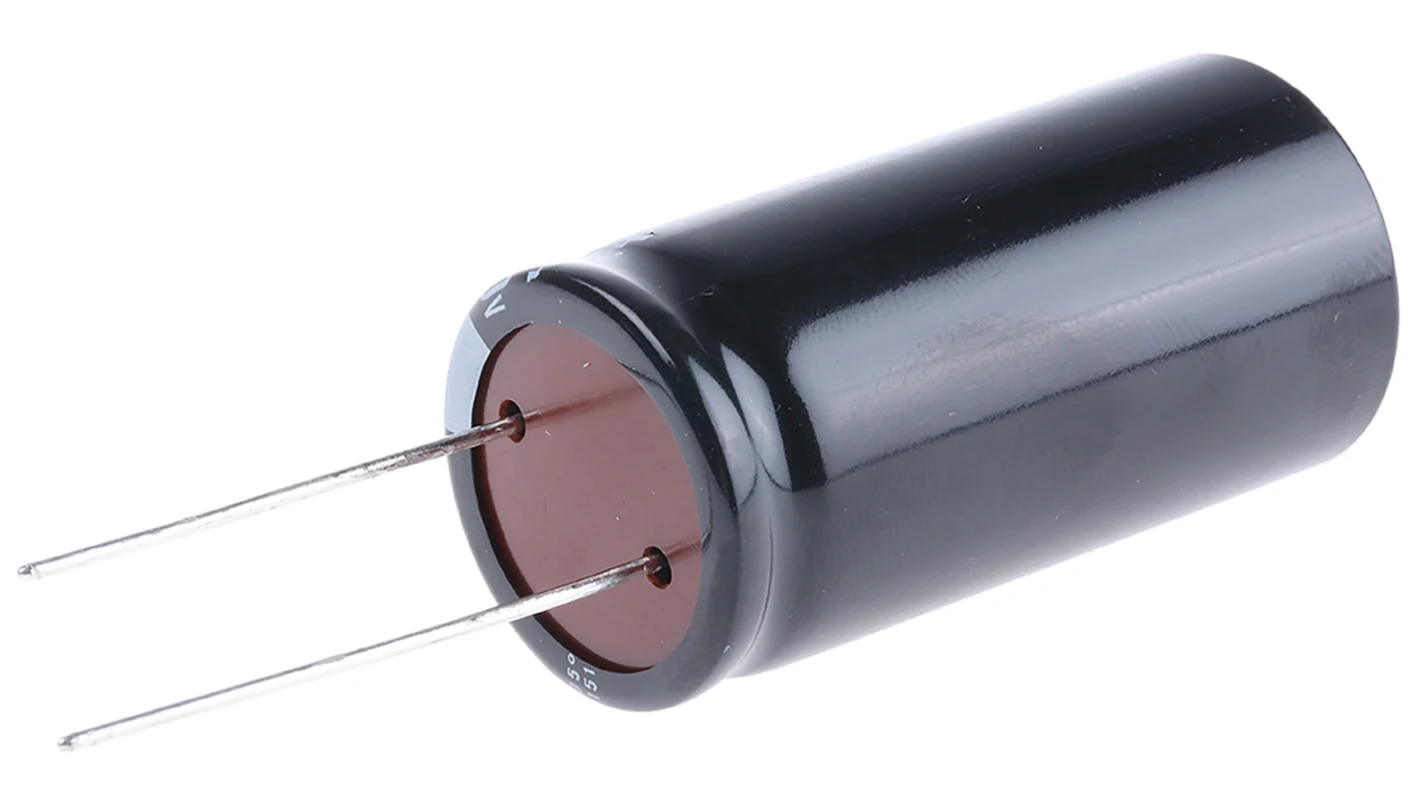
The global electrolytic capacitor market is forecast to create an absolute dollar opportunity of over USD 8 billion by the end of 2032, with sales expected to exceed USD 7 billion by 2022. The market is projected to grow at a compound annual growth rate (CAGR) of 2% to 3% during the forecast period from 2022 to 2032.
Electrolytic capacitors, commonly made from aluminum, are anticipated to account for 87% of the market share between 2022 and 2032. These capacitors are favored for their small size, large capacitance per volume, and cost-effectiveness compared to conventional capacitors.
Electrolytic Capacitors: Key Components in a Range of Industries
Electrolytic capacitors are widely used across multiple industries due to their unique properties, particularly their ability to store large amounts of energy in a compact form. They are used in various electronic applications, including inverter main circuits, switching mode power supplies, control circuits, and computer motherboards, where they are essential for filtering and smoothing signals.
The growing demand for supercapacitors, a subtype of electrolytic capacitors that offer capacitance in the thousands of farads, is also contributing to market growth, as they are increasingly used in a wide array of high-power applications.
Key Market Drivers: Surge in Demand Across Emerging Economies
The market’s growth is being significantly driven by rising demand across sectors such as automotive, telecommunication, and medical electronics. A shift towards miniaturization in electronic devices is further stimulating the need for more compact and efficient capacitors.
Additionally, increasing electrification trends, particularly in emerging markets like India, China, and Australia, are driving demand for electrolytic capacitors. In India, for example, the government’s National Smart Grid Mission (NSGM) is investing US$ 129.9 million to enhance smart grid infrastructure, which will further propel the demand for capacitors used in power transmission and distribution circuits.
Challenges Impacting Market Growth
Despite their widespread use, electrolytic capacitors face some challenges, including short lifespan, high equivalent series resistance, and large leakage currents. Additionally, the growing preference for multilayer ceramic capacitors (MLCCs) in consumer electronics like smartphones and entertainment systems could impede the market growth for electrolytic capacitors.
Key Companies Profiled
Rubycon Corporation
SamYoung Electronic Co. Ltd.
Vishay
Panasonic Corporation
Lelon Electronics Corp.
CapXon
Aihua; Jianghai Capacitor Co., Ltd; Nippon Chemi-Con Corporation; KEMET; Nichicon Corp.
Tap into Expertise: Discuss with Our Analyst on Email: sales@futuremarketinsights.com
Key Segments Profiled in the Electrolytic Capacitor Industry Survey
By Product Type:
- Non-solid Electrolytic Capacitor
- Solid Electrolytic Capacitor
By Material:
- Tantalum
- Aluminum
By End Use Industry:
- Consumer Electronic
- Industrial Electronic
- Computer & Peripherals
- Telecommunication Industry
- Automotive
By Region:
- North America
- Latin America
- Europe
- CIS & Russia
- APEJ
- Japan
- Middle East and Africa
About Future Market Insights (FMI)
Future Market Insights, Inc. (ESOMAR certified, recipient of the Stevie Award, and a member of the Greater New York Chamber of Commerce) offers profound insights into the driving factors that are boosting demand in the market. FMI stands as the leading global provider of market intelligence, advisory services, consulting, and events for the Packaging, Food and Beverage, Consumer Technology, Healthcare, Industrial, and Chemicals markets. With a vast team of over 400 analysts worldwide, FMI provides global, regional, and local expertise on diverse domains and industry trends across more than 110 countries.
Contact Us:
Future Market Insights Inc.
Christiana Corporate, 200 Continental Drive,
Suite 401, Newark, Delaware – 19713, USA
T: +1-347-918-3531
For Sales Enquiries: sales@futuremarketinsights.com
Website: https://www.futuremarketinsights.com
LinkedIn| Twitter| Blogs | YouTube