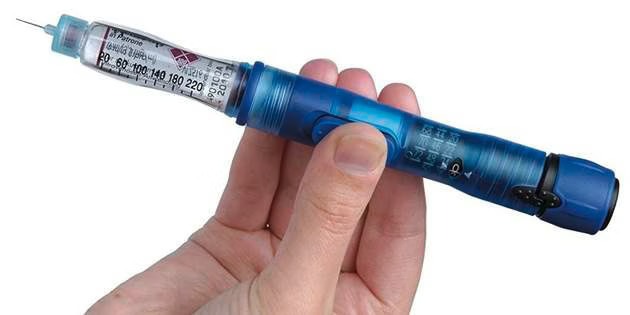
The auto-injectors market is forecast to reach a value of USD 5.71 billion in 2025 and is expected to expand to USD 23.31 billion by 2035, growing at a steady compound annualgrowth rate of 8.2% over the period. The market has gained considerable momentum with rising global incidences of chronic illnesses that require routine, precise drug delivery.
The auto-injectors market is experiencing significant growth, driven by increasing demand for self-administered drug delivery systems. Auto-injectors are medical devices designed to deliver a specific dose of medication via injection, simplifying the process for patients who need regular drug administration. These devices have become particularly important for managing chronic illnesses such as diabetes, rheumatoid arthritis, and multiple sclerosis. With healthcare systems becoming more patient-centric, the popularity of auto-injectors continues to rise, offering both convenience and safety. The market’s expansion is also being influenced by technological advancements that enhance ease of use, reliability, and portability.
Get Sample Report: – https://www.futuremarketinsights.com/reports/sample/rep-gb-1642
Market Trends
A notable trend in the auto-injectors market is the shift toward smart and connected devices. Smart auto-injectors equipped with digital sensors and Bluetooth connectivity are gaining traction as they allow users and healthcare providers to track medication adherence. This technological innovation aligns with the broader digital health movement, which aims to enhance patient outcomes through better monitoring and data collection. Additionally, the demand for disposable auto-injectors is increasing due to their hygiene benefits and ease of use, especially for emergency medications such as epinephrine. Environmentally conscious designs and recyclable materials are also becoming a priority among manufacturers as sustainability becomes a core industry focus.
Driving Forces Behind Market Growth
Several key factors are propelling the growth of the auto-injectors market. One of the primary drivers is the rising prevalence of chronic and life-threatening diseases that require consistent and timely medication. Auto-injectors offer a solution that empowers patients to manage their health conditions at home, reducing the need for frequent hospital visits. Moreover, the aging population and the growing burden on healthcare infrastructure further necessitate the adoption of self-injection technologies. Government initiatives to improve access to biologics and the approval of biosimilars have also contributed to market growth by expanding the range of treatments available in auto-injector form. The convenience offered by these devices is also encouraging pharmaceutical companies to integrate them into their drug delivery strategies.
Challenges and Opportunities
Despite the promising outlook, the auto-injectors market faces several challenges. One of the main hurdles is the high cost associated with auto-injectors, which can limit their accessibility in low- and middle-income countries. Additionally, device malfunctions or user errors can compromise the safety and effectiveness of treatment. There is also regulatory scrutiny concerning device reliability and patient safety, which can delay product approvals. However, these challenges present opportunities for innovation. Manufacturers are investing in user-friendly designs and cost-effective production methods to overcome these barriers. The growing interest in personalized medicine and patient-specific treatment protocols also offers new avenues for customized auto-injector solutions, creating untapped potential in niche therapeutic areas.
Recent Industry Developments
Recent developments in the auto-injectors market reflect a dynamic and competitive landscape. Pharmaceutical companies are collaborating with medical device manufacturers to co-develop integrated drug delivery systems. For instance, the introduction of dual-chamber auto-injectors has improved drug stability and simplified the reconstitution process before injection. Another significant development is the approval of new biologics and biosimilars, which are increasingly being paired with auto-injectors for patient convenience. Regulatory bodies in major markets such as the U.S. and Europe are also streamlining the approval process for combination products, encouraging innovation. Furthermore, the COVID-19 pandemic has accelerated the demand for self-administered treatments, prompting faster development and deployment of auto-injector devices.
Regional Analysis
Geographically, the auto-injectors market demonstrates varied growth patterns across regions. North America holds a dominant share due to advanced healthcare infrastructure, high adoption of novel drug delivery systems, and favorable reimbursement policies. The U.S. in particular remains a leader in terms of both consumption and innovation in auto-injectors. Europe follows closely, driven by a strong focus on chronic disease management and increasing awareness of self-injection benefits. The Asia-Pacific region is emerging as a lucrative market, propelled by a growing patient population, increasing healthcare expenditure, and rising acceptance of self-care medical devices. Countries like China and India are witnessing robust demand for affordable and easy-to-use auto-injectors, encouraging both local and international players to expand their presence.
Competitive Outlook
The competitive landscape of the auto-injectors market is characterized by a mix of established players and innovative startups. Companies are competing based on product reliability, ease of use, drug compatibility, and pricing. Research and development efforts are focused on creating more compact, intuitive, and multi-dose devices. Strategic partnerships, mergers, and acquisitions are common as firms seek to strengthen their portfolios and broaden market reach. Patent protection and proprietary technologies also play a critical role in maintaining competitive advantage. Moreover, companies are increasingly investing in user education and training programs to enhance the adoption of auto-injectors among patients and healthcare providers.
Top Companies
Several prominent companies are shaping the trajectory of the auto-injectors market. These include global pharmaceutical giants and specialized medical device firms. Pfizer Inc., Amgen Inc., and Eli Lilly and Company are leading pharmaceutical companies that offer auto-injectors for various therapeutic applications. On the device manufacturing side, companies like Ypsomed, SHL Medical, and Owen Mumford are known for their advanced and user-centric auto-injector technologies. Emerging players are also entering the market with innovative features such as customizable dose settings, audio-visual cues, and app integrations. Continuous investment in product development and global distribution networks enables these companies to maintain their leadership positions while catering to diverse patient needs.
Explore In-Depth Analysis-Click Here to Access the Report:- https://www.futuremarketinsights.com/reports/auto-injectors-market
Segmentation Outlook
The auto-injectors market can be segmented based on type, application, end user, and distribution channel. In terms of type, the market includes disposable and reusable auto-injectors. Disposable auto-injectors dominate the segment due to their ease of use and minimal maintenance. Reusable auto-injectors, however, are gaining popularity among cost-conscious users who require long-term treatment. By application, the market spans conditions such as anaphylaxis, rheumatoid arthritis, multiple sclerosis, and diabetes. The rising prevalence of these diseases is fueling segment growth. End users primarily include home care settings, hospitals, and clinics, with home care showing the fastest growth. Distribution channels comprise hospital pharmacies, retail pharmacies, and online platforms, with digital sales channels expanding rapidly due to increasing consumer preference for online convenience and privacy.
About Future Market Insights (FMI)
Future Market Insights, Inc. (ESOMAR certified, recipient of the Stevie Award, and a member of the Greater New York Chamber of Commerce) offers profound insights into the driving factors that are boosting demand in the market. FMI stands as the leading global provider of market intelligence, advisory services, consulting, and events for the Packaging, Food and Beverage, Consumer Technology, Healthcare, Industrial, and Chemicals markets. With a vast team of over 400 analysts worldwide, FMI provides global, regional, and local expertise on diverse domains and industry trends across more than 110 countries.
Contact Us:
Future Market Insights Inc.
Christiana Corporate, 200 Continental Drive,
Suite 401, Newark, Delaware – 19713, USA
T: +1-347-918-3531
For Sales Enquiries: sales@futuremarketinsights.com
Website: https://www.futuremarketinsights.com
LinkedIn| Twitter| Blogs | YouTube