Future Market Insights Forecasts Zeolite for Detergent Market Value to Exceed USD 1,754.1 million in 2028 Amid Rising Demand

Future Market Insights’ recent research titled zeolite for detergents worldwide Industry Analysis 2013 to 2021 and Opportunity Assessment 2022 to 2028′ provides important insights on the worldwide zeolite for detergents industry. The long-term outlook for the global zeolite for detergents market remains good, with a CAGR of 2.7% projected throughout the forecast period (2022-2028).

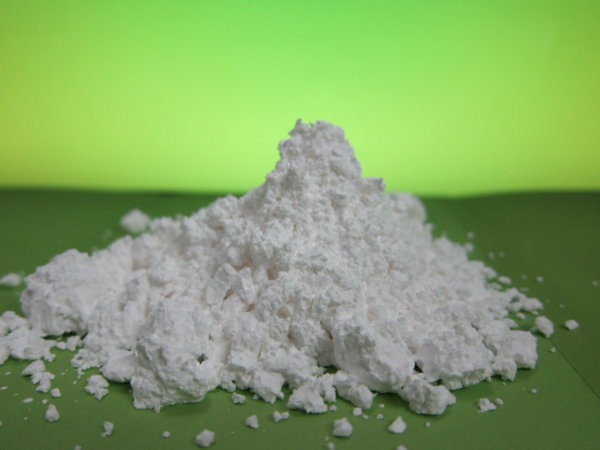
The Zeolite A product type category is predicted to grow at a substantial CAGR in terms of value and volume over the forecast period. The global sales of zeolite for detergents are expected to reach US$ 1,494.9  million by the end of 2022.

North America is estimated to account for a value share of 24.7% in the global zeolite for detergents market by 2022 end and it is anticipated to retain its dominance throughout the forecast period. In this report, Future Market Insights throws light on drivers and restraints likely to impact the market during this period.

Browse the Complete Report!
Zeolite for Detergents Market: Dynamics Influencing Revenue Growth

Increasing demand for powder and liquid detergents across the globe is the key driving factor for the growth of the zeolite for detergents market. Moreover, restrictions or limitations on the use of phosphate compounds in detergents across the globe result in an increase in the demand for zeolites as alternative materials.

Further, with growing economic prosperity, rising disposable income, and increasing purchasing power, the demand for personal care and home care products is increasing in developing countries. This increasing demand will in turn help drive raw material markets such as zeolite, surfactant, and additive, among others.

Further, increasing demand for and consumption of eco-friendly alternative products across the globe provide impetus for the growth of the zeolite for detergents market. Further, several zeolites manufacturers are focusing on providing customized product offerings in order to gain a competitive edge over other players.

Zeolite for Detergents Market: Segmentation Analysis

The zeolite for detergents market can be segmented on the basis of product type as Zeolite A, Zeolite P, and Zeolite X & AX.

  • On the basis of product type, the zeolite A segment is estimated to dominate the market in terms of value over the forecast period
  • The Zeolite X and AX segment is estimated to grow with a significant CAGR as compared to other types over the forecast period. It is expected to represent a total incremental opportunity of US$ 52 Million between 2022 and 2028

Zeolite for Detergents Market: Regional Market Projections

North America is expected to dominate the market with a 24.7% market share in terms of revenue in the global zeolite for detergents market by the end of 2022. After North America, Western Europe is expected to account for a dominant revenue share in the global zeolite for detergents market through 2028.

The China market is projected to hold a significant market share in terms of value in the global zeolite for detergents market over the forecast period, exhibiting a CAGR of 3.0%.

Zeolite for Detergents Market: Vendor Insights

Some of the players reported in this study on the global zeolite for detergents market are

  • PQ Group Holdings Inc.
  • Chalco Shandong Advanced Material Co., Ltd
  • National Aluminium Company Limited
  • Anten Chemical Co., Ltd.
  • Silkem d.o.o.
  • IQE Group
  • Gujarat Credo Mineral Industries Ltd.
  • Sachem Inc.
  • Huiying Chemical Industry (Xiamen) Co. Ltd.
  • Manek Group
  • Kunjan Silicate Pvt. Ltd.
  • Fujian Risheng Chemical Co. Ltd.
  • Guangzhou Hengbang Fine Chemical Co. Ltd.
  • Huiying Chemical Industry (Quanzhou) Co. Ltd.
  • Luoyang Jianlong Chemical Industrial Co. Ltd.

Key Segmentation

By Product Type:

  • Zeolite A
  • Zeolite P
  • Zeolite X and AX

By Region:

  • North America
  • Latin America
  • Western Europe
  • Eastern Europe
  • China
  • Japan
  • India
  • Southeast Asia Pacific
  • Middle East & Africa

About Future Market Insights (FMI)

Future Market Insights, Inc. (ESOMAR certified, recipient of the Stevie Award, and a member of the Greater New York Chamber of Commerce) offers profound insights into the driving factors that are boosting demand in the market. FMI stands as the leading global provider of market intelligence, advisory services, consulting, and events for the Packaging, Food and Beverage, Consumer Technology, Healthcare, Industrial, and Chemicals markets. With a vast team of over 400 analysts worldwide, FMI provides global, regional, and local expertise on diverse domains and industry trends across more than 110 countries.

Contact Us:      

Future Market Insights Inc.
Christiana Corporate, 200 Continental Drive,
Suite 401, Newark, Delaware – 19713, USA
T: +1-845-579-5705
For Sales Enquiries: sales@futuremarketinsights.com
Website: https://www.futuremarketinsights.com
LinkedInTwitterBlogs | YouTube

Thioesters Market Forecast: 4.8% CAGR Growth Expected from 2022 to 2028, China Leading with 6.4% Value Growth

Thioesters are widely employed in the processing of rubber and plastics, as well as in the manufacturing of food and feed, as well as in the creation of gasoline and lubricants, among other things. The thioesters industry is expected to rise 4.7% year on year in 2022, reaching a value of around USD 112.5 million by the end of 2022. During the forecast period of 2022 to 2028, the worldwide thioesters market is expected to grow at a CAGR of 4.8%.

Plastic processing is another important application area for the thioester and is projected to register considerable growth over the forecast period. The sales of thioesters are estimated to be valued at US$ 102.9 Million by the end of 2018, witnessing a Y-o-Y growth of 3.9% over the year 2017. China is estimated to account for a value share of 28.3% in the global thioester market by 2018 end and it is anticipated to retain its dominance throughout the forecast period.

Thioesters are organic compounds with a sulfur atom bonded to two carbon atoms, resembling esters but with a sulfur (thio) atom instead of oxygen. They play crucial roles in biochemical processes, particularly in fatty acid metabolism and protein modification. Thioesters are vital in enzyme reactions, forming high-energy intermediates, and are pivotal in acyl group transfer reactions. Their versatility and involvement in various biological and chemical processes make them significant in both scientific research and industrial applications.

Further coming to the segmental analysis, amongst the material type DSTDP is expected to offer significant absolute $ opportunity for market players during the period. Among the application segment, thioesters find their major adoption and attraction in the rubber processing industry and are proposed to show their domination throughout the forecast period.

Browse the Complete Report!
Thioester is classified as an organic compound that is formed after the esterification of carboxylic acids and thiols. On a commercial scale, these fall under the category of auxiliary antioxidants. One of the major functions of thioesters is to slow down the rate of oxidation and improve the operating life of the end product.

Thioesters are considered one of the best additives to inhibit the oxidation process. With attributes like high solubility, better thermal stability, and a high degree of antioxidant properties the thioesters are proving as a choice of antioxidant in the market. It can also be used with a combination of other types of antioxidants and further can be used in numerous applications.

With the growing automobile & footwear industry the demand for high-performance rubber increases significantly. To formulate high-performance tires the demand for novel rubber processing chemicals increases which further fuels the demand thioesters.

Also, some other applications like plastic processing, food & feed, and Fuels & lubricants create significant demand for thioesters which further opens up the growth opportunity prospects for the thioesters manufacturer. Amongst all the application types rubber processing chemicals and plastic processing additives are expected to dominate the overall thioester market

One of the major challenges faced by the global thioester market is the chemicals used in the processing of thioesters are harmful in nature and further create ill effects on humans when exposed. Moreover, the adoption of natural antioxidants because of their environment-friendly nature is gaining attraction which dents the thioesters growth for the long term

Thioesters Market: Segmentation Analysis

  • Based on material type DSTDP is projected to hold a relatively higher share throughout the forecast period. This segment is estimated to hold a share of 59.9 % in 2018 and is expected to expand at a CAGR of 4.8 % over the forecast period
  • Among applications, rubber processing segments where thioesters are an integral part of various types of rubber processing such as natural rubber, elastomers, and synthetic rubber are projected to register sound growth over the forecast period

Thioesters Market: Vendor Insights

Some of the key players reported in this study of the Global Thioester market include

  • Mayzo, Inc.
  • Trigon Antioxidants Pvt. Ltd.
  • Reagens S.p.A.
  • Tianjin Zhongxin Chemtech Co. Ltd.
  • Double Bond Chemical Ind. Co. Ltd.
  • Bioray Chemical Co. Ltd.
  • Songwong Industrial Co. Ltd.
  • Hangzhou Jingyou Chemical Co. Ltd.
  • Dalian Richfortune Chemicals Co. Ltd.
  • Beijing Yizhong Weiye Chemical Co. Ltd.
  • HongKun Group
  • Nanjing Hua Lim Chemical Co. Ltd.
  • Addivant USA LLC

Key Segmentation

By Material Type:

  • DLTDP (Dilauryl Thiodipropionate)
  • DTTDP (Ditridecyl Thiopropionate)
  • DSTDP (Distearyl Thiodipropionate)

By Application:

  • Rubber Processing
  • Plastic Processing
  • Fuel and Lubricants
  • Food & Feed
  • Others

By Region:

  • North America
  • Latin America
  • Europe
  • East Asia
  • South Asia Pacific
  • Middle East and Africa

About Future Market Insights (FMI)

Future Market Insights, Inc. (ESOMAR certified, recipient of the Stevie Award, and a member of the Greater New York Chamber of Commerce) offers profound insights into the driving factors that are boosting demand in the market. FMI stands as the leading global provider of market intelligence, advisory services, consulting, and events for the Packaging, Food and Beverage, Consumer Technology, Healthcare, Industrial, and Chemicals markets. With a vast team of over 400 analysts worldwide, FMI provides global, regional, and local expertise on diverse domains and industry trends across more than 110 countries.

Contact Us:      

Future Market Insights Inc.
Christiana Corporate, 200 Continental Drive,
Suite 401, Newark, Delaware – 19713, USA
T: +1-845-579-5705
For Sales Enquiries: sales@futuremarketinsights.com
Website: https://www.futuremarketinsights.com
LinkedInTwitterBlogs | YouTube

Vinyl Flooring Market Share Set to Reach USD 57,699.15 million by 2033, Driven by Rising Demand for Waterproof and Slip-Resistant Solutions

The global vinyl flooring industry share is expected to attain a valuation of USD 29,885.25 million in 2023 and is projected to reach USD 57,699.15 million by 2033 while exhibiting a CAGR of 6.8% during the forecast period. Rising construction activities and evolving lifestyles worldwide are projected to drive an increase in consumer demand for house renovation.

The global construction market has reached over USD 12.2 trillion in 2021, leading to a surge in demand for vinyl flooring as an alternative flooring solution. The demand for vinyl flooring is notably high and continues to grow, with individuals increasingly investing in home renovation and enhancement. Increasing disposable income is empowering individuals to elevate their lifestyles and invest in luxurious housing.

Consumers perceive well-decorated rooms as a symbol of status, prompting them to explore various flooring solutions like vinyl flooring to enhance their social image. Social media plays a significant role in influencing consumers and encouraging them to invest in housing renovations. On platforms like social media, do-it-yourself (DIY) home improvement projects often promote easily installable, low-maintenance, and cost-effective solutions that create a homely atmosphere.

The anticipated demand for vinyl flooring as a favored flooring solution in home renovation stems from the increasing interest in modernizing home spaces with user-friendly appliances. The adoption of advanced production techniques has improved the performance, design, and installation of vinyl flooring, providing higher resolutions and sharper textures.

The market is poised for revenue growth, supported by technological advancements like self-adhesive tiles, loose lay planks, interlocking planks and tiles, and glue-down tiles, simplifying the installation process. The thriving construction industry and growing interior design activities in emerging economies are also expected to have a positive impact on market growth. The regeneration of urban areas and the creation of smart cities demand newly developed flooring materials, further driving the revenue growth of the vinyl flooring market.

Browse the Complete Report!

Key Takeaways from the Market Study

“Thriving construction industry and increasing interior design activities is expected to boost market growth during the forecast period,” comments by Nikhil Kaitwade, Associate Vice President at Future Market Insights, Inc.

Competitive Landscape

Major players in the vinyl tiles market are actively involved in designing and developing new products with distinctive features to enrich their portfolios and broaden their global consumer base. Additionally, certain companies are emphasizing the reinforcement of their retail networks and the establishment of well-structured supply chains to effectively reach their customers.

Some recent developments in the vinyl flooring market are:

Key Companies Profiled

More Valuable Insights Available

Future Market Insights offers an unbiased analysis of the global vinyl flooring market, providing historical data for 2018 to 2022 and forecast statistics from 2023 to 2033.

To understand opportunities in the vinyl flooring market, the market is segmented on the basis of format, product type, application, and region.

Key Segments Profiled in the Vinyl Flooring Industry Survey

By Format:

By Product Type:

By Application:

By Region:

About the Chemicals & Materials Division at Future Market Insights

The chemical & materials team at Future Market Insights offers expert analysis, time-efficient research, and strategic recommendations with the objective of providing authentic insights and accurate results to help clients worldwide. With a repertoire of over 100+ reports and 1 million+ data points, the team has been analyzing the industry lucidly in 50+ countries for over a decade. The team provides a brief analysis of key trends including competitive landscape, profit margin, and research development efforts.

About Future Market Insights (FMI)

Future Market Insights, Inc. (ESOMAR certified, recipient of the Stevie Award, and a member of the Greater New York Chamber of Commerce) offers profound insights into the driving factors that are boosting demand in the market. FMI stands as the leading global provider of market intelligence, advisory services, consulting, and events for the Packaging, Food and Beverage, Consumer Technology, Healthcare, Industrial, and Chemicals markets. With a vast team of over 400 analysts worldwide, FMI provides global, regional, and local expertise on diverse domains and industry trends across more than 110 countries.

Contact Us:       

Future Market Insights Inc.
Christiana Corporate, 200 Continental Drive,
Suite 401, Newark, Delaware – 19713, USA
T: +1-845-579-5705
For Sales Enquiries: sales@futuremarketinsights.com
Website: https://www.futuremarketinsights.com
LinkedInTwitterBlogs | YouTube

North America and Europe Drive Bioceramics and Hydroxyapatite Market Growth; Bio-Inert Segment Leads with 6.8% CAGR

Future Market Insights delivers key insights on the global bioceramics and hydroxyapatite industry demand in its latest report titled ‘Bioceramics and Hydroxyapatite market: Global Industry Analysis 2014-2018 and Opportunity Assessment 2022-2028.’ Sales revenue of bioceramics and hydroxyapatite is expected to be nearly USD 2,243.8 Million in 2018. By the end of the forecast period, the global bioceramics and hydroxyapatite market is projected to reach a value of USD 4,390.1 Million, recording a CAGR of 6.9%.

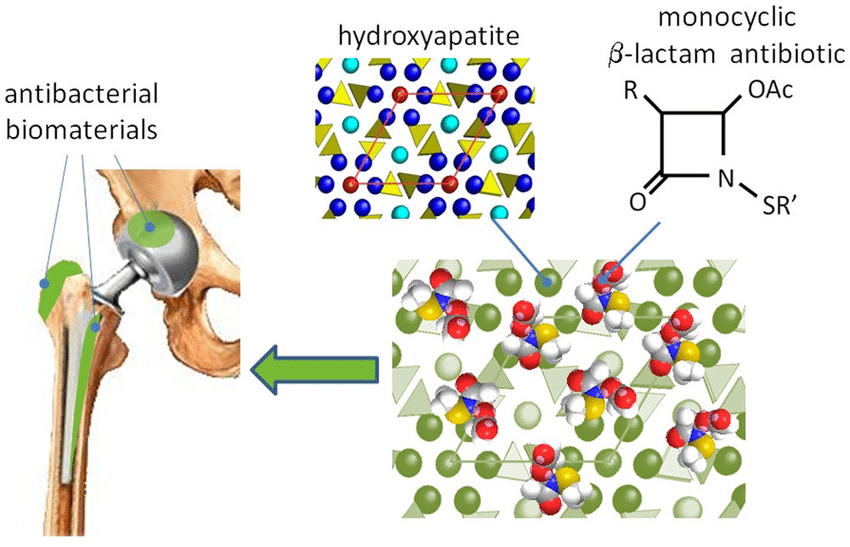
Bioceramics are also known as medical ceramics as they are mainly used as an important component in the production of dental and orthopedic implants. Bioceramics materials are mostly oxides, carbides, or nitrides-based. Preference for bioceramics continues to persist and they can be distinguished as biologically active, inert, or resorbable depending on the material type. Aluminum oxide, zirconia, calcium phosphate (tricalcium phosphate, hydroxyapatite), and bioglass are witnessed to be some of the commonly used bioceramics across industries. Hydroxyapatite is a calcium phosphate bioceramic and is biologically active by nature. The natural human bone comprises 70% hydroxyapatite. Thus it has excellent biocompatibility. Hydroxyapatite also aids in bone growth and promotes bone health. However, the low mechanical strength of hydroxyapatite has constrained the application of hydroxyapatite to coat the metal implants to trick the body as the tissues will directly come in contact with bioceramics and hydroxyapatite instead of metal. Thus the implants can gain the strength of the metal and biological acceptability of bioceramics and hydroxyapatite.

To offer effective solutions for bone growth, healthcare institutions prefer investing in hydroxyapatite as they interact with the living tissues of the body. The growing use of hydroxyapatite in the healthcare industry has broadened the scope of market growth for the global bioceramics and hydroxyapatite market. The global bioceramics and hydroxyapatite market witnessed a Y-o-Y growth of 5.7% in 2017. By 2018-end, the global sales of bioceramics and hydroxyapatite are estimated to be valued at USD 2,243.8 Million. Of various regions, North America and Europe is estimated to account for a value share of approximately 60% in the global bioceramics and hydroxyapatite market by 2018 end, and it is anticipated to show moderate growth for bioceramics and hydroxyapatite from dental and orthopedic implants and other applications.

Browse the Complete Report!

The growing need for developing effective dental implants, hip, joints, and knee replacement devices is projected to fuel demand for bioceramics and hydroxyapatite over the forecast period. Production of implants per capita has further translated to exponential market growth over the past decade.

There has been an increase in the percentage of the aging population which is prone to greater risk of diseases such as osteoarthritis, knee, joint and hip problems, and tooth decay amongst others. The aging population coupled with other factors such as an increasing number of accidents, and bad eating habits leading to tooth decay amongst others is projected to drive the demand for bioceramics and hydroxyapatite over the forecast period.

Attributed to enhanced biocompatibility, high mechanical strength, and chemical and thermal stability, bioceramics and hydroxyapatite are increasingly being used for orthopedic and dental implants. Growing health concerns pertaining to the impact of the materials used for developing dental implants have led manufacturers to direct their investments toward utilizing titanium as an important component. However, lack of maintenance of titanium implants can result in corrosion of the implants. To offer improved patient care, the manufacturers are developing zirconia-based implants that are white-colored ceramic material. These implants offer improved biocompatibility and are likely to encourage demand for bioceramics and hydroxyapatite in the healthcare industry.

Contrary to the factors boosting the market growth, the availability of bioceramics and hydroxyapatite at premium prices and lack of awareness among consumers is likely to inhibit the growth of the global bioceramics and hydroxyapatite market over the coming years. Also, lack of technological advancements in developing countries of the Asia Pacific region there has still been the prevalence of metal-based implants which may hinder the bioceramics and hydroxyapatite market growth in the long run.

To remain at the forefront of the competitive market, leading market players are focusing on long-term partnerships with implant manufacturers, and expanding their regional footprints in the bioceramics and hydroxyapatite market. In-depth research and development have also been conducted for developing 3-D printing and artificial bones thus expanding the application area and product offerings for bioceramics and hydroxyapatite.

Segmentation Analysis

Vendor Insights

The report highlights some of the top companies operating in the global bioceramics and hydroxyapatite market, which include

Global Bioceramics and Hydroxyapatite Market Segmentation

To understand and assess opportunities in the global bioceramics and hydroxyapatite Market, we have divided the report into three sections based on market segmentation as under:

By Material Type

By Type

By Application

By Region

About Future Market Insights (FMI)

Future Market Insights, Inc. (ESOMAR certified, recipient of the Stevie Award, and a member of the Greater New York Chamber of Commerce) offers profound insights into the driving factors that are boosting demand in the market. FMI stands as the leading global provider of market intelligence, advisory services, consulting, and events for the Packaging, Food and Beverage, Consumer Technology, Healthcare, Industrial, and Chemicals markets. With a vast team of over 400 analysts worldwide, FMI provides global, regional, and local expertise on diverse domains and industry trends across more than 110 countries.

Contact Us:       

Future Market Insights Inc.
Christiana Corporate, 200 Continental Drive,
Suite 401, Newark, Delaware – 19713, USA
T: +1-845-579-5705
For Sales Enquiries: sales@futuremarketinsights.com
Website: https://www.futuremarketinsights.com
LinkedInTwitterBlogs | YouTube

Fiberglass Market Projected to Soar to USD 19,028.50 million by 2034 Driven by Demand in Construction, Automotive, and Aerospace Sectors

The fiberglass industry is being propelled by the increasing demand for lightweight and durable materials across various sectors, including automotive, construction, and aerospace. Fiberglass’s exceptional strength-to-weight ratio makes it an ideal choice for manufacturers looking to reduce vehicle weight while maintaining structural integrity. Additionally, the construction industry’s growing preference for fiberglass-reinforced products, such as panels, pipes, and insulation, is driving demand. Moreover, the rising need for renewable energy sources, particularly wind energy, has led to a surge in fiberglass consumption for manufacturing wind turbine blades.

The fiberglass industry is poised for significant growth, with its value projected to increase from USD 11,356.30 million in 2024 to USD 19,028.50 million in 2034. This forecast corresponds to a CAGR of 5.30% over the period.

Despite its promising growth prospects, the fiberglass industry faces several restraints. One significant restraint is the volatility of raw material prices, particularly the cost of resins and glass fibers. Fluctuations in raw material prices can significantly impact production costs and profit margins for fiberglass manufacturers. Moreover, stringent environmental regulations and concerns about emissions during the manufacturing process pose challenges to the industry. Additionally, competition from alternative materials, such as carbon fiber and aluminum, presents a threat to fiberglass market growth in certain applications.

Browse the Complete Report!

The ongoing infrastructure development projects worldwide present lucrative opportunities for fiberglass manufacturers, particularly in emerging economies where construction activities are booming. In recent years, several notable trends have emerged in the fiberglass industry. One prominent trend is the increasing adoption of advanced composite materials, such as carbon fiber-reinforced fiberglass composites, in high-performance applications. These advanced materials offer superior strength, stiffness, and durability compared to traditional fiberglass products, making them ideal for aerospace, automotive, and sporting goods industries. Another trend is the growing use of automation and robotics in fiberglass manufacturing processes, leading to increased efficiency, precision, and cost savings. Additionally, there is a rising focus on digitalization and data analytics to optimize production processes and enhance product quality in the fiberglass industry.

“The fiberglass industry is ripe with opportunities for growth and expansion. One notable opportunity lies in the development of sustainable and eco-friendly fiberglass products. As environmental consciousness increases, there is a growing demand for recyclable and biodegradable fiberglass materials. Manufacturers can capitalize on this trend by investing in research and development to create innovative, sustainable fiberglass solutions.” Says an FMI Analyst.

Key Takeaways from the Market Study

Competition Outlook of the Fiberglass Market

In the fiberglass market, competition among industry players remains fierce as companies strive to differentiate themselves and capture market share. Established manufacturers like Owens Corning, Saint-Gobain, and Johns Manville maintain their dominance through extensive product offerings, technological innovation, and strong distribution channels. These industry leaders leverage their brand reputation and expertise to secure key contracts across various sectors, ranging from construction and automotive to aerospace and marine applications.

The market also witnesses the emergence of smaller players and niche manufacturers, who focus on specialized fiberglass products and cater to specific customer demands. These newcomers often innovate rapidly, introducing novel manufacturing techniques and product formulations to gain a competitive edge. Additionally, with a growing emphasis on sustainability and eco-friendly materials, fiberglass manufacturers are increasingly investing in recyclable and environmentally responsible production processes, further intensifying competition in the market.

Recent Developments:

Key Companies in the Market

Key Segments

By Product Type:

By Glass Type:

By End-use Industry:

By Region:

About Future Market Insights (FMI)

Future Market Insights, Inc. (ESOMAR certified, recipient of the Stevie Award, and a member of the Greater New York Chamber of Commerce) offers profound insights into the driving factors that are boosting demand in the market. FMI stands as the leading global provider of market intelligence, advisory services, consulting, and events for the Packaging, Food and Beverage, Consumer Technology, Healthcare, Industrial, and Chemicals markets. With a vast team of over 400 analysts worldwide, FMI provides global, regional, and local expertise on diverse domains and industry trends across more than 110 countries.

Contact Us:       

Future Market Insights Inc.
Christiana Corporate, 200 Continental Drive,
Suite 401, Newark, Delaware – 19713, USA
T: +1-845-579-5705
For Sales Enquiries: sales@futuremarketinsights.com
Website: https://www.futuremarketinsights.com
LinkedInTwitterBlogs | YouTube

Ferrovanadium Market to Reach USD 5,776.5 million by 2028 Driven by Steel Demand in Construction & Automotive Sectors

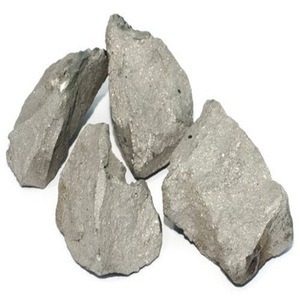
The ferrovanadium industry size is poised for substantial growth, with a projected year-on-year increase of 5.1% in 2022, culminating in a value of approximately USD 4,277.3 million by the year’s end. This surge is attributed to the escalating demand for steel in the construction and automotive sectors, driving an upswing in Ferrovanadium consumption for steel production. As the global steel appetite continues to expand, Future Market Insights (FMI) anticipates a promising trajectory, forecasting a robust CAGR of 5.1%, propelling global ferrovanadium sales to reach an impressive valuation of USD 5,776.5 million by 2028.

The persistent growth in ferrovanadium sales underscores its pivotal role in meeting the escalating demands of key industries. With a focus on catering to the evolving needs of the construction and automotive sectors, the market is positioned for sustained expansion, offering lucrative opportunities for stakeholders in the forecast period.

Browse the Complete Report!

Market Dynamics:

1. Growing Steel Industry: The ferrovanadium market is closely tied to the steel industry, which is experiencing robust growth worldwide. As infrastructure development and construction projects surge, the demand for high-strength steel, fortified with ferrovanadium, is on the rise.

2. Automotive Sector Boost: The automotive industry is another key driver of the ferrovanadium market. With a constant quest for lightweight yet sturdy materials, ferrovanadium finds increasing use in the production of high-strength steel for vehicle components.

3. Energy Storage: As the focus on renewable energy solutions intensifies, ferrovanadium is gaining prominence in energy storage applications. Vanadium redox flow batteries, leveraging the unique properties of vanadium, are becoming increasingly popular for grid energy storage.

Key Companies Profiled in the Ferrovanadium Market

Ferrovanadium Market By Category

By Grade

By Production Method

By End Use

By Region

About Future Market Insights (FMI)

Future Market Insights, Inc. (ESOMAR certified, recipient of the Stevie Award, and a member of the Greater New York Chamber of Commerce) offers profound insights into the driving factors that are boosting demand in the market. FMI stands as the leading global provider of market intelligence, advisory services, consulting, and events for the Packaging, Food and Beverage, Consumer Technology, Healthcare, Industrial, and Chemicals markets. With a vast team of over 400 analysts worldwide, FMI provides global, regional, and local expertise on diverse domains and industry trends across more than 110 countries.

Contact Us:       

Future Market Insights Inc.
Christiana Corporate, 200 Continental Drive,
Suite 401, Newark, Delaware – 19713, USA
T: +1-845-579-5705
For Sales Enquiries: sales@futuremarketinsights.com
Website: https://www.futuremarketinsights.com
LinkedInTwitterBlogs | YouTube

Natural Cinnamic Aldehyde Market to Reach USD 1,611.0 million by 2033, Driven by Rising Demand for Organic Fragrance Ingredients

The natural cinnamic aldehyde industry size is experiencing significant growth, driven by several key factors. One of the primary drivers is the increasing demand for natural and sustainable ingredients in various consumer products. In 2023, the market is expected to be worth USD 1,060 million. By 2033, the market is projected to cross USD 1,611.0 million with a CAGR of 3.3% over the forecast period.

Natural cinnamic aldehyde, derived from plant sources, offers a unique fragrance profile that appeals to conscious consumers seeking authentic and eco-friendly products. The rising popularity of organic and natural cosmetics, perfumes, and household products has fueled the demand for natural cinnamic aldehyde, creating new opportunities for manufacturers and suppliers in the industry.

While the natural cinnamic aldehyde industry presents promising prospects, companies and manufacturers also face certain challenges. One of the primary obstacles is the limited availability and sourcing of high-quality natural cinnamic aldehyde. As demand increases, ensuring a consistent and sustainable supply becomes crucial.

The growing demand for natural cinnamic aldehyde opens up exciting investment opportunities in the industry. Investors can explore partnerships with established manufacturers and suppliers to capitalize on the rising demand for natural fragrance ingredients. Investing in research and development of innovative extraction and purification techniques can also yield significant returns. Furthermore, there is potential for expansion into new geographical markets, targeting regions where consumer preferences for natural and sustainable products are on the rise. Investing in sustainable sourcing practices and eco-friendly production methods can further enhance market positioning and appeal to environmentally conscious consumers.

Browse the Complete Report!

The natural cinnamic aldehyde industry is witnessing unique trends that are shaping its future. One notable trend is the integration of natural cinnamic aldehyde in niche and artisanal fragrance creations. Perfumers and fragrance houses are exploring the distinctive scent profiles offered by natural cinnamic aldehyde to create unique and captivating fragrances. Another trend is the growing focus on transparency and traceability in the supply chain. Consumers are increasingly interested in knowing the origin of the ingredients in their products, prompting manufacturers to provide detailed information about the sourcing and production processes.

Key Takeaways from the Natural Cinnamic Aldehyde Market:

What are Key Players Doing to Thrive in the Natural Cinnamic Aldehyde Industry?

In the natural cinnamic aldehyde industry, several key players have emerged as frontrunners, employing various strategies to maintain their dominance in the market. These industry leaders invest heavily in research and development to enhance their product offerings, continuously exploring innovative extraction techniques and sustainable sourcing practices to meet the evolving demands of the market.

While the natural cinnamic aldehyde industry offers immense opportunities, key players face significant challenges. One major obstacle is the increasing competition from new entrants and the threat of substitution from synthetic alternatives. To overcome this challenge, established players must focus on product differentiation and innovation, ensuring that their natural cinnamic aldehyde offerings stand out in terms of quality, sustainability, and fragrance profiles.

One area of potential investment lies in establishing sustainable and vertically integrated supply chains. By investing in sustainable farming practices, cultivation of cinnamic aldehyde-rich botanical sources, and efficient extraction processes, new entrants can ensure a consistent and reliable supply of natural cinnamic aldehyde. Collaborating with fragrance houses and consumer goods companies to develop customized fragrance solutions also opens up avenues for investment and growth.

The natural cinnamic aldehyde industry is not immune to evolving trends that shape the fragrance landscape. One prominent trend is the increasing consumer preference for clean and sustainable fragrance ingredients. Key players in the industry are responding by prioritizing sustainable sourcing, implementing eco-friendly production practices, and obtaining certifications that demonstrate their commitment to environmental responsibility. Another notable trend is the integration of natural cinnamic aldehyde in niche and luxury fragrance formulations. Perfume brands are leveraging the unique scent characteristics of natural cinnamic aldehyde to create captivating and exclusive fragrances, catering to the discerning tastes of fragrance enthusiasts.

Key Companies Profiled

Natural Cinnamic Aldehyde Market by Category

By Application:

By End Use:

By Region:

About Future Market Insights (FMI)

Future Market Insights, Inc. (ESOMAR certified, recipient of the Stevie Award, and a member of the Greater New York Chamber of Commerce) offers profound insights into the driving factors that are boosting demand in the market. FMI stands as the leading global provider of market intelligence, advisory services, consulting, and events for the Packaging, Food and Beverage, Consumer Technology, Healthcare, Industrial, and Chemicals markets. With a vast team of over 400 analysts worldwide, FMI provides global, regional, and local expertise on diverse domains and industry trends across more than 110 countries.

Contact Us:       

Future Market Insights Inc.
Christiana Corporate, 200 Continental Drive,
Suite 401, Newark, Delaware – 19713, USA
T: +1-845-579-5705
For Sales Enquiries: sales@futuremarketinsights.com
Website: https://www.futuremarketinsights.com
LinkedInTwitterBlogs | YouTube

Hydrofluoric Acid Market to Reach USD 2,748.6 million by 2033, Driven by Growing Demand in Cookware and Cable Industries

The overall market is anticipated to maintain its upward trend, reaching an anticipated value of USD 1,892.4 million in the year 2023. With the demand for hydrofluoric acid expected to increase at 4.1% CAGR between 2023 and 2033, the future looks bright for producers of the chemical. Further, it is predicted that hydrofluoric acid sales, in terms of value, might reach a staggering USD 2,748.6 million by the end of this forecast period.

Thorough research from FMI indicates that the Hydrofluoric Acid market had an estimated value of US$ 1,640.4 million in the historical year 2018. Furthermore, during the period between 2018 and 2022, it expanded noticeably, having a CAGR of 2.9%. The global market value increased to US$ 1,839.1 million by 2022, underscoring the expanding use of hydrofluoric acid across several sectors.

The use of hydrofluoric acid in the manufacture of cookware and cable wires is a significant element influencing the rise in demand for the chemical. Moreover, there is an increasing demand for reliable and effective cookware as well as better communication infrastructure as the world’s population continues to expand. Such items’ manufacturing processes depend hugely on hydrofluoric acid, which, in turn, is driving up its demand, particularly in industrializing economies.

Hydrofluoric acid is used in the making of hydrofluorocarbons (HFCs) and hydrofluorolefins (HFOs), which are also in high demand on the market these days. These substances have a smaller influence on the ozone layer than conventional refrigerants, which makes them popular refrigerants and air conditioning system components. So the sales of hydrofluoric acid have increased as governments and businesses are increasingly prioritizing ecologically acceptable alternatives hugely.

Browse the Complete Report!

Key Takeaways from the Global Hydrofluoric Acid Market Study Report by FMI

Competitive Landscape for the Hydrofluoric Acid Market Players

The demand for hydrofluoric acid has been increasing globally, which has had a positive impact on the industry’s profitability encouraging many new players. With a promising outlook, the new players are anticipated to continue profiting from the rising worldwide demand for hydrofluoric acid and its numerous applications.

The Top Players are

  1. Gulf Fluor
  2. Lanxess AG
  3. Solvay SA
  4. Honeywell International
  5. Buss ChemTech AG
  6. Sinochem International Corp.
  7. Tanfac Industries ltd.
  8. Fubao Group
  9. Navin Fluorine International Limited
  10. Merck KGaA
  11. SRF Limited
  12. Gujarat Fluorochemicals Ltd.
  13. Stella Chemical Corporation
  14. Morita Chemical Industries Co. Ltd.
  15. Soulbrain Co. Ltd.

Recent Developments by the Hydrofluoric Acid Manufacturing Industries

Key Segments Covered in the Hydrofluoric Acid Industry Analysis

By Grade:

By Application:

By Region:

About Future Market Insights (FMI)

Future Market Insights, Inc. (ESOMAR certified, recipient of the Stevie Award, and a member of the Greater New York Chamber of Commerce) offers profound insights into the driving factors that are boosting demand in the market. FMI stands as the leading global provider of market intelligence, advisory services, consulting, and events for the Packaging, Food and Beverage, Consumer Technology, Healthcare, Industrial, and Chemicals markets. With a vast team of over 400 analysts worldwide, FMI provides global, regional, and local expertise on diverse domains and industry trends across more than 110 countries.

Contact Us:       

Future Market Insights Inc.
Christiana Corporate, 200 Continental Drive,
Suite 401, Newark, Delaware – 19713, USA
T: +1-845-579-5705
For Sales Enquiries: sales@futuremarketinsights.com
Website: https://www.futuremarketinsights.com
LinkedInTwitterBlogs | YouTube

Cold Rolling Oils/Lubricants Market to Reach USD 18.2 billion by 2028, Driven by Rising Demand in Automotive & Transportation Sectors

Cold Rolling Oils/Lubricants Market

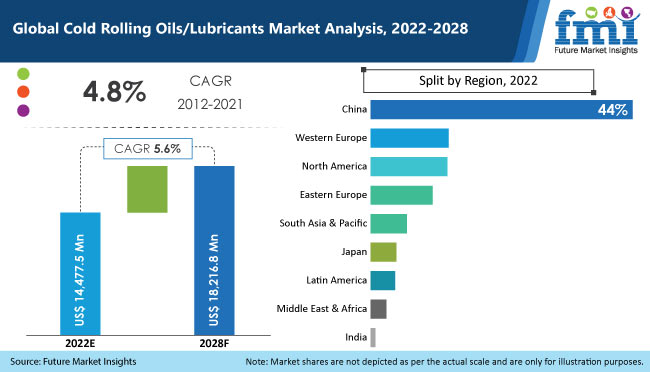
The global cold rolling oils/ lubricants industry is projected to reach a value of USD 18.2 Billion in 2028, with demand growing at a standard CAGR of 5.6% from 2022 to 2028. In 2022, the target market is expected to reach an estimated USD 14.5 Billion. The global demand for cold rolling lubricants increased by a magnitude of 4.6% over the first half of 2021.

Cold rolling oils/ lubricants are in high demand from the automotive and transportation sectors. In addition, accelerated urbanization and industrialization boost the demand for the cold rolling oils/ lubricants market during the forecast period.

The growing automotive, transportation and construction sector across the globe amplify the demand for cold rolling oils/ lubricants. An upsurge in demand for steel and aluminum sheets, among others, from automotive and construction sectors will, in turn, aid the growth of the target market during 2022-028. The automotive industry, particularly, has contributed to this spike in demand for steel and aluminium, and has extensively shaped the demand for the target market over the upcoming years.

Moreover, the increasing investments in the industrial sector, rise in production of metals like steel and aluminum, advancing research and development of synthetic lubricants, shifting requirements for different cold rolling processes, rapid industrialization in emerging economies, and growing technological advancements are certain factors that will likely boost the global sales of the cold rolling oils/ lubricants market during the next few years.

Again, rising FDI in the industrial and construction sector, a surge in disposable income, and swift urbanization are driving the demand for cold-rolled products, which ultimately bolsters the sales of cold-rolling oil.

“Surging demand for aluminum sheet, steel sheet, and others from automotive and construction sector will likely augment the global growth of the cold rolling oils/ lubricants market over the forecast period,” says an FMI analyst.

Browse the Complete Report!

Key Takeaways:

Competitive Landscape 

Key market players are focusing on investing in research and development activities to produce new products. These enterprises are adopting strategic mergers and acquisitions to strengthen their market position.

Key Companies Profiled

More Insights into Cold Rolling Oils/ Lubricants Market Report

In its latest report, FMI offers an unbiased analysis of the global cold rolling oils/ lubricants market, providing historical data from 2014 to 2021 and forecast statistics for 2022 to 2028. To understand the global market potential, growth, and scope, the market is segmented on the basis of product type (synthetic cold rolling oils/ lubricants, semi-synthetic cold rolling oils/ lubricants, mineral based cold rolling oils/ lubricants), material (steel, copper, aluminium, others (Titanium, etc.)), and region.

According to the latest FMI reports, based on segmentation, the synthetic cold rolling oils/ lubricants segment will dominate the international market space. This segment will continue to gain traction and demand during the projected period. This is so because of the rapid development of the manufacturing sector, especially in countries like BrazilChina, and India.

Based on region, the cold rolling oils/ lubricants market in China will display immense growth during 2022-2028. A major production and manufacturing center, China accounts for almost 44.7% of the global cold rolling oils/ lubricants market share. Swift evolution of the industrial sector coupled with heightened demand for steel and aluminum across different end-use industries including automotive and construction further aids the cold rolling oils/ lubricants market growth in this country. Apart from ChinaIndiaBrazil and the United States will also demonstrate considerable cold rolling oils/ lubricants market growth during the forecast period.

Key Segments of Cold Rolling Oils/Lubricants Industry Survey

By Product Type:

By Material:

By Region:

About Future Market Insights (FMI)

Future Market Insights, Inc. (ESOMAR certified, recipient of the Stevie Award, and a member of the Greater New York Chamber of Commerce) offers profound insights into the driving factors that are boosting demand in the market. FMI stands as the leading global provider of market intelligence, advisory services, consulting, and events for the Packaging, Food and Beverage, Consumer Technology, Healthcare, Industrial, and Chemicals markets. With a vast team of over 400 analysts worldwide, FMI provides global, regional, and local expertise on diverse domains and industry trends across more than 110 countries.

Contact Us:       

Future Market Insights Inc.
Christiana Corporate, 200 Continental Drive,
Suite 401, Newark, Delaware – 19713, USA
T: +1-845-579-5705
For Sales Enquiries: sales@futuremarketinsights.com
Website: https://www.futuremarketinsights.com
LinkedInTwitterBlogs | YouTube

IP Multimedia Subsystem (IMS) Market Skyrockets with a 15% CAGR, Projected to Reach US$ 50.4 Billion by 2026

The IP Multimedia Subsystem (IMS) market has witnessed remarkable growth in recent years, with global revenues surging from nearly US$ 14.3 billion in 2017 to a projected US$ 50.4 billion by 2026. This substantial expansion signifies an impressive compound annual growth rate (CAGR) of 15% expected to be achieved by the end of 2026.

This robust growth is attributed to the increasing demand for advanced communication services and the proliferation of 4G and 5G networks globally.

Key Takeaways

Drivers and Opportunities

Several factors are driving the exceptional growth of the IP Multimedia Subsystem (IMS) market. The advent of 5G technology is a primary catalyst, as it enables ultra-fast data transmission, low latency, and supports a multitude of connected devices. This fosters the deployment of IMS solutions to meet the evolving communication needs of consumers and businesses alike. Additionally, the rising demand for rich multimedia services, including video conferencing, VoIP, and multimedia messaging, has bolstered the adoption of IMS. Moreover, the integration of IMS with Internet of Things (IoT) devices and applications presents significant opportunities for market expansion, particularly in sectors such as healthcare, automotive, and smart cities.

Competitive Landscape – Regional Trends

The global IP Multimedia Subsystem (IMS) market is characterized by intense competition among key players. Companies are focusing on strategic collaborations, mergers, and acquisitions to strengthen their market presence and enhance their product portfolios. Regional trends indicate that North America and Asia-Pacific are expected to dominate the market, with the United States and China spearheading the adoption of IMS technology. The Asia-Pacific region, in particular, is anticipated to witness substantial growth due to the rapid expansion of 5G networks and the increasing demand for high-quality multimedia services.

Restraints

While the IP Multimedia Subsystem (IMS) market shows great promise, it also faces certain challenges. Security concerns and the need for robust data protection mechanisms remain significant roadblocks to widespread adoption. Additionally, interoperability issues between different IMS solutions and the high initial deployment costs pose challenges for small and medium-sized enterprises. Addressing these challenges will be crucial for sustained market growth.

Region-wise Insights – Category-wise Insights

Regionally, North America is expected to maintain its dominance in the IP Multimedia Subsystem (IMS) market, driven by early 5G adoption and a strong demand for multimedia services. In Europe, the market is experiencing steady growth, supported by the expansion of 5G infrastructure and government initiatives promoting digital transformation. The Asia-Pacific region is poised for exponential growth, with emerging economies like India and Southeast Asian countries witnessing increased IMS adoption.

Category-wise, the demand for IMS solutions is highest in the telecommunications sector, followed by healthcare and automotive industries. IMS is enabling telecommunication providers to offer a wide array of multimedia services, while healthcare and automotive sectors are utilizing IMS for remote patient monitoring and connected vehicle applications.

Market Taxonomy By Mode of Communication

By End User

By Application

By Region

About Future Market Insights (FMI)

Future Market Insights, Inc. (ESOMAR certified, recipient of the Stevie Award, and a member of the Greater New York Chamber of Commerce) offers profound insights into the driving factors that are boosting demand in the market. FMI stands as the leading global provider of market intelligence, advisory services, consulting, and events for the Packaging, Food and Beverage, Consumer Technology, Healthcare, Industrial, and Chemicals markets. With a vast team of over 400 analysts worldwide, FMI provides global, regional, and local expertise on diverse domains and industry trends across more than 110 countries. Join us as we commemorate 10 years of delivering trusted market insights. Reflecting on a decade of achievements, we continue to lead with integrity, innovation, and expertise.

Contact Us:      

Future Market Insights Inc.
Christiana Corporate, 200 Continental Drive,
Suite 401, Newark, Delaware – 19713, USA
T: +1-845-579-5705
For Sales Enquiries: sales@futuremarketinsights.com
Website: https://www.futuremarketinsights.com
LinkedInTwitterBlogs | YouTube