Drip Irrigation Offerings to Account for More than 60% of the Micro Irrigation Systems Market: FMI Report

The global micro irrigation systems market is expected to grow at an exponential rate of more than 13% CAGR through the end of 2031, according to insights from the latest study from Future Market Insights (FMI) an ESOMAR-certified research and consulting firm. The report provides a detailed analysis in more than 20 high growth regional markets, with comprehensive details on the prospects of micro irrigation systems through the coming decade.

Micro irrigation systems are gaining importance in the agriculture sector, owing to their efficacy in minimizing the effects of drought conditions, at comparatively low costs. Increasing demand for water and concerns over scarcity of this natural resource, with its effects in terms of quality and crop yield will play key roles in driving the growth of the market. Growing interest in greenhouse farming is also driving micro-irrigation systems in specialized farms.

Get | Download Sample Copy with Graphs & List of Figures: https://www.futuremarketinsights.com/reports/sample/rep-gb-4303

The study by FMI has analyzed the global demand for micro irrigation systems, in terms of macro-economic factors, the impact of the covid-19 pandemic, and market landscape. As per the scope of research conducted by FMI, the market has been studied on the basis of consumer interests, product segments, and regional influences, in addition to qualitative data on the players operating in the market covering both supply and demand.

Key Takeaways from Micro Irrigation Systems Market Study

  • Drip irrigation systems are estimated to hold the lead, supported by lower purchase and installation costs, in addition to low water use.
  • Micro farming applications will reflect a relatively higher rate of growth, driving demand for lateral move and central pivot products.
  • United States will hold significant market share owing to the concentrated presence of market leaders in the country.
  • India and China will account for a high rate of growth, supported by an agrarian economy and favorable government initiatives in the industry.
  • Access to technologies associated to mechanized irrigation systems are generating opportunities in the Middle East and Africa region.

“The growing need for water conservation efforts driven by rising population levels and decreasing global water reserves are key factors that drive the micro irrigation systems market.  Stringent regulations associated with water becoming a rare commodity, has pushed players in the agricultural sector to invest in novel solutions to enhance the productivity of a limited volume of water. Micro irrigation systems are capable of optimizing water usage, which in turn will support market expansion for the duration of the forecast period,” says the FMI analyst

The micro irrigation systems market is expected to grow at a healthy rate during 2021 to 2031. With the essential nature of irrigation in agriculture, coupled with growing concerns over water scarcity issues, market players are expected to be focused on research and development to improve on resource optimization objectives. Field testing and collaborations with regional players is likely to gain the interest of market players through the assessment period.

Request a Complete TOC of this Report with figures: https://www.futuremarketinsights.com/toc/rep-gb-4303

Micro Irrigation Systems Market Key Segments

System Type

  • Drip Irrigation
  • Micro/Mini Sprinkler Irrigation
  • Conventional Sprinkler Irrigation
  • Traditional Sprinklers
  • Central Pivot Sprinklers
  • Lateral Move Sprinklers

End Use

  • Small Farmers
  • Large Private & Corporate Farming
  • Government
  • Others (Residential Gardens, Green Houses, Plant Nurseries)

Region

  • North America (U.S. & Canada)
  • Latin America (Mexico, Brazil, Argentina, Chile, Peru, & Rest of LATAM)
  • Western Europe (Germany, U.K., France, Italy, Spain, BENELUX, Nordic, & Rest of W. Europe)
  • Eastern Europe (Russia, Poland, CIS Countries and Rest of E. Europe)
  • Middle East and Africa (GCC Countries, Turkey, South Africa, Israel, & Rest of MEA)
  • Japan
  • Asia Pacific excluding Japan (China, India, ASEAN, South Korea, Australia, & Rest of APEJ)

Competitive Landscape

The global micro irrigation system market is moderately fragmented, with a number of regional players holding notable market share, which is likely to continue for the duration of the forecast period. Leading manufacturers are increasingly investing in new technology innovations in addition to strategic geographic expansion efforts.

Some of the leading players in the micro irrigation systems market include but are not limited to

  • Netafim Ltd., Jain Irrigation Systems Ltd., The Toro Company, Rain Bird Corporation, Hunter Industries, Valmont Industries, Rivulis Irrigation Ltd., Lindsay Corporation, Reinke Manufacturing Company Inc., EPC Industries Ltd., T-L Irrigation, Elgo irrigation, Sistema Azud SA, Nelson Irrigation Corporation, Chinadrip Irrigation Equipment Co. Ltd., Kisan Irrigation Ltd., Finolex Plasson Industries Pvt. Ltd., Ripple Aquaplast , Irritrol, Eurodrip SA.

Valuable Insights into Micro Irrigation Systems Market Study

Future Market Insights brings the detailed research report of the latest industry trends affecting growth in the global micro irrigation systems market. The market has been segmented in terms of system type and end use to offer a comprehensive overview of the industry. The study provides in-depth analysis of the key factors enabling growth in these segments across seven key regions.

For More Information or Query or Customization Before Buying, Visit: https://www.futuremarketinsights.com/customization-available/rep-gb-4303

About Industrial Automation Division at Future Market Insights

The Industrial Automation & Equipment division at FMI adopts a novel approach and innovative perspective in analyzing the global machinery and industrial automation market. A range of FMI’s market research reports offer comprehensive coverage of capital, portable, process, construction, industrial, and special purpose machinery used across manufacturing sector. The team also conducts distinctive analysis about installed base, consumables, replacement, and USP-feature application matrix, making us a prominent voice of authority in the industry. We are associates of choice for established as well as budding industry
Fiber to the Home (FTTH) Market 2022 | Present Scenario and Growth Prospects 2029

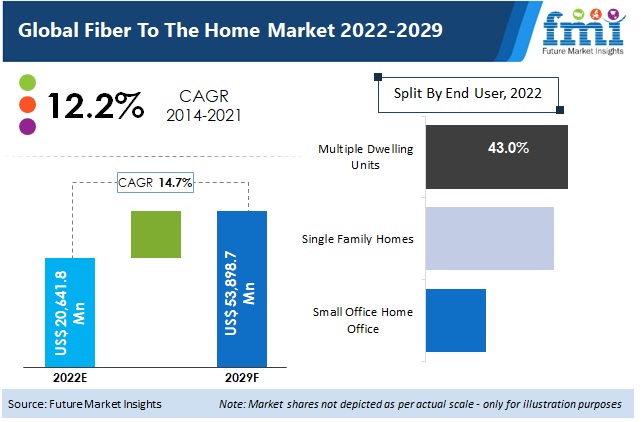
Global sale revenue of fiber to the home market stood at around US$ 17,951.6 Mn in 2021, and is slated to increase at a CAGR of 14.7% to reach a valuation of US$ 53,898.7 Mn by 2029. Fiber to the home market is nearly 15% of fiber-optic communications market.

The fiber to the home market growth will continue to accelerate due to the continuous developments in optical fiber technologies. The growth of fiber to the home market is driven by factors such as increasing broadband penetration rates, rise in internet TV, increasing need for Fiber to the x (FTTx) and growing telecommunication industry.

Request a Sample of this Report @ https://www.futuremarketinsights.com/reports/sample/rep-gb-11084

fiber to the home market

“Service providers in the global FTTH market can gain significant profits by focusing on partnerships with service providers from developing nations in the Asia Pacific excluding Japan region such as China and India. This enables all parties to establish strong supply chains and distribution channels, and improve their growth prospects.”

Key Takeaways of Fiber to the Home Market Study

  • The 50 to 100 Mbps segment is the key download speed segment, which accounted for the largest share of the fiber to the home market in 2018.
  • The smart home application segment is expected to be the most lucrative segment in the FTTH market during the forecast period, owing to the increasing number of smart homes in North America and Western Europe.
  • Among all the segments by application, the VoIP segment dominated the global fiber to the home market in terms of revenue in 2018.
  • Asia Pacific Excluding Japan is expected to hold the largest share in the fiber to the home market over the forecast period. Moreover, India is anticipated to exhibit an impressive CAGR during the forecast period.

Ask An Analyst @ https://www.futuremarketinsights.com/ask-the-analyst/rep-gb-11084

Supportive Government Initiatives for Better Internet Infrastructure to Propel FTTH Market Growth

Increasing government initiatives to promote industrialization and digitalization in developing countries offers a regional expansion opportunity for providers in the fiber to the home market. Rapid increase in data traffic in developing economies such as India, Mexico, and Brazil is another factor that is creating profitable opportunities for service providers in the FTTH market.

More Valuable Insights on Fiber to the Home Market

In its latest report, Future Market Insights offers an unbiased analysis of the global fiber to the home market, providing historical data for the period of 2014-2018 and forecast statistics for the period of 2019-2029. To understand the opportunities in the global fiber to the home market, it has been segmented on the basis of download speed (less than 50 Mbps, 50 Mbps to 100 Mbps, 100 Mbps to 1 Gbps, and more than 1 Gbps), application (Internet TV, VoIP, interactive gaming, VPN on broadband, virtual private LAN, and remote education smart home application), and end user (single family homes, multiple dwelling units, and small office home office), across seven major regions of the world.

Fiber To The Home Market Outlook by Category

By Download Speed :

  • Less than 50 Mbps
  • 50 Mbps to 100 Mbps
  • 100 Mbps to 1 Gbps
  • More than 1 Gbps

 By Application :

  • Internet TV
  • VoIP
  • Interactive Gaming
  • VPN on Broadband
  • Virtual Private LAN Service
  • Remote Education
  • Smart Home Application

By End User :

  • Single Family Homes
  • Multiple Dwelling Units
  • Small Office Home Office

By Region :

  • North America
  • Latin America
  • Western Europe
  • Eastern Europe
  • Asia Pacific excluding Japan
  • Japan
  • Middle East & Africa

Key Questions Answered in the Report

  • Which region is expected to showcase high growth in fiber to the home market?
  • What was the last 8-year market CAGR?

Buy Complete Report @ https://www.futuremarketinsights.com/checkout/11084

Contact Us:                                                            

Future Market Insights
Unit No: AU-01-H Gold Tower (AU), Plot No: JLT-PH1-I3A,
Jumeirah Lakes Towers, Dubai,
United Arab Emirates
For Sales Enquiries: sales@futuremarketinsights.com
For Media Enquiries: press@futuremarketinsights.com
Website: https://www.futuremarketinsights.com

Orthokeratology Market by Indication is projected to be valued at US$ 88.7 Million by 2028

Orthokeratology has been considered to facilitate the elimination of contact lens related vision problems, providing patients with the freedom to experience an active lifestyle.

While this factor will continue to play a pivotal role in growing adoption of Ortho-K lenses, Future Market Insights has discovered a few other factors that are likely to impact the growth of orthokeratology market in near future. In a recently released report, titled “Orthokeratology Market: Global Industry Analysis 2013-2021 and Opportunity Assessment, 2022–2028,” the performance of global market for orthokeratology is assessed for a 10-year period 2022-2028.

Increasing online efforts in patient education and awareness about Ortho-K, coupled with an intensifying rate of success of orthokeratology lenses in recent years, is expected to strengthen the prospects for global orthokeratology market, over the next decade. The market is likely to witness a promising CAGR of 7.4%; whereas, the global revenue is anticipated to reach beyond US$ 88 million by the end of 2028.

While increasing prevalence of myopia stands as a key factor impacting the market growth, several advantages of Ortho-K lenses over the conventional contact lenses have been recognized to be pushing adoption of orthokeratology among sports persons. A few restrictions arising in case of LASIK surgery will also be reportedly responsible for growing inclination for Ortho-K. On the flipside, the adoption of orthokeratology lenses among the myopic patient is less than 0.5%, which is a major factor deterring the growth of the market. In few under developing economies, patient are not able afford the high cost of ortho-k lenses and also the high fees of ophthalmologists and optometrists which will also deter the growth of market to some extent.

For more insights into the market, request a sample of this report@ https://www.futuremarketinsights.com/reports/sample/rep-gb-3142

Myopia Continues to Remain the Most Influencing Indication, Accounting for a Major Revenue Share

Myopia is expected to remain a key indication driving the demand for orthokeratology, worldwide. With over 70% share of the total market value estimated for 2028, myopia will also provide an extensive scope for innovation opportunities. Hyperopia, followed by astigmatism, will represent the next key indicative factor, which is anticipated to drive market growth over the forecast period.

Demand from Optometry Clinics Accounts for a Share that Equates More than Half of the Market Value

Among all distribution channels, optometry clinics will reportedly continue to generate the maximum demand for Ortho-K, accounting for a share of more than 50% to the total market value through 2028. Ophthalmic clinics are expected to hold a decent revenue share throughout the assessment period, whereas hospitals are likely to emerge as the most opportunistic distribution channel.

MEA Still Struggles through Low Awareness Level

North America and Europe, which represent the key regional markets, will reportedly account for a collective value share of around 60% through 2028. Asia Pacific excluding China and Japan is slated for modest growth, whereas MEA will continue to witness sluggish growth rate owing to relatively lower consumer awareness about availability and use of Ortho-K lenses.

For any queries linked with the report, ask an analyst >> https://www.futuremarketinsights.com/ask-question/rep-gb-3142

About FMI:
Future Market Insights (FMI) is a leading provider of market intelligence and consulting services, serving clients in over 150 countries. FMI is headquartered in Dubai, the global financial capital, and has delivery centers in the U.S. and India. FMI’s latest market research reports and industry analysis help businesses navigate challenges and make critical decisions with confidence and clarity amidst breakneck competition. Our customized and syndicated market research reports deliver actionable insights that drive sustainable growth. A team of expert-led analysts at FMI continuously tracks emerging trends and events in a broad range of industries to ensure that our clients prepare for the evolving needs of their consumers.

Contact Us:
Mr. Debashish Roy
Unit No: AU-01-H Gold Tower (AU), Plot No: JLT-PH1-I3A,
Jumeirah Lakes Towers, Dubai,
United Arab Emirates
MARKET ACCESS DMCC Initiative
For Sales Enquiries: sales@futuremarketinsights.com
For Media Enquiries: press@futuremarketinsights.com
Website: https://www.futuremarketinsights.com

Air Quality Monitoring Equipment Market 2022 Development Status, Competition Analysis, Type and Application 2029

The worldwide sales of air quality monitoring equipment reached US$ 4.7 Bn in 2018, and this is anticipated to exhibit a CAGR of 7% during the forecast period of 2019 to 2029. The emergence of smart air quality meters and growing partnerships between private-public institutions for air pollution monitoring are factors creating potential growth opportunities for the air quality monitoring equipment market. According to FMI’s report, factors such as rising air pollution, increasing government initiatives on reducing air pollution, and rapid industrialization in developing economies across the globe are projected to drive the growth of the air quality monitoring equipment market.

Request a report sample to gain comprehensive market insights @  https://www.futuremarketinsights.com/reports/sample/rep-gb-11083

Key Takeaways of Air Quality Monitoring Equipment Market Study

  • Continuous rise in air pollution levels in urban areas and stringent government regulations and laws towards environmental protection are expected to boost the air quality monitoring equipment market growth.
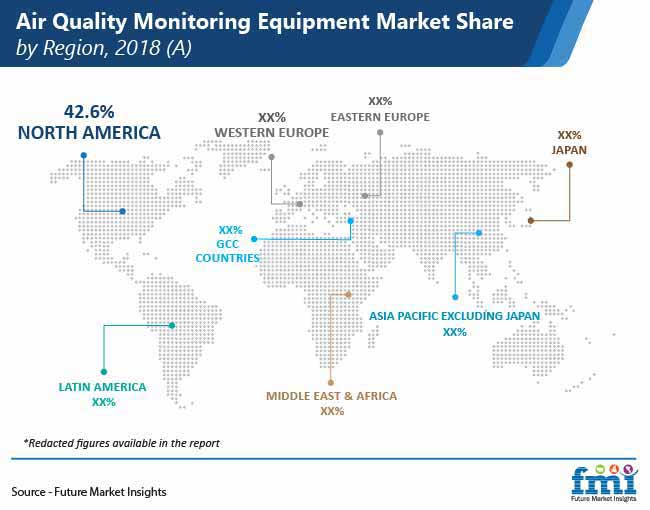
  • North America dominated the air quality monitoring equipment market in 2018 in terms of revenue, owing to the presence of early technology adopters in developed countries such as the U.S. and Canada.
  • The adoption of indoor air quality monitors is expected to gain significant traction during the forecast period, owing to the increasing demand for smart air quality monitors in smart cities across the globe.
  • Demand for air quality monitoring equipment solutions in the residential sector is expected to increase at a striking CAGR during the forecast period, owing to increasing demand for IoT-based indoor air quality monitors in pharmaceutical and petrochemical industries.
  • Lack of awareness about indoor air pollution and dearth of strict regulations for air quality monitoring in various countries are some of the factors hindering the growth of the air quality monitoring equipment market.

“Increasing harmful emissions such as carbon monoxide, nitrogen dioxide, and particulate matter (PM10 & PM25) from the industrial and manufacturing sectors, and stringent government regulations and laws to control and monitor air pollution levels will increase the demand for air quality monitoring systems in the coming years.”

Ask An Analyst @ https://www.futuremarketinsights.com/ask-the-analyst/rep-gb-11083

air quality monitoring equipment market share by region pr

Increasing Focus of Key Players on Product Innovation

Companies in the air quality monitoring equipment market are investing more towards advanced technologies like IoT and Machine Learning (ML) to develop advanced air quality monitoring equipment to minimize indoor and outdoor air pollution. Leading players are adopting business expansion, acquisition, and collaboration strategies in a bid to capture a significant share of the global market.

  • For instance, in July 2019, SKC Ltd acquired Colormetric Laboratories, Inc. (CLI) to add CLI products, longstanding sampling solutions that help maintain the health and safety of workers. The company looks forward to continuing to provide the same great CLI products with excellent customer and technical support.

Some of the key players in the air quality monitoring equipment market are SKC Ltd, TSI Incorporated, Aeroqual Limited, Thermo Fisher Scientific, Testo, Honeywell, PCE Instruments, Opsis AB, Ecotech, ENVEA group, Vaisala, LumaSense Technologies, and Oizom Instruments.

Contact Sales for Further Assistance in Purchasing this Report@ https://www.futuremarketinsights.com/checkout/11083

AIR QUALITY MONITORING EQUIPMENT MARKET TAXONOMY

The air quality monitoring equipment market is segmented in detail to cover every aspect of the market and present a complete market intelligence approach to the reader.

Component

  • Air Sampling Pumps
  • Sorbent Tubes
  • Filters & Membranes
  • Sample Bags
  • Other Accessories

Equipment Type

  • Indoor Air Quality Monitors
    • Fixed Indoor Air Quality Monitors
    • Portable Indoor Air Quality Monitors
  • Outdoor Air Quality Monitors
    • Fixed Outdoor Air Quality Monitors
    • Portable Outdoor Air Quality Monitors
    • Air Quality Monitoring (AQM) Stations

End User

  • Residential
  • Government Environment Monitoring Agencies
  • Commercial
    • Hotels & Restaurants
    • Corporates & Academic Institutions
    • Construction & Real Estate
    • Others
  • Industrial
    • Energy & Utilities
    • Pharmaceuticals
    • Petrochemicals
    • Others

Region

  • North America
  • Latin America
  • Western Europe
  • Eastern Europe
  • Asia Pacific excluding Japan
  • Japan
  • GCC Countries
  • Middle East & Africa

Contact Us:                                                            

Future Market Insights
Unit No: AU-01-H Gold Tower (AU), Plot No: JLT-PH1-I3A,
Jumeirah Lakes Towers, Dubai,
United Arab Emirates
For Sales Enquiries: sales@futuremarketinsights.com
For Media Enquiries: press@futuremarketinsights.com
Website: https://www.futuremarketinsights.com

Fire Alarm Systems Market 2022 | Scope of Current and Future Industry 2029

The commercial and residential construction sectors now have to follow strict government safety standards and regulations regarding fire alarm systems and fire safety components. Modern systems have advanced capabilities as compared to the older, basic ones, including advanced equipment for smoke/flame detection and signaling. These systems use new technologies such as cloud-based fire alarm control panels and video-based smoke/flame detectors. Commercial fire alarm systems are capable of detecting threats and generating a signal in order to alert people in the building and deliver information to the monitoring company, allowing them to deploy emergency responders.

Request a Sample of this Report @ https://www.futuremarketinsights.com/reports/sample/rep-gb-11019

The global fire alarm systems market is anticipated to experience an attractive CAGR of 6% during the forecast period of 2019 to 2029.

“Manufacturers in the fire alarm systems market can gain significant profits from focusing on the Asia Pacific market, attributable to new safety standards and regulations such as National Building Code in India and Fire Protection Law of the People’s Republic of China.”

Key Takeaways of Fire Alarm System Market Study

  • Addressable systems are estimated to continue to hold a significant market share of the global fire alarm systems market among all the segments by solution, during the forecast period of 2019-2029.
  • Designing & installation services are estimated to continue to hold the largest market share of the global fire alarm systems market among all the segments by professional service, during the forecast period.
  • Among all the applications, the industrial sector is estimated to register the highest CAGR in the global fire alarm systems market.

Ask An Analyst @ https://www.futuremarketinsights.com/ask-the-analyst/rep-gb-11019

Fire Alarm Systems Market – How Growth will Unfold

Both, conventional and addressable fire alarm systems continue to stay at the top against other solutions such as professional services and managed services. Among them, addressable fire alarm systems are likely to see substantial adoption, owing to better efficiency in terms of time and cost over conventional versions.

As both system types hold around 4/5 of total market revenue, players in the fire alarm systems market are highly focused on these solutions. This study further reveals that, addressable fire alarm systems market will register revenue nearly thrice that of their conventional counterparts by the end of 2029.

fire alarm systems market share by region

Increasing Demand for Fire Alarm Systems in Construction Industry

The industrial sector requires secure facilities that integrate industrial process systems and equipment designed to produce end products such as vehicles, textiles, chemicals or processed metals, and electricity. Rising demand for secure infrastructure is expected to lead to increasing installation of fire alarm systems.

  • In September 2019, Bosch Limited launched AVIOTEC IP starlight 8000, a video-based fire detection solution that can be used in tunnels, to ensure reliable and early detection of smoke and flames.

More Valuable Insights on Fire Alarm Systems Market

Future Market Insights offers an unbiased analysis of the global fire alarm systems market, providing historical data for 2014-2018 and forecast statistics for 2019-2029. To understand opportunities in the fire alarm system market, the market is segmented on the basis of solution (type of system and services) and application (commercial, industrial, and residential), across seven major regions.

FIRE ALARM SYSTEMS MARKET TAXONOMY

The global fire alarm systems market is segmented in detail to cover every aspect of the market and present a complete market intelligence approach to readers.

Solution

  • Type of System
    • Conventional Systems
    • Addressable Systems
  • Services
    • Professional Services
      • Consulting
      • Designing & Installation
    • Managed Services

Application

  • Commercial
  • Industrial
  • Residential

Region

  • North America
  • Latin America
  • Western Europe
  • Eastern Europe
  • Asia Pacific Excluding Japan
  • Japan
  • Middle East & Africa

Buy Complete Report @ https://www.futuremarketinsights.com/checkout/11019

Contact Tracing Applications Market Set to Grow at 15% CAGR through 2030

Contact tracing applications are being used to leverage the widespread global penetration of smartphone devices in controlling infectious disease outbreaks. According to Future Market Insights’ latest research, the market is set to grow at 15% CAGR through 2030.

Also, Future Market Insights has projected substantial scope of increasing applications in disease control even after the conclusion of the ongoing covid-19 pandemic.

The coronavirus outbreak which emerged out of China in late 2019, has been the primary driver for the development, deployment, and adoption of contact tracing applications.

Favorable government initiatives towards social distancing and patient tracking has also positively influenced the industry. Innovations in terms of GPS, Bluetooth and ultrasonic technologies is improving growth prospects for the industry.

Request a sample to obtain authentic analysis and comprehensive market insights at- https://www.futuremarketinsights.com/reports/sample/rep-gb-12512

App developers are pushing for the development of decentralized data collection approaches via device-based databases to keep up with strong demand for data privacy standards.

Contact tracing applications initially found use during the Ebola outbreak in the Congo. The application was developed by Global Outbreak Alert and Response Network in collaboration with WHO.

The industry has witnessed an upsurge in the development of contact tracing applications after the advent of the coronavirus pandemic in China, owing to greater financially feasibility in the scope of adoption during the crisis period.

Growing efforts by public health agencies towards community engagement will positively influence the industry. Contact tracing applications can either be run on centralized or decentralized platforms, for smartphones using iOS or Android operating systems. These programs make use of Bluetooth or GPS technologies to track potential patients, and their proximity to other users. However, developers are still challenged by issues of misinformation, cybersecurity and data privacy.

“Functional advantages of contact tracing applications include superior data quality, easier tracking and monitoring of larger numbers of people in a time effective manner, the ability of real time analysis, and the significant improvements to management and coordination of manual contact tracing teams,” said a lead analyst at FMI.

Discover more about report analysis with figures and data tables, along with the table of contents. Ask an Analyst- https://www.futuremarketinsights.com/ask-question/rep-gb-12512

Key Highlights

  • The market for contact tracing applications is projected to display exponential growth through the forecast period on the back of the ongoing coronavirus crisis
  • Decentralized, Bluetooth based applications are likely to gain strong traction as a result of data privacy concerns
  • Android platforms are likely to contribute significantly to adoption owing through higher penetration of associated smartphone models
  • Europe is expected to be a prominent market, with East Asia showing lucrative growth prospects on the back of mandatory use in China.

Covid-19 Impact on Contact Tracing Applications Market

Although contact tracing processes can be implemented for covid-19 control by public health authorities without the use of contact tracing applications, these programs have proven useful in large scale operations, set up by governments in many countries around the world.

Countries such as Ireland and South Korea have been able to use contact tracing applications to gain promising results towards breaking chains of coronavirus patients, limiting the risks of community transmission.

Demand for these applications has been limited to countries with high rates of smartphone penetration. In addition, ethical problems in terms of transparency, privacy, and accountability have restrained adoption during this period. Also, developer costs for user support, training, software, and hardware are limiting factors.

However, prospects for contact tracing applications remain positive for the post-pandemic era, owing to potential for use in controlling other infectious disease outbreaks worldwide, albeit at a smaller scale.

Contact Sales for Further Assistance in Purchasing this Report- https://www.futuremarketinsights.com/checkout/12512

Who is Winning?

In its report, FMI has analyzed the various strategies employed by major companies operating in the contact tracing applications market. Market leaders have been observed focusing on strategic collaborations within the industry towards application development efforts for multiplatform compatibility features. In addition, developers are also pushing for contracts to push their offerings through government channels to expand regional footprint and user base.

Some of the participants operating in the contact tracing applications market include IBM Corporation, Oracle Corporation, Microsoft Corporation, Apple Inc., T-Systems, SAP SE, Salesforce.com Inc., Siemens AG, and ServiceNow.

Contact Us:                                                      

Future Market Insights
Unit No: AU-01-H Gold Tower (AU), Plot No: JLT-PH1-I3A,
Jumeirah Lakes Towers, Dubai,
United Arab Emirates
For Sales Enquiries: sales@futuremarketinsights.com
For Media Enquiries: press@futuremarketinsights.com
Website: https://www.futuremarketinsights.com

Gold Plating Chemicals Market to grow at 4.5% CAGR through 2030

Driven by the surging industrial uses, the gold plating chemicals market is forecast to grow at 4.5% CAGR through 2030. Future Market Insights (FMI), in its recent study, has identified the expanding applications in electronics as a chief market driver.

As key players in the sector aim at innovation and commercializing their product portfolio, the scope for application of gold plating chemicals is expected to get better. Besides this, steady demand from jewelry sector will enable the market stay afloat despite threats posed by pocket-friendly alternatives.

In its report, FMI has projected the gold plating chemicals market to surge at 4.5% CAGR between 2020 and 2030. Notwithstanding this, contraction of growth rate is imminent, even if it is for a temporary phase, during the global pandemic crisis.

Request a sample to obtain authentic analysis and comprehensive market insights at- https://www.futuremarketinsights.com/reports/sample/rep-gb-12423

Supply chain disruptions caused due to the unprecedented COVID-19 outbreak will restrict growth of the market for the most part of 2020. However, recovery is on the cards once economies resume in full swing. 2021 will most likely be the year when the market will commence regaining momentum after a period of slump during pandemic.

FMI’s report on the gold plating chemicals market offers a holistic overview and is intended to help stakeholders gauge investment feasibility across key segments. Some of the key takeaways from the report are:

  • The gold plating chemicals market is set to surpass US$ 406 Mn by the end of 2020. Between 2020 and 2030, the market is expected to remain steady backed by increasing applications across diverse sectors
  • Demand from electronics sector will be key to growth
  • High potential markets across East Asia and South Asia & Pacific will be of immense potential
  • Automotive gold plating will emerge as a lucrative application segment

Discover more about report analysis with figures and data tables, along with the table of contents. Ask an Analyst- https://www.futuremarketinsights.com/ask-question/rep-gb-12423

“Automobile OEMs are expected to demonstrate high demand for gold plating because of its long-lasting protective properties. Gold plating will also discover huge scope for application in chips used in vehicles,” said a lead analyst at FMI.”

Demand from Electronics Industry Spurring Growth

The electronics industry has significantly surged in the last few years. Encouraged by strong growth it exhibited across the world, gold plating chemicals suppliers are expecting strong demand from the electronics industry.

Application of gold plating chemicals in a variety of products from microelectronic components to aerospace machine parts such as solar photovoltaic cells has been enabling growth in the market.

While demand from the electronics industry may hit a snag in 2020, FMI projects it to recover from the first quarter of 2021. Innovations witnessed drive growth in the sector will augur well for the gold plating chemicals market.

Contact Sales for Further Assistance in Purchasing this Report- https://www.futuremarketinsights.com/checkout/12423

Who is winning?

The market for gold plating chemicals is a highly fragmented, however, tier 1 companies enjoy a higher representation in terms of share. Most companies operating in the market are likely to focus on research and development activities to gain competitive edge.

While expansion strategies are a mainstay among market players, some of them have postponed their plans following the unprecedented COVID-19 outbreak. There is also immense focus on leveraging alternative distribution channels to strengthen their presence amid the tumultuous times.

Some of the leading companies operating in the market are Johnson Matthey Plc, Technic Inc., Umicore, Legor Group Spa, Matsuda Sangyo Co., Ltd., METALOR, American Elements, Hiemerle + Meule GmbH.

Contact Us:                                                      

Future Market Insights
Unit No: AU-01-H Gold Tower (AU), Plot No: JLT-PH1-I3A,
Jumeirah Lakes Towers, Dubai,
United Arab Emirates
For Sales Enquiries: sales@futuremarketinsights.com
For Media Enquiries: press@futuremarketinsights.com
Website: https://www.futuremarketinsights.com

Advanced Distribution Management Systems Market 2022 Outlook, Current and Future Industry Landscape Analysis 2029

The global advanced distribution management systems market is expected to witness a CAGR of 19% over the forecast period (2019-2029).

Advanced distribution management systems have significantly benefitted users looking for efficient data security, higher reliability, improved power distribution, and flexibility in restoring normal functions after a natural disaster. These systems provide situational intelligence that ensures efficient and reliable smart grid analysis and management during a rapidly changing network. The adoption of advanced distribution management systems is increasing in smart cities, as these systems manage, control, optimize, visualize, and automate distribution networks.

To remain ‘ahead’ of your competitors, request for a sample @ https://www.futuremarketinsights.com/reports/sample/REP-GB-10975

Key Takeaways of Advanced Distribution Management Systems Market Study

  • The energy & utilities industry is estimated to continue to hold significant market share among all segments by industry during the forecast period, owing to optimized energy distribution, reduction in electricity losses, and minimal electricity shortages.
  • Among all the applications, fault location and isolation & service restoration is estimated to register notable CAGR, as FLISR reroutes power to reduce power supply faults, power shortages, and other disturbances.
  • Asia Pacific excluding Japan is witnessing an impressive growth rate in the global advanced distribution management systems market, as governments in countries such as China, South Korea, and India are trying to balance the demand and supply of power to ensure efficiency and cost effectiveness.

Urbanization, Industrialization, and Increasing Rate of Electrification Driving Market Growth

The world is witnessing an increase in transmission, generation, and distribution of energy. With growth in the energy sector, the demand for electricity is increasing at a rapid pace. In 2018, the global demand for electricity increased by 4% to more than 23,000 TWh. Also, rising urbanization on a global scale is increasing the rate of electrification at houses, commercial places, and end-use sectors, which is further boosting the demand for advanced distribution management systems. Furthermore, rapid industrialization in various developed and emerging economies is generating demand for electricity as a primary source for modern development.

Apart from this, strong economic growth in emerging countries such as India and China, combined with rapid urbanization and growth in investments in these countries, are factors propelling market growth. The Government of India has invested US$ 44.9 Bn in smart grid infrastructure, which is bolstering the demand for smart grid technology and thus, fueling the growth of the advanced distribution management systems market.

Ask An Analyst @ https://www.futuremarketinsights.com/ask-the-analyst/rep-gb-10975

More Valuable Insights on Advanced Distribution Management Systems Market

FMI’s report on the advanced distribution management systems market is segmented into four major sections – solution (ADMS platforms and services), application (supervisory control & data acquisition, distribution management systems, outage management systems, and distributed energy resource management systems, geospatial information systems, and fault location and isolation & service restoration), and industry (transportation & logistics, energy & utilities, oil & gas, manufacturing, and others), across seven regions, to help readers understand and evaluate lucrative opportunities in the advanced distribution management systems market.

For critical insights, request for PDF Brochure – https://www.futuremarketinsights.com/reports/brochure/rep-gb-10975

Why Future Market Insights?

• Comprehensive analysis on evolving purchase pattern across different geographies
• Detailed insights of market segments and sub-segments for historical as well as forecast period
• A competitive analysis of prominent players and emerging players in the keyword market
• Detailed information about the product innovation, mergers and acquisitions lined up in upcoming years

Ground breaking research and market player-centric solutions for the upcoming decade according to the present market scenario

FREQUENTLY ASKED QUESTIONS ABOUT ADVANCED DISTRIBUTION MANAGEMENT SYSTEMS MARKET

What are the future opportunities in the advanced distribution management systems market?

Rapid development in infrastructure and adoption of advanced distribution management systems in smart devices are anticipated to create opportunities for players in the advanced distribution management systems market.

What are the major challenges for the advanced distribution management systems market?

Aging infrastructure, interoperability issues, and inadequate standard interface in advanced distribution management systems are restricting the growth of the global advanced distribution management systems market.

Which industry will have significant revenue growth in the next five years?

The energy and utilities industry is the largest customer of advanced distribution management systems, as the industry is focusing on balancing the demand and supply of energy in order to ensure cost effectiveness and efficiency.

Which application area holds potential growth opportunities for market players?

The fault location, isolation and service restoration application holds potential growth opportunities, as FLISR reroutes power to reduce power supply faults, power outage, and other disturbances. It automatically isolates the fault zone and restores services to remaining customers by transferring them to adjacent circuits.

Which region is expected to be at the forefront in the global advanced distribution management systems market?

Asia Pacific excluding Japan is anticipated to remain at the forefront, offering high growth opportunities for players in the advanced distribution management systems market. Due to rapid industrialization in the developing countries of the region, energy demand has significantly increased, which is boosting market growth.

Who are the major companies leading the advanced distribution management systems market?

Prominent companies in the advanced distribution management systems market include Schneider Electric, ABB Group, Siemens AG, Oracle Corporation, GE Digital, Survalent Technologies, Etap, and Open Systems International.

Buy Complete Report @ https://www.futuremarketinsights.com/checkout/10975

Contact Us:                                                            

Future Market Insights
Unit No: AU-01-H Gold Tower (AU), Plot No: JLT-PH1-I3A,
Jumeirah Lakes Towers, Dubai,
United Arab Emirates
For Sales Enquiries: sales@futuremarketinsights.com
For Media Enquiries: press@futuremarketinsights.com
Website: https://www.futuremarketinsights.com

Positive Displacement Pumps Sales Set to Account for 22% of Oil and Gas Industry Application: Future Market Insights

Global positive displacement pump market is set to be valued at over US$ 2.6 Bn in 2021, with a stable long-term projection, according to latest insights by Future Market Insights (FMI). The report forecasts the market to expand at around 4% CAGR between 2021 and 2031. Growing need in the oil and gas and water distribution sectors has led to increasing demand for positive displacement pumps.

Applications in the power generation and chemical sectors have played important roles in the last five years between 2016 and 2020. FMI predicts a healthy growth rate for the oil and gas industry in economies such as China, India, the Middle East and Africa.

Get | Download Sample Copy with Graphs & List of Figures: https://www.futuremarketinsights.com/reports/sample/rep-gb-522

Positive displacement pumps are important equipment used for ensuring accurate and repeatable transportation and pumping operations. Market leaders are investing in refineries for oil-based products to increase their regional presence and market share.

Positive displacement pumps have seen a significant rise in demand over the last few years. To meet the increased demand, manufacturers are planning to build new manufacturing units or expand existing infrastructure.

Demand for positive displacement pump waned in 2020 due to the COVID-19 pandemic. However, the water and wastewater segment of the industry sowed less due to the latest guidelines issued by World Health Organization (WHO) which bodes well for the sales of these equipment in future. Despite the risk of a stimulus in many countries, the market’s long-term outlook is optimistic.

Key Takeaways from Positive Displacement Pumps Market Study

  • Reciprocating positive displacement pumps are expected to hold close to 69% of the overall market, driven by cost benefits.
  • Oil and gas applications are projected to account for over two-fifths of the overall market share owing to extensive applications in associated refinery facilities.
  • The market in the Germany is projected to expand at a CAGR of around 5%, supported by increasing investments in infrastructure for oil & gas imports.
  • Sales of positive displacement pumps in the U.S. will account for over 65% of the North America market by the end of 2031.
  • The emerging markets such as Spain will exhibit steady growth at 5.3% CAGR over the next ten years.

“The surge in demand from the global oil & gas industry for positive displacement pumps in recent years is expected to support market growth, especially in emerging economies such as India and China. Against this backdrop, the market players are likely to increase their investment towards expansion in the developing countries,” says a Future Market Insights analyst.

Request a Complete TOC of this Report with figures: https://www.futuremarketinsights.com/toc/rep-gb-522

Positive Displacement Pump Market by Category

By Product Type:

  • Reciprocating Pump
    • Low Capacity
    • Medium Capacity
    • High Capacity
  • Rotary Pump
    • Low Capacity
    • Medium Capacity
    • High Capacity

By Application Type:

  • Oil & Gas
  • Chemical
  • Water & Wastewater
  • Pulp & Paper
  • Power
  • Others

By Region:

  • North America
  • Latin America
  • Europe
  • East Asia
  • South Asia & Pacific
  • Middle East and Africa (MEA)

Competitive Landscape

The market is highly consolidated, with key players accounting for more than four-fifth of the market share. These players are likely to invest in new technology developments and expansion of their networks in order to maintain their market shares.

Some of the key players in this industry include but are not limited to

  • Grundfos,
  • Ebara Corp.,
  • Flowserve Corporation,
  • WILO SE,
  • Xylem Inc.,
  • The Weir Group Plc,
  • Ruhrpumpen Group,
  • Sulzer AG,
  • Dover Corp., and
  • KSB Group.

Find More Valuable Insights

The research report analyzes demand for positive displacement pump. The global positive displacement pump market has been analyzed with the COVID-19 impact, various macroeconomic factors, market trends & market background. As per Future Market Insights’ research scope, the market has been analyzed on the basis of product type, application, and region. The report provides qualitative and quantitative information on various players in this market. This report also tracks the market by both, supply side and demand side.

For More Information or Query or Customization Before Buying, Visit: https://www.futuremarketinsights.com/customization-available/rep-gb-522

About Industrial Automation Division at Future Market Insights

The Industrial Automation & Equipment division at FMI adopts a novel approach and innovative perspective in analyzing the global machinery and industrial automation market. A range of FMI’s market research reports offer comprehensive coverage of capital, portable, process, construction, industrial, and special purpose machinery used across manufacturing sector. The team also conducts distinctive analysis about installed base, consumables, replacement, and USP-feature application matrix, making us a prominent voice of authority in the industry. We are associates of choice for established as well as budding industry
Aircraft Refurbishing Market 2021 Outlook, Current and Future Industry Landscape Analysis 2031 : FMI

As per Future Market Insights analysis, the aircraft refurbishing market is projected to be valued at US$ 4.2 Bn in 2021. Increasing airline fleet across the globe and the rise in demand for better comfort are expected to boost the aircraft refurbishing market between 2021 and 2031.

The market is projected to expand at a CAGR of 5.8% between 2021 and 2031. With the onset of the novel COVID-19, sales prospects in aviation industry dampened due to restrictions imposed on international and domestic travel around the globe.

Closure of airports adversely impacted the aviation industry, in turn causing disruptions in the aircraft refurbishing market. However, recovery is on card post resumptions of economic activities. Demand in the market is growing as the aviation sector gradually returns to normalcy.

With increasing demand for VIP cabin refurbishing due to rise in air traffic in first class will boost the demand for aircraft refurbishing market. On the back of this aforementioned factors, sales of aircraft refurbishing market are expected to reach US$ 7.4 Bn by 2031-end.

Aircraft Refurbishing Market 2021-2031 Outlook Compared to 2016-2020The aircraft refurbishing market is estimated to grow at 5.8% CAGR between 2021 and 2031. Advent of new technologies for interior refurbishing in existing aircrafts to make them more comfortable for passengers is aiding the growth of the market.

Many airlines are choosing refurbishing of interiors with improved technologies to cater to the increasing demand for better comfort and luxury in air travel. Increasing production of narrow body and wide body aircraft fleet by commercial airlines due to increasing air passenger traffic is also fueling demand in the aircraft refurbishing market.

Many airlines are focusing on providing better comfort and amenities on short-haul flights to boost the reputation of airlines. This is increasing the demand for refurbishing of aircraft interiors by commercial airlines.

Demand for VIP refurbishing is increasing in developing economies such as India, Middle East countries, and China.On the back of these factors, sales in the aircraft refurbishing market will increase by 1.8x, reaching a valuation of US$ 4.2 Bn in 2021.

aircraft refurbishing market characteristics and attributes with regional relevence 2021 2031\

Request Complete TOC Of this Report @ https://www.futuremarketinsights.com/toc/rep-gb-1617

Key Takeaways of Aircraft Refurbishing Market Study

  • The demand for retrofit aircraft refurbishing fitting type will grow at a CAGR of 5.7% over the assessment period
  • Narrow body aircraft segment is expected to account for the leading share in the aircraft type segment. Demand in this category will increase at a CAGR of 5.2% through 2021 and beyond
  • Demand for aircraft refurbishing in ASEAN will grow by and China is set to surge at 7.6% CAGR between 2021 and 2031
  • China aircraft refurbishing market will register growth at 7.1% CAGR over the next ten years

Competitive LandscapeThe aircraft refurbishing market is highly consolidated, in which the leading players account for more than half of the market share. Some of the key players in the market are Diehl Shiftung & Co. KG, Gulfstream Aerospace Ltd., Jamco, Hong Kong Aircraft Engineering Co. Ltd, Jet Aviation AG, Lufthansa Technik AG, Raytheon Technologies, Safran SA and others.

These players have higher shares in the global market, and have longstanding relationships with a number of distributors, giving them an upper hand among their peers.

Find More Valuable InsightsThe research report analyzes demand for aircraft refurbishing. The global aircraft refurbishing market has been analyzed with the COVID-19 impact, various macroeconomic factors, market trends & market background. As per Future Market Insights’ research scope, the market has been analyzed on the basis of fitting type, aircraft type, refurbishing type and region. The report provides qualitative and quantitative information on various players in this market. This report also tracks the market by both, supply side and demand side.

Aircraft Refurbishing Market by CategoryBy Fitting Type: 

  • Retrofit
  • IFES & Lighting
  • Passenger Seats

By Aircraft Type:

  • Large Body Aircraft
  • Wide Body Aircraft
  • Narrow Body Aircraft

By Refurbishing Type:

  • VIP Cabin Refurbishing
  • Commercial Cabin Refurbishing

By Region:

  • North America
  • Latin America
  • Europe
  • East Asia
  • South Asia & Pacific
  • Middle East and Africa (MEA)