Ultra Violet (UV) Lamps Market Research Report 2022 – Global Forecast till 2025

Future Market Insights (FMI) delivers key insights on the global UV lamps market in its latest report titled “UV Lamps Market: Global Industry Analysis and Opportunity Assessment, 2015–2025”. Global UV lamps market revenue is projected to expand at a CAGR of 11.3% during the forecast period due to various factors, regarding which FMI offers vital insights in detail in its report.

On the basis of lamp type, the market has been segmented into UV LED and UV mercury lamp, with the latter representing nearly 90% revenue share of the global UV lamp market in 2014; FMI expects this segment to witness a decline of 27 BPS by the end of 2025.

Request a Sample of this Report @ https://www.futuremarketinsights.com/reports/sample/rep-gb-1065

UV mercury lamp segment is categorised into low-pressure, medium- pressure and amalgam mercury lamp. Among these, amalgam mercury lamp dominated the UV mercury lamp segment market, accounting for over 40% of the UV mercury lamp market in 2014.

On the basis of end-use application, the UV lamps market is segmented into wastewater treatment, water treatment, air treatment, surface treatment and food and beverages disinfection. Revenue contribution by the food and beverages disinfection segment was over 25.1% in 2014, which is projected to increase to 28.2% by the end of 2025, gaining 309 BPS and expanding at a CAGR of 12.5% during the forecast period.

Water treatment segment is categorised into industrial process water treatment, water treatment, commercial water treatment, residential water treatment, municipal pool and spa, and others. Municipal water treatment sub-segment accounted for the highest revenues in 2014, and this trend is expected to continue through 2025.

Air treatment is further sub-segmented into residential and commercial, healthcare facilities, and others. Among these, residential and commercial sub-segments accounted for bulk of the revenues in 2014; FMI estimates this segment to retain its dominance throughout the forecast period.

Increasing Municipal Infrastructure Investment Driving Adoption of UV Lamps

Growth of the global UV lamps market is mainly driven by increasing municipal infrastructure investment, safety measures through regulations, increasing industrial development and price performance of UV lamps compared to other conventional treatment methods.

Ask An Analyst @ https://www.futuremarketinsights.com/ask-the-analyst/rep-gb-1065

Asia Pacific Excluding Japan (APEJ)was dominant in the global UV lamps market with over 30% market share in 2014, followed by North America with 24.2% market share. APEJ is projected to remain the largest market for UV lamps over the forecast period, driven by increasing municipal infrastructure investment, industrial development and cost-effective solutions offered by UV lamps when compared to the other conventional treatment methods used in the region.

Some key players identified in the global UV lamps market are Trojan Technologies Inc., Xenex Disinfection Services LLC, Xylem Inc., OSRAM GmbH, Koninklijke Philips N.V., Heraeus Holding Gmbh, Calgon Carbon Corporation, Halma PLC, Severn Trent PLC, and Atlantic Ultraviolet Corporation.

Major UV lamp manufacturers in the market are currently focusing on strengthening their partnerships with major UV disinfection equipment manufacturers. In addition, UV disinfection equipment manufacturers are focusing on providing a broad and customised range of UV solutions to cater to the varying and increasing customer demands.

Key Regions

The global UV lamps market has been sub-segmented into seven major regions which include North America, Western Europe, Asia Pacific Excluding Japan (APEJ), Japan, Eastern Europe, Latin America and Middle East & Africa. APEJ dominated the market with over 30% of the overall UV lamp market share in 2014, while Eastern Europe followed with over 20% market share. In addition, APEJ is anticipated to be the fastest growing region in the UV lamp market in terms of revenue contribution.

Key Segments Covered

  • UV Lamps Market
    • Lamp Type
      • UV Mercury Lamp
        • Low-pressure Mercury Lamp
        • Medium-pressure Mercury Lamp
        • Amalgam Mercury Lamp
      • UV LED
    • End-use Application
      • Wastewater Treatment
      • Water Treatment
      • Air treatment
      • Surface Treatment
      • Food and Beverages

Key Regions covered:

  • North America
  • Latin America
  • Western Europe
  • Eastern Europe
  • APEJ
  • Japan
  • MEA

Buy Complete Report @ https://www.futuremarketinsights.com/checkout/1065

Contact Us:                                                            

Future Market Insights
Unit No: AU-01-H Gold Tower (AU), Plot No: JLT-PH1-I3A,
Jumeirah Lakes Towers, Dubai,
United Arab Emirates
For Sales Enquiries: sales@futuremarketinsights.com
For Media Enquiries: press@futuremarketinsights.com
Website: https://www.futuremarketinsights.com
Telecom Tower Power System Market 2022 | Present Scenario and Growth Prospects 2031

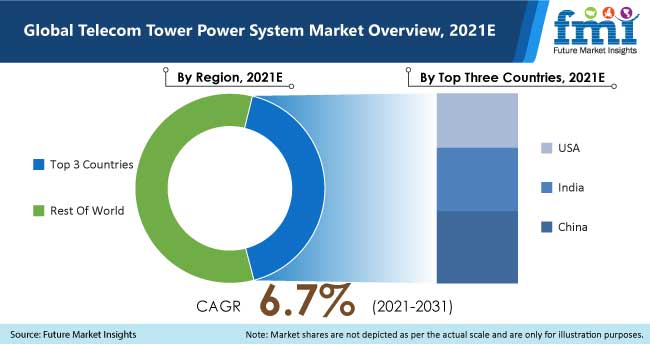
Global sales of telecom tower power systems are set to be valued at over US$ 3.5 Bn in 2021, with a stable long-term projection, according to latest insights by Future Market Insights (FMI). A new report estimates the market to expand at over 6.7% CAGR from 2021 to 2031.

According to Future Market Insights, expansion of telecom infrastructure facilities to cover rural and other remote areas has led to stronger demand for telecom tower power systems. Rapid technological advancements in production technologies are also projected to complement market growth in the near future.

In spite of the recessionary effect of the COVID-19 pandemic in 2020, the telecommunication industry in terms of essential service sector has remained unaffected. With the continual demand for high energy efficient solutions, growth of telecom tower power systems is expected to reflect an upward trajectory for the foreseeable future.

Request a Sample of this Report @ https://www.futuremarketinsights.com/reports/sample/rep-gb-444

Demand for telecom tower power systems is increasing with the rise in the volume of telecom tower networks in recent years. This can be attributed to an increase in investments and expansion of new telecom infrastructure projects in developing nations.

The growing requirement of mass production has resulted in increased importance of process automation. The market is shifting towards Industry 4.0 norms, leading to the promotion and universal adoption of new production technologies.

global telecom tower power system market overview, 2021e

Increasing number of players focusing on research and development related to telecom tower power systems is anticipated to contribute towards market growth in the years to come.

Key Takeaways from Telecom Tower Power System Market Study

  • Outdoor telecom tower power systems are projected to hold over 54% of the global market share in 2021, supported by the availability of superior configurations.
  • The diesel generator + battery segment is set to hold over 41% of the market share as a power source by 2031-end, supported by investments into renewable energy systems.
  • The U.S. will remain a primary market, backed by rising demand from the energy sector. It is expected to account for over 86% of the demand registered in North America in 2021.
  • The markets in India and China are set to surge at CAGR of approximately 8% and 7% over the coming decade.
  • Russia is emerging as a key market in Europe, with a valuation of over US$ 154.5 Mn in 2021, driven by presence of massive telecom infrastructure network.

“The telecom tower power system market is growing at a strong pace driven largely by increasing demand for energy efficient power systems. Increasing investments in the telecommunication industry for the expansion of telecom infrastructure projects will create extensive opportunities for telecom tower power system manufacturers. Industry participants are investing in expansions, strategic alliances, and energy efficient solutions to gain a competitive advantage,” says a Future Market Insights analyst.

Who is Winning?

The telecom tower power system market is moderately consolidated, with key players accounting for more than 55% of the market share. These players are likely to invest in new technology developments and expansion of their distribution networks in order to maintain their market presence.

Some of the key players in this industry include but are not limited to Delta Electronics Inc., Cummins Inc., Huawei Technologies Co., Ltd, Eaton Corporation PLC, Vertiv Group Corporation, STMicroelectronics NV, ZTE Corporation, and ABB Ltd.

Ask An Analyst @ https://www.futuremarketinsights.com/ask-the-analyst/rep-gb-444

Telecom Tower Power System Market by CategoryBy Product Type:

  • Outdoor Telecom Power System
  • Indoor Telecom Power System

By Power Source:

  • Diesel Generator
  • Diesel Generator + Battery
  • Renewable Energy
    • Solar
    • Wind Turbine
    • Biomass

By Region:

  • North America
  • Latin America
  • Europe
  • East Asia
  • South Asia & Pacific
  • Middle East and Africa (MEA)

Key Questions Answered in the Report

  • What is the current valuation of the telecom tower power system market?
  • At what rate will the Japan telecom tower power system market grow?

Buy Complete Report @ https://www.futuremarketinsights.com/checkout/444

Contact Us:                                                                            

Future Market Insights
Unit No: AU-01-H Gold Tower (AU), Plot No: JLT-PH1-I3A,
Jumeirah Lakes Towers, Dubai,
United Arab Emirates
For Sales Enquiries: sales@futuremarketinsights.com
For Media Enquiries: press@futuremarketinsights.com
Website: https://www.futuremarketinsights.com
Below 30 Hp Centrifugal Water Pump Market Development Status, Competition Analysis, Type and Application.

Future Market Insights (FMI) delivers key insights on the Egypt below 30Hp centrifugal water pump market in its upcoming market forecast and outlook titled, “Below 30 Hp Centrifugal Water Pump Market: Egypt Industry Analysis and Opportunity Assessment 2015 – 2020”. The Egypt below 30 Hp centrifugal water pump market is projected to register a steady CAGR of 5.1% in terms of revenue during the forecast period due to various factors, regarding which FMI offers vital insights in detail.

Request a Sample of this Report @ https://www.futuremarketinsights.com/reports/sample/rep-eg-704

FMI analyses the Egypt below 30Hp centrifugal water pump market in terms of market value (US$ Mn) and volume (units), by applications, pump type and pump capacity, and provides insightful information regarding market dynamics, value chain, competitive landscape, current trends, market estimations and forecast until 2020.

Below 30Hp centrifugal water pumps are the most used types of pumps in the world due to robust and effective nature. Below 30 Hp centrifugal water pumps find application in various large and small scale industries such as chemicals, construction, waste water treatment and agriculture. On the basis of application type, the market has been segmented into industrial, agriculture and domestic use. The domestic application segment accounted for around 40% revenue share of the overall Egypt below 30Hp centrifugal water pump market in 2014, and is expected to register a CAGR of 4.8% over the forecast period. Agriculture application is estimated to grow at the fastest CAGR during the forecast period. Every application segment is further sub-segmented into monobloc, mini pump and submersible pump. Submersible pumps are widely preferred for all the above mentioned applications; however, monobloc pumps is expected to register a high CAGR over the forecast period. Submersible centrifugal water pumps are widely preferred in Egypt, and account for over 50% share of the Egypt below 30Hp centrifugal water pumps market.

This report covers trends driving growth of each segment and respective sub-segments and offers pricing analysis and insights for each pump type and their respective capacities. From the capacity perspective, segmentation is done on the basis of horsepower for all three types of pumps. A detailed pricing analysis is done for the same. The 25 to 30 Hp pump in the monobloc and submersible pump category are more preferred, while the 1 to 2 Hp capacity pumps account for over 50% share in the mini centrifugal water pump category.

Ask An Analyst @ https://www.futuremarketinsights.com/ask-the-analyst/rep-eg-704

Increasing investment in housing construction, infrastructure development, expansion of water supply network and increase in agriculture initiatives are some of the macro-economic drivers for the Egypt below 30Hp centrifugal water pump market. Political instability and price volatility are some of the factors restricting growth of the Egypt below 30Hp centrifugal water pump market. Prices of China-made centrifugal water pumps are relatively lower and this is one of the major concerns for global and regional players operating in this market. Adoption of photovoltaic powered centrifugal water pumps and solar powered centrifugal water pumps is trending in the Egypt below 30Hp centrifugal water pumps market.

Key players in the Egypt below 30Hp centrifugal water pump market include Grundfos, KSB Pumps, Xylem Inc., Wilo, Flowserve Corporation, Calpeda and Omega Engineering Egypt. Egypt centrifugal water pump market is largely dominated by regional and local players, and these collectively account for around 70% share of the total centrifugal water pump market. Grundfos accounts for largest share among all others, followed by KSB Egypt and Wilo.

Key Segments Covered

  • Industrial
    • Mini Pumps  (0.5-30 HP)
    • Monobloc Pumps (0.5-30 HP)
    • Submersible Pumps (0.5-30 HP)
  • Agriculture
    • Mini Pumps (0.5-30 HP)
    • Monobloc Pumps (0.5-30 HP)
    • Submersible Pumps (0.5-30 HP)
  • Domestic
    • Mini Pumps (0.5-30 HP)
    • Monobloc Pumps (0.5-30 HP)
    • Submersible Pumps (0.5-30 HP)

Buy Complete Report @ https://www.futuremarketinsights.com/checkout/704

Contact Us:                                                            

Future Market Insights
Unit No: AU-01-H Gold Tower (AU), Plot No: JLT-PH1-I3A,
Jumeirah Lakes Towers, Dubai,
United Arab Emirates
For Sales Enquiries: sales@futuremarketinsights.com
For Media Enquiries: press@futuremarketinsights.com
Website: https://www.futuremarketinsights.com
U.S.Plastic-to-fuel Market Competitive Growth Strategies Based on Type, Applications, End User.

The U.S. Plastic-to-fuel market is driven by number of factors such as increasing use of plastic, leading to easy availability of feedstock. As estimated by the U.S. Environmental Protection Agency (EPA), plastics accounted for approximately 12.7% of the total Municipal Solid Waste (MSW) generation in the U.S. in 2012.

Future Market Insights (FMI) announces the release of its latest report titled, “Plastic-to-fuel Market : U.S. Industry Analysis and Opportunity Assessment 2015 – 2020”. As per FMI’s projection, the U.S. Plastic-to-fuel market is estimated to generate US$ 42.78 million in revenues in 2015, which is likely to reach US$ 98.26 million in 2020 representing a CAGR of 6.79% through the forecast period of 2016 to 2020.

Request a Sample of this Report @ https://www.futuremarketinsights.com/reports/sample/rep-us-448

Strong need for an alternative fuel due to depleting natural hydrocarbon resources across the globe is also a strong driver for growth of the U.S. plastic-to-fuel market. Furthermore, increasing tipping cost of landfills, coupled with a need for solid plastic waste recycling technology is amongst key factors leading to growth in the market.

However, high initial setup cost of waste processing facilities, in addition to technological complexities occurring due to delicate relationship between type of waste plastic processed, technology, and the output can pose key challenges for growth.

Revenue Generated through Sale of Processor: Key Segment in the U.S. Plastic-to-Fuel Market

The U.S. plastic-to-fuel market is segmented on the basis of revenue generation models followed by key market players. Revenue generation models include revenue earned through sale of processors, revenue earned by sale of fuel produced using conversion technology, and revenues grossed through royalties.

Amongst other segments, revenue generated through sale of processor is estimated to account for approximately 70% of the total plastic-to-fuel market in the U.S. However, revenues earned through royalties is anticipated to witness a CAGR of 7.81% during the forecast period, despite expected to account for a negligible share in revenue in 2020.

Revenue generated through sale of fuels is estimated to account for less than 40% of the total market in 2020. This model is likely to exhibit a lower CAGR as compared to other segments, which can be attributed to a number of technical difficulties faced during the plastic-to-fuel conversion process.

Ask An Analyst @ https://www.futuremarketinsights.com/ask-the-analyst/rep-us-448

Competitive Landscape

Key players in plastic-to-fuel business in the U.S. are Plastic2Oil, Vadaxx Energy, Agilyx Corporation and RES Polyflow. The companies active in the market are undergoing expansion plans within and outside the countries. However, one of the key players in the market recently announced closure of one of the plastic-to-oil production facility.

Key market players target landfills, municipalities and major industrial plastic waste generators to ensure constant feedstock availability. Companies are raising capital through equity investors to implement these conversion technologies.

U.S. Plastic-to-fuel Market Segmentation by Revenue Generating ModelThe U.S. plastic-to-fuel market has been segmented in to three revenue generating models, wherein the market revenues can be generated through sale of processors, sale of fuels and royalties earned by companies with proprietary technologies. The revenue generated through sale of processors accounted for the leading share in 2020.

U.S. Plastic-to-fuel Market: Government GrantsAs far as the government grants for recycling technologies is concerned, Pyrolysis, which is widely used to convert waste plastic into fuel is not eligible for recycling grants offered by state governments.

This is due to the fact that the technology is not categorized under recycling technology and is called conversion technology. However, it can still fetch government grants for green job creation and credits incentives for starting a unit in rural area.

Key Segments CoveredThe report analyses U.S. Plastic-to-fuel market on the basis of following segments:

  • Revenue generation model
    • Fuel
    • Processors
    • Royalties
  • End Products
    • Crude Oil
    • Diesel

Buy Complete Report @ https://www.futuremarketinsights.com/checkout/448

Contact Us:                                                                            

Future Market Insights
Unit No: AU-01-H Gold Tower (AU), Plot No: JLT-PH1-I3A,
Jumeirah Lakes Towers, Dubai,
United Arab Emirates
For Sales Enquiries: sales@futuremarketinsights.com
For Media Enquiries: press@futuremarketinsights.com
Website: https://www.futuremarketinsights.com
Produced Water Treatment Systems Market 2022 | Scope of Current and Future Industry 2029

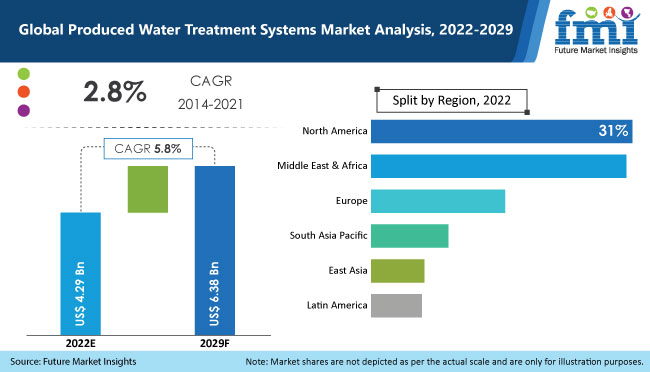
FMI has segmented the produced water treatment systems market on the basis of technology into primary, secondary, and tertiary. Future Market Insights (FMI) offers an overview of the key technologies used in produced water treatment systems in its research report. The report titled, “Produced Water Treatment Systems Market: Global Industry Analysis and Opportunity Assessment 2022-2029, forecasts the market to amplify at a compound annual growth rate (CAGR) of over 5.8% during the forecast period.

Request a Sample of this Report @ https://www.futuremarketinsights.com/reports/sample/rep-gb–86

Primary treatment technologies employ basic, such as settling, media filtration, floatation, and biological aerated filtering to separate solids from water. According to FMI’s research, Alderley plc is one of the dominant players in the primary treatment technologies.

produced water treatment systems market

Secondary treatment technologies involve the use of induced gas floatation, degasser, and membrane separation. Twin Filter BV is a dominant company providing secondary treatment technology in the market.

Tertiary treatment technologies involve the use of absorption and polishing to separate oil content in produced water. These technologies use a combination of technologies to treat produced water. According to FMI, ProSep, Inc. is the dominant player in tertiary treatment technology.

FMI has analysed the produced water treatment systems market in North America, Europe, Asia Pacific, Middle East and Africa, and Latin America.

North America is the most lucrative region in the global produced water treatment systems market, accounting for nearly one-third of the global market revenue. In terms of CAGR, the North America produced water treatment systems market is expected to expand at over 8% during the forecast period 2014-2020.

In terms of market share, North America is expected to gain 590 BPS during the forecast period. FMI’s analysis revealed that although all three technologies are widely used in North America, tertiary technology was the largest in terms of market revenue, accounting for US$ 574 Mn in 2014. FMI expects the tertiary technology segment to expand at a double-digit CAGR during the forecast period.

Tertiary technology is more effective than both primary and secondary technology, owing to which it is being widely adopted by end-use industries. The tertiary technology segment of North America is expected to gain a whopping 1310 BPS during the forecast period.

Ask An Analyst @ https://www.futuremarketinsights.com/ask-the-analyst/rep-gb–86

Onshore crude oil industry in North America represented 49.14 Bn barrels or nearly 80% of produced water in 2012. FMI expects this to reach 116.29 Bn barrels by the end of 2020.

Asia Pacific is the second largest market for produced water treatment systems after North America. The Asia Pacific produced water treatment systems market was worth US$ 960 Mn in 2014; FMI expects it to expand at a CAGR of over 2.8% during the forecast period 2014-2021.

FMI has segmented the competitive landscape of global produced water treatment systems market into treatment systems, mobile systems and rental service, and commissioning and consulting services.

Competitive Landscape

The produced water treatment systems market is highly competitive in nature. Leading market players are upgrading their product portfolio. Besides this, they have adopted various organic and inorganic strategies such as partnerships, advanced product launches, collaborations and acquisitions to dominate the market. For instance,

  • In March 2021, Heartland Technology partnered with Power-On-Demand, the oil and gas cogeneration solution provider, to deliver innovative, combined power-water solutions to the energy industry that generate cleaner on-site power with reduced greenhouse-gas (GHG) emissions, while providing cost-effective, reliable solutions for produced water disposal and reuse.
  • In May 2016, GE launched a new water treatment technology called ZeeWeed 700B for the offshore oil and gas industry.
  • In November 2021, Ovivo Inc., a global provider of water and wastewater treatment equipment, technology and systems, invested over 25 million US dollars for the construction of a state-of-the-art facility that will produce Cembrane’s unique patented Silicon Carbide flat sheet membranes in the United States.
In July 2020, Veolia Water Technologies launched TERION, a standard single-skid unit which combines single pass reverse osmosis and continuous electrodeionization to produce high-grade deionized water for laboratory, power, and general industry.

Key Questions Answered in the Report

  • What is the current produced water treatment systems market valuation?

Buy Complete Report @ https://www.futuremarketinsights.com/checkout/86

Contact Us:                                                            

Future Market Insights
Unit No: AU-01-H Gold Tower (AU), Plot No: JLT-PH1-I3A,
Jumeirah Lakes Towers, Dubai,
United Arab Emirates
For Sales Enquiries: sales@futuremarketinsights.com
For Media Enquiries: press@futuremarketinsights.com
Website: https://www.futuremarketinsights.com
Lead Acid Battery Market 2022 Outlook, Current and Future Industry Landscape Analysis 2031

The global sales of lead acid battery are set to be valued at over US$ 54.3 Bn in 2021, with a stable long-term projection, according to latest insights by Future Market Insights (FMI). The report has forecast the market to expand at over 5.2% CAGR between 2021 and 2031.

According to the market analysis by Future Market Insights, expansion of automotive production facilities to cover rural and other remote areas has led to the increasing demand for lead acid battery. Rapid technological advancements in production technologies are also projected to complement market growth over the coming years.

Request a Sample of this Report @ https://www.futuremarketinsights.com/reports/sample/rep-gb-54

Demand for lead acid battery is increasing with the rise in the volume of vehicle fleet in recent years. This can be attributed to an increase in aftermarket sales in regular interims for battery replacement.

The growing requirement has led to mass production and has increased importance of process automation in the lead acid battery market. The market is shifting towards industry 4.0 s, leading to the universal adoption of new production technologies.

There also is an increasing demand from other industries for deployment of lead acid battery. Increasing number of players focusing on research and development related to lead acid battery is anticipated to have a significant contribution towards market growth in the years to come.

Key Takeaways from Lead Acid Battery Market Study

  • Flooded battery is projected to hold over 49% of the global market share in 2021 in terms of product type, supported by superior configurations.
  • Transportation is projected to hold over 56% of the overall market share as leading segment in terms of application by 2031-end, supported by increasing investments in electric vehicles production.
  • China will remain a chief market, backed by rising demand from the automotive industry. It is expected to account for over 57.3% of demand registered in East Asia in 2021.
  • The markets India is set to surge at around 6% CAGR over the next ten years.
  • Germany is emerging as a key market in Europe, accounting for over US$ 2,509.4 Mn in 2021, driven by expansion of the automotive industry.

“The lead acid battery market is growing at a strong pace, driven largely by increasing demand for energy efficient solutions across automotive sector. The increasing demand for electric vehicles will create extensive opportunities for manufacturers. Key industry participants have been focusing product diversification to offer energy efficient solutions and gain a competitive advantage,” says a Future Market Insights analyst

Ask An Analyst @ https://www.futuremarketinsights.com/ask-the-analyst/rep-gb-54

Competitive Landscape

The lead acid battery market is highly competitive at regional as well as global levels, and highly consolidated in nature. These players are likely to invest in new technology developments and expansion of their networks in order to maintain their market shares.

Some of the key players in this industry include but are not limited to Furukawa Electric Co., Ltd., Narada Power Source Co. Ltd., Clarios, Leoch International Technology Ltd., Enersys, Exide Industries Ltd., GS Yuasa Corporation, East Penn Manufacturing Co., Chaowei Power Holdings Limited., and others.

Find More Valuable Insights

The research report analyzes demand for Lead Acid Battery. The global Lead Acid Battery market has been analyzed with the COVID-19 impact, various macroeconomic factors, market trends and market background. As per Future Market Insights, the market has been analyzed on the basis of product type, power source, and region. The report provides qualitative and quantitative information on various players in this market. This report also tracks the market by both, supply side and demand factors.

Key Questions Answered in the Report

  • What is the current valuation of lead acid battery market?
  • At what rate will the Japan lead acid battery market grow?

Buy Complete Report @ https://www.futuremarketinsights.com/checkout/54

Contact Us:                                                            

Future Market Insights
Unit No: AU-01-H Gold Tower (AU), Plot No: JLT-PH1-I3A,
Jumeirah Lakes Towers, Dubai,
United Arab Emirates
For Sales Enquiries: sales@futuremarketinsights.com
For Media Enquiries: press@futuremarketinsights.com
Website: https://www.futuremarketinsights.com

Whole Genome Amplification Market 2021 Outlook, Current and Future Industry Landscape Analysis 2031

The global whole genome amplification market is estimated at around US$ 5.08 Bn by the end of 2031, as indicated by a recent report released by Future Market Insights. The global market for whole genome amplification will possibly expand at a CAGR of 7.9% during the forecast period, 2021-2031

A US-based team of researchers has recently developed a microfluidic device for isolating a genomic DNA, which is to be purified later. This DNA is sourced from individual cells and the device physically catches single cells using a micropillar array.

It also captures chromosomal DNA of these single cells post-extraction, which is later immobilized in the micropillar array so as to enable the process of isothermal amplification. The entire methodology is referred to as ‘on-chip cell capture and DNA extraction’.

As conventional single cell WGA is often prone to amplification biases, which may hold a significant influence on the accuracy of the data of single cell sequencing.

This drawback is foreseen to be overcome with the introduction of single cell on-chip WGA, resulting in reduced biases regarding amplification, offering an improved coverage of the genome. The team has used individual cancer cell genomes (human), sourced from the HeLa Cell Line.

WGA has been a crucial procedure that helps in DNA analysis from limited quantities of genomic DNA. The ease provided by various WGA kits available for the entire process has been driving the market over the years.

Increasing research activities will remain the key factor pushing the growth of whole genome amplification market over the next decade. Adoption of this process is expected to witness robust growth, predominantly among research institutes, hospitals, diagnostic centers, and forensic labs, as it offers an improved and advanced means of genome amplification and sequencing.

To increase the revenue share, molecular testing companies are focusing more on the development of advanced devices and kits such as WGA kits and complete WGA kits with advanced capabilities.

The global whole genome amplification market is estimated at around US$ 5.08 Bn by the end of 2031, as indicated by a recent report released by Future Market Insights. The global market for whole genome amplification will possibly expand at a CAGR of 7.9% during the forecast period, 2021-2031.

Single Cell WGA Continues to Bring in New ApplicationsIntroduction of massively parallel single-cell genome sequencing is anticipated to offer a new dimension to the understanding of genetic diversities in complex biological systems.

Single cell WGA is a method used to examine the sequence information with the optimized next generation sequencing technologies, only from a single cell. This method is considered to be a powerful tool that helps to understand the ins and outs of genetics by bringing the entire genome structure to a cellular level.

Since this method offers a high-resolution view of the genomic sample, its adoption will continue to be on the rise in diverse biological fields such as microbiology, immunology, neurobiology, cancer research, and tissue mosaicism.

Single cell WGA also plays a crucial role in conveying new applications to the market, eventually pushing the market growth further through 2031.

Request Complete TOC Of this Report @ https://www.futuremarketinsights.com/toc/rep-gb-1873

New Technology Assessment in Branded WGA ProductsAs a move towards better results and implementation of advanced technology, novel techniques are being introduced in the new WGA products.

The TruePrime Single Cell WGA Kit (Expedeon Ltd.), utilizes a unique and reliable method to achieve accurate genome amplification from single cells. TruePrime technology uses a revolutionary novel multiple displacement amplification (MDA) method based on the combination of the recently discovered DNA primase “TthPrimPol” and the extremely processive and high-fidelity Phi29 DNA polymerase to amplify uniformly total genomic DNA either a single or a few cells.

Similarly MALBAC Multiple annealing and Looping Based Amplification Cycles) technology and PicoPLEX® WGA kit (Rubicon Genomics), with patented technology are the other options that have been unveiled as the latest and advanced technologies which are more efficient and optimized in the results and analysis outcomes.

Companies Focusing on Better Product Quality through Life Science ResearchIncreasing prevalence of infectious diseases and oncology disorders has increased the demand for WGA devices and kits, fueling the growth of companies dealing in WGA kits.

Despite the market having several large players as well as multiple smaller companies, there are limited companies that have a complete focus on being a provider of life science products and reagents.

Vendors have different specializations and product offerings, with most of the large companies combining research products and reagents with equipment, in-vitro diagnostics tools etc.

However, the companies that have a sole focus on this market can have better growth prospects in the coming future.

They can ensure better quality of products, customer loyalty and an established distribution network that can cater to product availability around the globe.

The key players of the market, including GE Healthcare, Sygnis AG, Illumina, Inc., Merck KGaA, Thermo Fisher Scientific Inc., and Active Motif are inclined more towards strategic acquisitions and mergers.

They are also looking for distribution and collaboration agreements to help improve their product reach. It will also help them serve end users better, with diagnostic consulting and good laboratory practices. High price point may remain a major challenge for companies.

Orthokeratology Market 2022 Outlook, Current and Future Industry Landscape Analysis 2028

Orthokeratology has been considered to facilitate the elimination of contact lens related vision problems, providing patients with the freedom to experience an active lifestyle.

While this factor will continue to play a pivotal role in growing adoption of Ortho-K lenses, Future Market Insights has discovered a few other factors that are likely to impact the growth of orthokeratology market in near future. In a recently released report, titled “Orthokeratology Market: Global Industry Analysis 2013-2021 and Opportunity Assessment, 2022–2028,” the performance of global market for orthokeratology is assessed for a 10-year period 2022-2028.

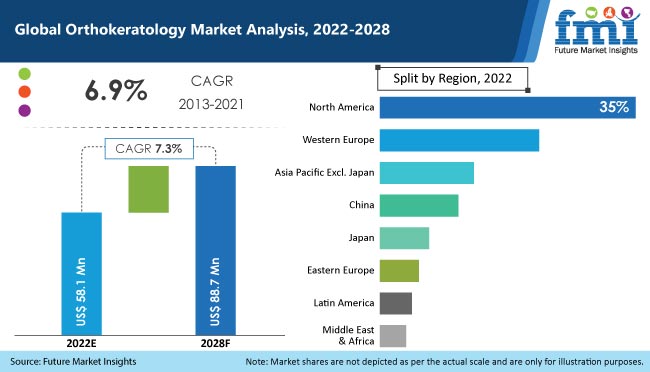
Increasing online efforts in patient education and awareness about Ortho-K, coupled with an intensifying rate of success of orthokeratology lenses in recent years, is expected to strengthen the prospects for global orthokeratology market, over the next decade. The market is likely to witness a promising CAGR of 7.4%; whereas, the global revenue is anticipated to reach beyond US$ 88 million by the end of 2028.

While increasing prevalence of myopia stands as a key factor impacting the market growth, several advantages of Ortho-K lenses over the conventional contact lenses have been recognized to be pushing adoption of orthokeratology among sports persons. A few restrictions arising in case of LASIK surgery will also be reportedly responsible for growing inclination for Ortho-K. On the flipside, the adoption of orthokeratology lenses among the myopic patient is less than 0.5%, which is a major factor deterring the growth of the market. In few under developing economies, patient are not able afford the high cost of ortho-k lenses and also the high fees of ophthalmologists and optometrists which will also deter the growth of market to some extent.

Orthokeratology Market Historical Analysis (2013-2021) Vs. Market Outlook (2022-2028)The global orthokeratology market value increased at around 6.9% CAGR from 2013 to 2021.

Orthokeratology (Ortho-K), an emerging treatment option for myopia, presbyopia, hyperopia, and astigmatism, is a non-invasive process and works on the principle of corneal replacement. At present, there are two FDA approved Ortho-K therapies: Corneal Refractive Therapy (CRT) and Vision Shaping Treatment (VST).

Patients availing these treatments need to wear the Ortho-K lenses for 6 to 8 hours at night during their sleep, and this reshapes their cornea to facilitate clear vision during the daytime.

Orthokeratology has been considered to facilitate the elimination of contact lens-related vision problems, providing patients with the freedom to experience an active lifestyle. While this factor will continue to play a pivotal role in the growing adoption of Ortho-K lenses.

Increasing online efforts in patient education and awareness about Ortho-K, coupled with an intensifying rate of success of orthokeratology lenses in recent years, is expected to strengthen the prospects for the global orthokeratology market, over the coming years.

While increasing prevalence of myopia stands as a key factor impacting market growth, several advantages of orthokeratology lenses over conventional contact lenses have been recognized to be pushing the adoption of orthokeratology devices among sportspersons.

The orthokeratology market is projected to expand at a CAGR of around 7.3% from 2022 to 2028.

Orthokeratology market

Request Complete TOC Of this Report @ https://www.futuremarketinsights.com/toc/rep-gb-3142

Myopia Continues to Remain the Most Influencing Indication, Accounting for a Major Revenue ShareMyopia is expected to remain a key indication driving the demand for orthokeratology, worldwide. With over 70% share of the total market value estimated for 2028, myopia will also provide an extensive scope for innovation opportunities. Hyperopia, followed by astigmatism, will represent the next key indicative factor, which is anticipated to drive market growth over the forecast period.

Demand from Optometry Clinics Accounts for a Share that Equates More than Half of the Market ValueAmong all distribution channels, optometry clinics will reportedly continue to generate the maximum demand for Ortho-K, accounting for a share of more than 50% to the total market value through 2028. Ophthalmic clinics are expected to hold a decent revenue share throughout the assessment period, whereas hospitals are likely to emerge as the most opportunistic distribution channel.

MEA Still Struggles through Low Awareness LevelNorth America and Europe, which represent the key regional markets, will reportedly account for a collective value share of around 60% through 2028. Asia Pacific excluding China and Japan is slated for modest growth, whereas MEA will continue to witness sluggish growth rate owing to relatively lower consumer awareness about availability and use of Ortho-K lenses.

Key Segments Covered in Orthokeratology Industry SurveyOrthokeratology Market by Indication

  • Myopia
  • Presbyopia
  • Hyperopia
  • Astigmatism

Orthokeratology Market by Distribution Channel

  • Hospitals
  • Optometry Clinics
  • Ophthalmology Clinics

Orthokeratology Market by Region

  • North America Orthokeratology Market
  • Latin America Orthokeratology Market
  • Europe Orthokeratology Market
  • East Asia Orthokeratology Market
  • South Asia & Pacific Orthokeratology Market
  • Middle East & Africa (MEA) Orthokeratology Market\

Arthroscopy Procedure and Products Market 2021 Outlook, Current and Future Industry Landscape Analysis 2031

ESOMAR-certified consulting firm Future Market Insights, in its updated report, projects a steady growth of the arthroscopy procedures and products market between 2021 and 2031. The market is expected to reach a valuation of approx. US$ 6488.4 Mn in 2021.

Rising prevalence of knee osteoarthritis among geriatric population and increasing number of knee arthroscopy conducted worldwide have augmented the market growth. Increasing application in sports medicine, and ease in regulatory approval such as the U.S. Food & Drug Administration are the factors driving growth.

Due to the non-invasive nature and benefits of arthroscopy, patients suffering from severe osteoarthritis are preferring knee arthroscopy, which is accelerating the market growth.

Growing incidence of osteoarthritis across the U.S., Germany, the UK, and China have propelled the adoption of knee arthroscopy surgeries in those regions.

With such rising statistics, healthcare professionals and government are increasing the initiatives to provide rehabilitation and facilities to curb the additional cost. Based on such factors, the market is anticipated to witness healthy growth at over 7.7% CAGR during 2021 and 2031.

However, increasing risk of edema and other infections such as blood clots in the joints might restrict the market growth. Also, high cost of surgery and procedures across low economies such as Brazil, India and other countries in Latin America will hamper the market growth.

Key Takeaways from FMI’s Arthroscopy Procedures and Products Market Study

  • In terms of procedure type, knee arthroscopy will account for over 50% of the global market share
  • Arthroscopic implants segment will account for highest share of the arthroscopy procedures & products market during the forecast period
  • The U.S. will emerge as the most lucrative market backed by the rising prevalence of degenerative disease among geriatric population
  • Germany and the U.K., collectively, will emerge as the most lucrative market across Europe in the upcoming decade
  • Japan is anticipated to emerge as a lucrative market backed by the high prevalence of rheumatoid arthritis and osteoarthritis among elderly

 “Increasing prevalence of osteoarthritis and growing degenerative disease among elderly population have encouraged the leading players to engage in research & development activities to develop advanced procedure & instrument for non-invasive surgeries,” says the FMI analyst. 

Request Complete TOC Of this Report @ https://www.futuremarketinsights.com/toc/rep-gb-1386

Competitive LandscapeProminent players in the market are focusing on strategic mergers and collaboration to expand their global footprint in the market.

New product launches coupled with increasing research & development activities for the development of advanced arthroscopy instruments & devices will also be one of the key strategy to enhance their customer base for market players.

For instance, couple of years back, leading player, Smith & Nephew entered into a distribution agreement with OrthAlign, a U.S. based private company to develop medical devices and distribute their Total-Knee Arthroplasty (TKA) technology across several countries in Africa and Middle East.

Also, in 2018, Ceterix® Orthopedics, Inc., a leader in the development of cutting-edge surgical tools for orthopedic surgeons announced the U.S. Food and Drug Administration (FDA) 510(k) clearance of NovoStitch® Pro Meniscal Repair System – a size 0 suture cartridge – offering surgeons more options to repair meniscal tears for arthroscopic surgeries.

Arthroscopy Procedure and Product Market by CategoryBy Product Type:

  • Arthroscopes and Visualization Systems
  • Arthroscopic Resection Systems
  • Arthroscopic Fluid Management Systems
  • Arthroscopic Implants
    • Knee Implants
    • Shoulder Implants
    • Hip Implants
    • Other Implants
  • Arthroscopy Radiofrequency (RF) Systems
  • Arthroscopic Drills and Fixation Systems
  • Other Arthroscopy Instruments and Accessories

By Procedure Type:

  • Shoulder Arthroscopy
  • Hip Arthroscopy
  • Knee Arthroscopy
  • Elbow Arthroscopy
  • Small Joints Arthroscopy
  • Others

By Region:

  • North America
  • Latin America
  • Eastern Europe
  • Western Europe
  • Asia Pacific excluding Japan
  • Japan
  • Middle East and Africa (MEA)

Europe Viscosupplementation Market 2016 Outlook, Current and Future Industry Landscape Analysis 2026

Future Market Insights (FMI) delivers key insights on the Europe viscosupplementation market in its upcoming report titled, “Viscosupplementation Market: Europe Industry Analysis and Opportunity Assessment, 2016-2026”. In terms of revenue, the Europe viscosupplementation market is projected to register a healthy CAGR of 5.1% during 2016-2026.

FMI’s report has segmented the market on the basis of product type, end user and region.

Based on product type, the market has been segmented into one injection viscosupplementation, three injection viscosupplementation and five injection viscosupplementation.

Single injection viscosupplementation product type segment is expected to emerge as the most popular segment over the forecast period, driven by better patient compliance as the treatment reduces the need for multiple hospital visits. The segment is expected to register the highest CAGR of 6.7% during the forecast period.

Five injection viscosupplementation product type segment is expected to witness a decline in market share in terms of revenue from 29.0% in 2015 to 23.3% in 2026. This decline is attributed to more incidence of side effects and repeated patient visit requirements associated with five injection viscosupplementation. Reimbursement cutbacks and high injection costs are other factors that can curtail demand for five injection viscosupplementation.

By end-users, the market is segmented into hospitals, ambulatory surgical centres and orthopaedic clinics. Hospitals end-use segment is expected to witness significant demand for viscosupplementation, registering a CAGR of 4.3% over the forecast period. Better reimbursement options and increasing patient preference for single injection cycle for osteoarthritis treatment is expected to drive demand for one injection viscosupplementation in the orthopaedic clinics segment over the forecast period.

Browse the full “Viscosupplementation Market: Europe Industry Analysis and Opportunity Assessment, 2016 – 2026” market research report at https://www.futuremarketinsights.com/reports/europe-viscosupplementation-market

Europe Viscosupplementation Market Trends

Key trends in the viscosupplementation market are the use of single injection cycle for osteoarthritis treatment and introduction of new combination products in the market. For example, the product pipeline of major players in the viscosupplementation market involves combining corticosteroid injections, which help in relieving pain associated with osteoarthritis, with long-lasting effects of hyaluronic acid, which lasts for nearly six months. Further, regional competition within EU countries, especially in five injection cycle, is leading to entry of new market players. Europe is a mature market in terms of generic products and it is therefore relatively easier to obtain CE mark in Europe than it is to obtain the U.S. FDA approval.

Western Europe has been estimated to dominate the Europe viscosupplementation market in 2015, attributed to factors such as the presence of key regional players, strong distribution network and better healthcare infrastructure in the region.

Request Complete TOC Of this Report @ https://www.futuremarketinsights.com/toc/rep-eu-1383

Key Players in Europe Viscosupplementation Market

Some key players in the Europe viscosupplementation market are Anika Therapeutics Inc., Sanofi S.A., Zimmer Biomet Holdings, Meda AB, Ferring B.V, Fidia Pharmaceutici S.p.A,   and Bioventus LLC. We have discussed individual strategies followed by these companies in terms of enhancing product designs, creating new manufacturing facilities, market consolidation and advanced R&D initiatives. The report concludes with key takeaways that could help players already present in the market and new players planning to enter the market in the long run.

Key Segments

  • Product Type
    • Single Injection Viscosupplementation
    • Three Injection Viscosupplementation
    • Five Injection Viscosupplementation
  • End User
    • Hospitals
    • Ambulatory Surgical Centres
    • Orthopaedic Clinics

 Key Regions/Countries

  • Western Europe
    • U.K.
    • France
    • Germany
    • Spain
    • Italy
    • Nordics
    • Rest of Western Europe
  • Eastern Europe
    • Russia
    • Rest of Eastern Europe