BRICS Oral Care Market to Reach US$ 17.3 Bn Through 2020, Driven by Increasing Consumer Awareness: Future Market Insights

Future Market Insights (FMI) in its latest offering, “BRICS Oral Care Market: Global Industry Analysis and Opportunity Assessment, 2014-2020“, provides in-depth analysis and strategic recommendations on the BRICS (Brazil, Russia, India, China and South Africa) oral care market. Personal care includes categories such as skin care, hair care, cosmetics, oral care and toiletries. The global oral care market represents 15% of the personal care market in 2014, and is expected to account for almost 20% of the overall market by 2020. Organised retailing, rising per capita income, increasing consumer spending on personal care products and consumer preferences for value-added products are some of the factors contributing to growth of the BRICS personal care market. The BRICS region represents a major segment of the global market. FMI forecasts that the overall oral care market in BRICS will grow at a moderate single-digit CAGR between 2014 and 2020.

Product-wise, the BRICS oral care market is broadly segmented into primary oral care and secondary oral care products. The primary oral care products segment comprises toothpaste and toothbrush. The secondary oral care products segment includes dental floss, mouthwash, denture care and others. The others segment includes whitening strips, dental chewing gums and mouth fresheners.

Browse the full “BRICS Oral Care Market: Global Industry Analysis and Opportunity Assessment, 2014 – 2020” report at http://www.futuremarketinsights.com/reports/details/brics-oral-care-market-opportunity-assessment

“Increasing consumer awareness with regard to better oral hygiene is the primary driver of the overall BRICS oral care market. Furthermore, dentist recommendations for adoption of various-related products is projected to lead to a shift in consumer preference from basic oral care products to secondary oral care products in the coming years”.

Growing awareness about better oral hygiene opens up ample opportunities for international players operating in the BRICS oral care market to introduce enhanced and innovative products, further increasing competition among the players in this region. This has led key players to adopt various approaches to increase product visibility in modern retail formats, coupled with branding and advertisement to sustain in the competitive oral care market in BRICS. As a result, demand for secondary oral care products in BRICS is expected to increase considerably between 2018 and 2020.

Request a Free Sample Report with TOChttp://www.futuremarketinsights.com/reports/sample/rep-br-27

Product-wise, toothpaste, in the primary oral care product segment currently dominates the BRICS oral care market and is expected to grow substantially between 2014 and 2020. This growth can be attributed to the fact that the BRICS region consists of emerging nations and awareness of basic oral hygiene is currently growing rapidly, supported by product launches in the region. Hence, consumers are demonstrating greater demand for primary oral care products such as toothpaste and toothbrush, as compared to that for secondary oral care hygiene products in these nations.

Furthermore, dentist recommendations will add to the rising consumer awareness about secondary oral hygiene products towards the end of the forecast period. This will result in growing preference for mouthwash, thereby driving the demand for this product category among the expanding middle-class population in the BRICS. Thus, secondary products in the BRICS oral care market such as mouthwash and dental floss will demonstrate an above-average annual growth percentage.

Get More Insights on Retail and Consumer Products Markethttp://www.futuremarketinsights.com/reports/category/retail-consumer-products

Some other factors such as adoption of digital marketing and introduction of product variants at affordable prices are also expected to contribute to growth of the BRICS oral care market. Research results reveal that in 2013, the top key distribution channels, which are general merchandise retailers and direct selling, accounted for around 50% share of the BRICS oral care market.

Players in the BRICS oral care market are widening their distribution channels and strengthening partnerships across the value chain to enhance profitability and increase adoption of oral care products in the region.

FMI Latest Insights:

About Us

Future Market Insights (FMI) is a leading market intelligence and consulting firm. We deliver syndicated research reports, custom research reports and consulting services which are personalized in nature. FMI delivers a complete packaged solution, which combines current market intelligence, statistical anecdotes, technology inputs, valuable growth insights and an aerial view of the competitive framework and future market trends.
Wearable Sleep Trackers Market Poised to Register 7.6% CAGR Through 2028

Tech advances in wearable devices and the rising consumer demand for health and fitness solutions are positively influencing manufacturers in the healthcare industry to develop smart devices such as biosensors, insulin pumps and more. According to Future Market Insights (FMI), the demand for wearable medical devices will rise owing to the growing global incidences of chronic ailments. The market is anticipated to reflect a promising rate of growth with approximately 7% CAGR through the end of the forecast period in 2031.

Health and fitness applications are projected to display a relatively high rate of growth. Increasing expenditure by adults on leisure and sports activities are bolstering the demand for product such as the Fitbit. Advances in GPS tracking and Internet of Things will prove beneficial to market players.

Efforts by governments and private health organizations to spread health awareness has resulted in increased focus towards solutions for early diagnostics for underlying conditions. Consequently, advances in wearables allows for real time data collection and analysis. This trend will aid in the expansion of product portfolios, while consolidating market position.

The covid-19 pandemic has brought increased focus on healthcare, and market players are leveraging the crisis to promote their products to aid in analyzing potential patients. In addition, the growing importance of clinical mobility through smart watch devices is expected to gain traction with improvements to biosensor products.

On the other hand, market players will face challenges in the near future, affecting market expansion. High costs of purchasing wearable medical devices limits adoption rates. In addition, concerns over data security remains a challenge for manufacturers that will affect long term growth.

To remain ‘ahead’ of your competitors, request for a sample

Key Companies Profiled:

  • Medtronic plc
  • Siemens AG
  • Fitbit Inc.
  • Bayer AG
  • Panasonic Corporation
  • Animas Corporation – Johnson and Johnson
  • Smiths Medical – A Smiths Group Company
  • Koninklijke Philips N.V.
  • Owlet Baby Care
  • OMRON Corporation
  • Hoffmann-La Roche Ltd and Rest Devices Inc. (indicative list)

Key Takeaways from Wearable Medical Devices Market Study

  • The global demand for wearable medical devices is expected to rise strongly, enabling the market to exhibit a CAGR of nearly 7% in the forecast period from 2021 to 2031.
  • Therapeutic wearables will account for more than 50% of the market share owing to rising incidences of diabetes and respiratory disorders.
  • Backed by rapidly increasing expenditure on the healthcare sector, the United States will account for major global market share.
  • Increasingly favorable setups for reimbursement policies will play a key role in the growth of the U.K. market for wearables through 2021 and beyond.
  • Germany will reflect high growth potential on the back of improvements to healthcare infrastructure, fueling demand for wearable medical devices.
  • In the Asia Pacific excluding Japan region South Korea and China will emerge as lucrative markets supported by a large potential patient base.

Get a Customized Scope to Match Your Need Ask an Expert- https://www.futuremarketinsights.com/ask-question/rep-gb-826

Wearable Medical Devices Market – Key Segments

Product

  • Wearable Monitoring and Diagnostic Devices
  • Fetal and Obstetric Devices
    • Wearable Fetal Monitors
    • Infant Motion Sensing Monitors
  • Continuous Glucose Monitoring Devices
  • Cardiac Monitoring Devices
    • Wearable Heart Rate Monitors
    • Wearable Pulse Oximeters
    • Wearable Blood Pressure Monitors
  • Wearable Therapeutic Medical Device
  • Hearing Aid
  • Insulin Pump
  • Respiratory Therapy Devices
    • Sleep Apnea Devices
    • Non-invasive Ventilation
  • Health and Fitness Devices

Application

  • Patient Monitoring
  • Home Healthcare
  • Health and Fitness

Distribution Channel

  • Hospital Pharmacies
  • Clinics
  • Online Channels
  • Hypermarkets

For critical insights, request for PDF Brochure: https://www.futuremarketinsights.com/reports/brochure/rep-gb-826

Region

  • North America (U.S. & Canada)
  • Latin America (Mexico, Brazil, Argentina, Chile, Peru, & Rest of LATAM)
  • Western Europe (Germany, U.K., France, Italy, Spain, BENELUX, Nordic, & Rest of W. Europe)
  • Eastern Europe (Russia, Poland, CIS Countries and Rest of E. Europe)
  • Middle East and Africa (GCC Countries, Turkey, South Africa, Israel, & Rest of MEA)
  • Japan
  • Asia Pacific excluding Japan (China, India, ASEAN, South Korea, Australia, & Rest of APEJ)

Digital Transaction Management Market 2021 Growth, COVID Impact, Trends Analysis Report 2028

The global digital transaction management market revenue totaled ~US$ 2,385.0 Mn in 2021, according to Future Market Insights (FMI). The overall digital transaction management market is expected to reach ~US$ 16,284.8 Mn by 2028, growing at a CAGR of around 31.7% for 2022 – 28.

Digital Transaction Management (DTM) solution is estimated to be nearly 45% of global document management market. Increase in the adoption of digital transformation technologies is the major factor driving the market growth. DTM is the part of the cloud services specially designed to manage the digital document based transactions. Digital transaction management delivers numbers of benefits to the enterprises, which include collaborative document management and optimizing document-based tasks for better customer experience. Enterprises can use DTM solutions in multiple segments, such as HR, sales, finance, IT, legal, and procurement.

Digital transaction management market is growing rapidly, and an increasing number of enterprises and organizations are adopting the solutions. Automotive, manufacturing, BFSI and telecommunication are significant industries adopting the DTM solutions. Also, the digital transaction management developers are focusing on the collaboration with cloud service providers as the potential of digital documents is complemented by cloud computing to perform real-time documents monitoring and debugging.

Click the link to get a free Sample Copy of the Report @ https://www.futuremarketinsights.com/reports/sample/rep-gb-5660

Developed countries are working continuously on transforming their paper work into digital means. Nowadays, several regions are receiving investments from companies for the adoption of digital transaction management solutions and services. The governments of several countries are primarily focused on adopting digital transaction management software and tools for security, accessibility, privacy, universality, scalability and interoperability. Companies are working on implementing new technologies, such as electronic signatures and workflow automation, especially in the BFSI and transportation sectors.

To understand and assess the demand and opportunities in the digital transaction management market, the report is categorically split into digital transaction management market analysis by component, vertical, end user and by region. Digital transaction management market analysis by component comprehensively analyses the market on the basis of solutions and services analysis in terms of value for 2018-2028. Digital transaction management market analysis by vertical analyses the digital transaction management market on the basis of retail, BFSI, healthcare, IT & telecommunication, travel & transportation, manufacturing, government and others. Digital transaction management market analysis by end user analyses the digital transaction management market on the basis of large enterprises and small and midsized enterprises.

In 2017, the solutions segment dominated the digital transaction management market followed by the services segment. Moreover, the solutions segment is projected to expand at the fastest CAGR of 30.9% over the forecast period in the digital transaction management market in terms of revenue, followed by the services sub-segments.

The section market analysis by vertical analyses the digital transaction management market based on different segments and data is provided in terms of value for 2018-2028. The retail sub-segment of the digital transaction management market is expected to expand at a significant CAGR of 30.5% in terms of value during the forecast period. In terms of digital transaction management market share, the BFSI segment accounted for a major percentage of the revenue share of the overall digital transaction management market in 2017, and is also expected to dominate the digital transaction management market throughout the forecast years.

Digital transaction management market analysis by region includes an in-depth country-level analysis of all the global regions, namely North America, Latin America, Western Europe, Eastern Europe, SEA & Others of APAC, China, Japan and the Middle East & Africa, as well as countries in these regions, and provides market data in terms of value for 2018-2028 for the digital transaction management market. In 2017, the digital transaction management market in North America dominated the overall global digital transaction management market, followed by the market in Western Europe.

Digital Transaction Management Outlook by Category

By Component:

  • Digital Transaction Management Solutions
  • Digital Transaction Management Services

By End-User:

  • Large Enterprises
  • Small and Midsize Business

By Vertical:

  • Retail
  • BFSI
  • Healthcare
  • IT & Telecommunication
  • Travel & Transportation
  • Manufacturing
  • Government
  • Others

By Region:

  • North America
  • Latin America
  • Western Europe
  • Eastern Europe
  • China
  • Japan
  • SEA and Others of APAC
  • Middle East and Africa (MEA)

To gain more insights into the market with a detailed table of content and figures, click here: https://www.futuremarketinsights.com/toc/rep-gb-5660

Key players reported in this study on the global digital transaction management market are Adobe Systems Incorporated; Namirial SPA; DocuSign Inc.; Nintex Global Ltd.; HELLOSIGN; ZorroSign, Inc.; AssureSign LLC; ThinkSmart LLC; Kofax, Inc. and eOriginal, Inc.

Key Questions Answered in the Report

  • Which region is expected to showcase high demand for digital transaction management?

– China is projected to register strong growth in the market, exhibiting a CAGR of nearly 30.3% from 2022-2028.

  • Who are some of the leading companies offering digital transaction management solutions?

-Adobe Systems Incorporated, Namirial SPA, DocuSign Inc., Entrust Datacard Corporation, and OneSpan among others, are the top 5 digital transaction management solution and service providers. They are likely to account for over 25% of the global market.

  • In which industries the adoption of digital transaction management growing?

-BFSI segment is expected to dominate the market over the forecast period, generating a maximum revenue among all industries by the end of 2028.

  • How much is the global market for digital transaction management worth?

-The market for digital transaction management was valued at ~US$ 2,385.0 Mn in 2021, and is estimated to grow at a steady pace with a CAGR of around 31.7% to reach ~US$ 16,284.8 Mn by 2028.

  • What is driving demand for digital transaction management?

– Increase in the adoption of the digital document workflows and collaborative document management across enterprises happens to be the major factor driving the market growth.

Stainless steel welded pipe market is expected to grow at 4.6% CAGR between 2021 and 2031: FMI

The global stainless steel welded pipe market is expected to reach US$ 16.36 Bn in 2021 with a stable long-term projection, according to the latest insights from Future Market Insights, ESOMAR-certified research and consulting firm. The report offers an analysis of 20+ high-growth markets, providing detailed insights on the stainless steel welded pipe market’s growth in the next decade.

Demand for stainless steel welded pipes decelerates as operations across construction, automotive, water supply and distribution, oil and gas, petrochemical and fertilizers, power generation, and other sectors were hampered amid the COVID-19 outbreak. However, considering the possibility of a stimulus for infrastructure projects in many countries, the long-term outlook of the market remains positive.

Get | Download Sample Copy with Graphs & List of Figures: https://www.futuremarketinsights.com/reports/sample/rep-gb-7392

The surge in demand for stainless steel welded pipes from applications such as oil and gas will remain a chief growth driver due to the presence of oil rigs all over the globe. For the transportation of the fluid from one place to another, a large quantity of pipes is required, which will drive the sales in the market. The same applies to the water supply and distribution segment because the demand is expected to surge amid the rising need for an uninterrupted water supply.

The replacement of old pipes with new stainless steel welded pipes can also provide a boost in the sales of stainless steel welded pipes. The substantial increase in the demand from the supplier side and from the end-use industries across the globe is propelling the stainless steel welded pipe market growth.

The use of stainless steel welded pipes in construction and automotive and power generation applications will create solid opportunities for growth. According to FMI, the construction sector is expected to account for nearly 29% of sales in the market by 2031. Investment in residential, commercial, and infrastructural construction projects will increase in the future, paving way for the expansion of the market.

Stainless Steel Welded Pipe Market Key Takeaways

  • The stainless steel welded pipe market is expected to grow at 4.6% CAGR between 2021 and 2031
  • Investment in construction projects will remain a chief growth driver in the U.S., enabling it to account for nearly 72% of sales in North America
  • Focus on improving public infrastructure will drive growth in the U.K. market at 5.5% CAGR between 2021 and 2031
  • India is expected to register increasing investment in water supply and distribution to ensure safe drinking water to all citizens and support industrialization. This will create attractive opportunities for stainless steel welded pipe sales
  • China will emerge as a highly lucrative market in East Asia, accounting for maximum sales of stainless steel welded pipes

“As competition continues to grow, companies operating in the market are likely to adopt strategies for strengthening their global footprint. Besides expanding operations across emerging nations, they are likely to focus on launching better quality stainless steel welded pipes to gain competitive edge” says FMI analyst.

The stainless steel welded pipe market is likely to grow at a moderate pace during 2021-2031. However, as it is a matured market, companies are expected to concentrate further on research and development activities to develop more in the field of construction, oil & gas, and water supply and distribution, majorly focusing on the outer diameter required for the specific applications. Collaboration with local players and developing new technology in the form of advanced stainless steel welded pipes is a prime strategy expected to increase in popularity in the forecast period.

Request a Complete TOC of this Report with figures: https://www.futuremarketinsights.com/toc/rep-gb-7392

Will Growing Automotive Industry Propel the U.S? Market Growth?

The U.S. stainless steel welded pipe market is expected to rise at 4.4% CAGR between 2021 and 2031. The growth forecast for the U.S. market remains positive on account of the increasing demand from the automotive industry and construction industry. The U.S. automotive industry not only produces vehicles for domestic sales, but also exports vehicles, and to fulfill the demand auto industry players have to manufacture efficiently. Stainless steel welded pipes are used for making mufflers and exhausts in the automotive industry, which propels the growth of the stainless steel welded pipe market in the United States.

How is Germany relevant to the Stainless Steel Welded Pipe market?

After a brief period of declining growth in 2020, the German market is expected to register 4.3% y-o-y growth in 2021. The German stainless steel welded pipe market will witness an appreciable growth on account of the increasing demand from the automotive and aerospace industries. Germany comes under the tag of the top 10 steel-producing countries with a market volume of 39.7 Million Tons in 2019. Stainless steel which is made in Germany is also very popular in sales due to its lower carbon content and is softer which makes them more durable than American grade Stainless Steel.

Stainless Steel Welded Pipe Market Segmentation

By Grade

  • 300 Series
    • 304, 304L & 304H
    • 309 & 310S
    • 316, 316L, 316H, 316TI
    • 321/321H
    • 347/347H
  • 400 Series
    • 409
    • 410/410S
  • 900 Series
  • Nickel Alloy Grade
    • Duplex 2205
    • Duplex 2207

By Application

  • Construction
  • Automotive
  • Water Supply and Distribution
  • Oil and Gas
  • Petrochemical and Fertilizers
  • Power Generation
  • Others

By Outer Diameter

  • 4 – 36mm
  • 36 – 60 mm
  • 61 – 150 mm
  • 151 – 500 mm
  • 500 – 1000 mm

By Region

  • North  America
  • Latin America
  • Europe
  • East Asia
  • South Asia & Pacific
  • Middle East & Africa

Stainless Steel Welded Pipe Market Competitive Landscape

The market is fragmented, with key players accounting for approximately one-fifth of the market share. These players are likely to invest in new technology developments and the expansion of their networks to maintain their market shares. Some of the key players in the market are Marcegaglia, Sosta GmbH & Co. KG, ArcelorMittal S.A., Nippon Steel, Hyundai Steel Co., Ltd, Sandvik AB, Shanghai Metal Corporation, FROCH ENTERPRISE CO., LTD., F.E.R. Fischer Edelstahlrohre GmbH, YC Inox, JFE Steel Corporation, CSM TUBE spa, Guangzhou Pearl River Petroleum Steel Pipe Co., Ltd., Guangdong Lizz Steel Pipe Co, Ltd., Foshan Zhongde Stainless Steel Co., Ltd. & others.

For More Information or Query or Customization Before Buying, Visit: https://www.futuremarketinsights.com/customization-available/rep-gb-7392

Get Valuable Insights into Stainless Steel Welded Pipes Market

Future Market Insights, in its new offering, provides an unbiased analysis of the global stainless steel welded pipes market, presenting historical demand data (2016-2031) and forecast statistics for the period from 2021-2031. The study divulges compelling insights on the market based on grade (300 series, 400 series, 900 series, and nickel alloy grade), application (construction, automotive, water supply & distribution, oil & gas, petrochemical & fertilizer, and power generation), an outer diameter (4 – 36 mm, 36 – 60 mm,  61 – 150 mm, 151 – 500 mm, and 500 – 1000 mm) across seven major regions.

Membrane Microfiltration Market is Estimated to Touch a Valuation of US$ 8 Bn by 2028

Several traditional techniques such as pasteurisation, heat treatment, and sterilisation have long been used to improve the shelf life of milk. One of the newest alternatives to heat treatment is microfiltration that reduces bacteria and improves the shelf life of dairy products, while also preserving the basic taste. Adoption of membrane microfiltration in milk is one of the trends being witnessed in the global market, according to a new research study on the global membrane microfiltration market by Future Market Insights. An increasing adoption of ceramic microfiltration membranes for cross flow filtration in water plants is another key trend, as ceramic membranes help maintain a high filtration rate and ensure enhanced savings in membrane replacement costs.

(Logo: https://mma.prnewswire.com/media/677274/Future_Market_Insights_Logo.jpg )

Manufacturers in the membrane microfiltration market are producing robust microfiltration systems using large filter cartridges that occupy lesser space and eliminate the number of filtration system connections, thereby reducing maintenance costs. A preference for continuous fermentation over batch processing is also being observed, with manufacturers increasingly deploying membrane microfiltration technology in their plants. These trends are likely to positively impact revenue growth of the global membrane microfiltration market in the coming years. According to Future Market Insights forecasts, sales revenue in the membrane microfiltration market is anticipated to cross US$ 8 Bn by 2028, from an estimated value of about US$ 3.8 Bn in 2018. A decadal growth rate of 7.8% can be attributed to several factors, of which Future Market Insights throws deeper insights in this research study.

Request a Sample Report with Table of Contents and Figures: https://www.futuremarketinsights.com/reports/sample/rep-gb-5402

Increasing Applications in Industrial Biotechnology and Widespread Use of Large Molecule Biopharmaceuticals Pushing Revenue Growth of the Global Membrane Microfiltration Market

Membrane microfiltration is finding application in the production of biofuel and bio refineries are incorporating this technology to lower the overall energy costs and reduce industrial bio waste. Membrane microfiltration is also increasingly used in biodiesel processes where this technology is used to reuse water especially in areas of water scarcity. The rising industrial applications of membrane microfiltration are fuelling revenue growth in the global market. Also, filtration is a critical component of biopharmaceuticals production, and membrane microfiltration is widely used to remove cellular debris and other cellular colloids. With a growing adoption of large molecule biopharmaceuticals owing to their therapeutic properties, the demand for membrane microfiltration technology in the production of biopharmaceuticals is expected to surge in the near future.

Membrane microfiltration is also extensively used in the food and beverages industry as a technology to separate and purify components and improve the quality and yield of food products. An increasing use in vegetable and fruit juices, fermented dairy products, milk and dairy products, non-alcoholic beverages, and other food and beverage products is expected to spur revenue growth of the global membrane microfiltration market to a significant extent. One of the other critical application areas of membrane microfiltration is in water treatment plants. Membrane microfiltration helps remove unwanted particles from water before the water is treated for purity using other processes such as reverse osmosis. A growing need for quality potable water is further driving growth of the membrane microfiltration market.

Preview Analysis Global Membrane Microfiltration Market Segmentation by Material Type (CrossFlow Membranes, Direct Flow Membranes); By Application (Biopharmaceutical Processing, Water Treatment Application, Dairy & Food Processing, Chemical Application, Others): https://www.futuremarketinsights.com/reports/membrane-microfiltration-market

Future Market Insights Recommends…

With newer applications of membrane microfiltration coming to the fore, Future Market Insights feels there is a great deal of opportunity for key players operating in the global market. Water treatment and food and beverages are two important end-use application areas that manufacturers can target with their advanced solution offerings. China is projected to be the fastest growing regional market for membrane microfiltration in terms of demand for the technology, and manufacturers would be well advised to focus on this region to augment their market share. By setting up robust supply chains in regions that are anticipated to develop at a faster pace in the coming years, manufacturers can benefit from the lucrative opportunities presented by local markets to up their current standing in the global membrane microfiltration market.

Our advisory services are aimed at helping you with specific, customised insights that are relevant to your specific challenges. Let us know about your challenges and our trusted advisors will connect with you: https://www.futuremarketinsights.com/askus/rep-gb-5402

More from FMI’s Healthcare, Pharmaceuticals and Medical devices:

  • Mobile Gamma Cameras Market Segmentation By Product Type ( Single Head Gamma Cameras, Double Head Gamma Cameras, Triple Head Gamma Cameras, Hand Held Gamma Camera); By Indication Type (Cardiac Imaging, Breast Imaging, Hepatobiliary Imaging, GI Imaging, Renal Imaging, Brain Imaging, Others); By End User (Hospital, Ambulatory Surgical Centers, Cancer Research Institutes, Specialized Clinics): https://www.futuremarketinsights.com/reports/mobile-gamma-cameras-market
  • Western Blotting Processors Market Segmentation By product type (Automated Dry Blotting Systems, Semi-Dry Blotting Systems, Traditional Wet Transfer Blotting Systems); by Application Type (Agricultural Application, Food & Beverages, Medical Diagnostics, Scientific Research, Other Applications); by End user Type (Diagnostic laboratories, Pharmaceutical and Biotechnology Companies, Research & Academic institution, others): https://www.futuremarketinsights.com/reports/western-blotting-processors-market
  • Hearing Implant Market Segmentation By Product types (Cochlear Implants, Middle Ear Implants, Bone conduction Implants, Auditory brainstem implant); End users type (Hospitals, ENT clinics, Ambulatory Surgical Centres): https://www.futuremarketinsights.com/reports/hearing-implants-market

Process Liquid Analyser Market is slated to reach a valuation of about US$ 4 Bn by 2028

According to a new research study by Future Market Insights (FMI), the process liquid analyser market is slated to reach a valuation of about US$4 Bn by 2028. From an estimated value of just under US$2.4 Bn in 2018, this indicates a decadal growth rate of 5.8% from 2018 to 2028. Mass urbanisation across the globe brought about by rapid industrialisation has resulted in a sustained need for clean, potable water and wastewater treatment.

The governments of emerging economies, particularly in the Asia Pacific, are beefing up investments in water and wastewater treatment infrastructure to meet the rising demands of the population. Future Market Insights predicts a lucrative opportunity for new revenue generation in the process liquid analyser market as a direct consequence of these investments.

To remain ‘ahead’ of your competitors, request for a sample @
https://www.futuremarketinsights.com/reports/sample/rep-gb-534

Process Liquid Analyzer Market: Drivers and Trends 

The global process liquid analyzer market is expected to witness a robust growth rate in the coming years. The unique benefits offered by process liquid analyzers for process integrity management and product quality control are driving the process liquid analyzer market across the globe.

Additionally, the increasing demand from end-use sectors, particularly water treatment, food & beverage and chemical, is also aiding the market growth of process liquid analyzers. While countries such as the U.S., the U.K., Germany, and China have solid demand for process liquid analyzers, new growth avenues are opening up in regions such South East Asia Pacific and the Middle East & Africa as well.

Process Liquid Analyzer Market: Market Participants 

Some of the prominent players reported in the global process liquid analyzer market study include Emerson Electric, Yokogawa Electric, Endress+Hauser and Danaher Corporation (Hach), among others. New product launches, expansion of manufacturing and sales footprint and acquisitions are some of the key developments observed in the global process liquid analyzer market.

Key Segments Covered

By Technology,

  • NIR Based
  • NMR Based
  • ECD Sensor Based
  • Laser Based

By Liquid Medium,

  • Water
  • Oil
  • Other Chemicals & Liquids

For critical insights on this market, request to ask an expert here @
https://www.futuremarketinsights.com/ask-question/rep-gb-534

By Product,

  • pH & ORP (Oxidation-Reduction Potential) Analyzers
  • Conductivity Analyzers
  • MLSS (Mixed Liquor Suspended Solids) & Turbidity Analyzers
  • Liquid Density Analyzers
  • Chlorine Analyzers
  • Dissolved Oxygen Analyzers
  • Total Sulfur & Nitrogen Analyzers
  • Oil in Water Analyzers
  • TOC Analyzers
  • Heavy Aromatics Analyzers

By Display,

  • Analog
  • Digital

By End Use,

  • Oil & Petrochemicals
  • Water & Wastewater Treatment
  • Food & Beverages
  • Chemicals
  • Medical & Pharmaceutical
  • Others

By Region,

  • North America
  • Western Europe
  • South East Asia & Pacific
  • Latin America
  • Eastern Europe
  • Middle East and Africa
  • China
  • Japan
  • India

Revenue Pullers in the Process Liquid Analyser Market

While the need to enhance industrial operational efficiencies and ensure consistent integrity of industrial processes is driving the process liquid analyser market, there are certain factors that are restricting revenue growth. Process liquid analysers come with very low replacement rates, requiring the replacement of the product after a span of several years. Product longevity acts as a bane in subsequent replenishments, thereby restraining replacement revenue growth to some extent. Then again, the initial setup costs associated with process liquid analysers could be very high, depending on the end-use application. Complex process liquid analysers used in some of the crucial industrial processes may require high capital investments. This factor is also expected to act as a hindrance to revenue growth of the global process liquid analyser market.

For More Information or Query or Customization Before Buying, Visit:
https://www.futuremarketinsights.com/customization-available/rep-gb-534

FMI Projections and Forecasts of the Process Liquid Analyser Market

  • The process liquid analyser market is estimated to generate incremental $ opportunity to the tune of about US$ 1.8 Bn in the next 10 years
  • Process liquid analysers deploying NIR technology are slated to have the widest application
  • TOC analysers to dominate the global market through 2028; pH & ORP analysers to witness fastest growth owing to increasing application across several end-use industries
  • Process liquid analysers with digital displays to hold largest market share in the coming decade
  • Demand from the water and wastewater treatment sector will witness fastest growth during the period 2018 – 2028; this is also the largest revenue generating end-use sector in the global market
  • North America to remain dominant regional market for process liquid analysers through 2028; China and India to remain top regional markets in terms of demand for process liquid analysers

Dry Vacuum Pumps Market Demand and Research Insights by 2028

Dry Vacuum Pumps Market report by TMR comprises an elaborated executive summary that offers a snapshot of the market undercurrents, it lists succinct information on drivers, trends, challenges, competition, and regional analysis.There is a continuous thrust on renewable power production across the globe, in the wake of global warming and a sustained need to protect the environment. Regions such as North America, Europe, and Asia Pacific are engaged in the production of renewable power through alternate sources such as solar energy. The governments of several countries across the world are encouraging private players to create sustainable, green power through solar and other forms of renewable energy and are also offering tax and other incentives to promote the generation of solar power. This has led to a sudden increase in the number of solar plants and projects globally, thereby driving the production of solar panels. This is set to fuel the demand for dry vacuum pumps, according to a recent market intelligence outlook published by Future Market Insights (FMI).

Request a Complete TOC of this Report with figures: https://www.futuremarketinsights.com/toc/rep-gb-3686

In this new report on the global dry vacuum pumps market, FMI predicts revenue from the sales of dry vacuum pumps to reach US$ 1,680.8 Mn by the end of 2018 and this is expected to increase to US$ 3,070.1 Mn towards the close of 2028. The global dry vacuum pumps market is slated to register a growth rate of 6.2% during the decade 2018 to 2028.

Steady and Growing Demand from the Electronics and Semiconductor Sectors to Augur Well for the Dry Vacuum Pumps Market

Growing infrastructural activities across the globe are directly favouring the demand for pumps. The electronics and semiconductor industries have witnessed rapid revenue growth over the last few years, with an increasing focus on the manufacturing of semiconductor and electronic components and equipment. This has led to an increase in demand for dry vacuum pumps from these industries, especially in the production of micro-electronics and chips. Manufacturers of semiconductor and electronic components such as Panasonic, Samsung, Meiko Electronics, Saigon Semiconductor Technology, and Taiwan Semiconductor Manufacturing Co. are setting up production plants in developing regions to benefit from cost competitiveness. Local governments across several developing countries such as Brazil, India, and ASEAN countries are focused on increasing foreign direct investments in the manufacturing sector. This is expected to boost sales of dry vacuum pumps in the coming years.

Opportunity Assessment of the Dry Vacuum Pumps Market

Future Market Insights has conducted an extensive opportunity assessment of the global dry vacuum pumps market for the 10 year period 2018 to 2028. One of the key opportunity areas in the global market for dry vacuum pumps lies in the strategic investments being made globally across the pharmaceutical industry. Demand for dry vacuum pumps is steadily increasing from the pharmaceutical industry in developing countries such as Indonesia, India, Brazil, and China. Further, there is a lack of local manufacturers of dry vacuum pumps in developing economies, with the top manufacturers based in Japan, U.S, Germany, and certain other European countries. This scenario presents lucrative growth opportunities for global manufacturers of dry vacuum pumps to establish production facilities in developing economies. Setting up bases in developing regions will help manufacturers benefit from better economies of scale, given the low production and labour costs in developing countries.

Download Your Sample Copy of This Report: https://www.futuremarketinsights.com/reports/sample/rep-gb-3686

Key Segments Covered

By Product Type,

  • Dry Screw Vacuum Pump
  • Dry Scroll Vacuum Pump
  • Dry Diaphragm Vacuum Pump
  • Dry Claw and Hook Pump
  • Others (Dry Lobe Vacuum Pump, and Dry Rotary Vane Vacuum Pump)

By End Use,

  • Electronics & Semiconductor Industry
  • Pharmaceutical Industry
  • Chemical Industry
  • Others (Printing Industry, Packaging Industry, Food and Beverages Industry)

By Region,

  • North America
  • Latin America
  • Western Europe
  • Eastern Europe
  • Middle-East & Africa (MEA)
  • China
  • Asia Pacific excluding China (APEC)

Low-cost Chinese Products and Lack of Skilled Labour in Developing Regions to Restrict Revenue Growth of the Global Dry Vacuum Pumps Market

The global market for dry vacuum pumps is disrupted by several players from China who offer products at very low prices. Owing to the increasing price pressure from these companies, leading global players are striving to offer high-quality dry vacuum pumps that are more reliable and efficient at highly competitive prices. This price sensitive nature of the global market is expected to restrain revenue growth in the coming years. The dry vacuum pumps markets in the Latin America and SEA regions suffer from a very high dependency on imports from other regional markets, owing to a lack to talented and experienced local vacuum technology professionals. This is leading to a stagnancy in revenue growth of the global dry vacuum pumps market to a certain extent.

Ask us your Any Queries About this Report: https://www.futuremarketinsights.com/askus/rep-gb-3686

About Industrial Automation Division at Future Market Insights

The Industrial Automation & Equipment division at FMI adopts a novel approach and innovative perspective in analyzing the global machinery and industrial automation market. A range of FMI’s market research reports offer comprehensive coverage of capital, portable, process, construction, industrial, and special purpose machinery used across manufacturing sector. The team also conducts distinctive analysis about installed base, consumables, replacement, and USP-feature application matrix, making us a prominent voice of authority in the industry. We are associates of choice for established as well as budding industry.

To understand the other revenue push and pull factors impacting the global dry vacuum pumps market, write in to Future Market Insights analysts at press@futuremarketinsights.com


Carbon Steel Tubing in Oil and Gas Lift Applications Market to Grow at a CAGR of 3.9% through 2028

In a recently published analysis, Future Market Insights (FMI) has studied various market dynamics including key drivers, trends, and growth scenario of the global carbon steel tubing market, with a focus on the key lift applications of carbon steel tubes in the Oil and Gas industry over the forecast period of 2018-2028. Market projections reveal revenue from the sales of carbon steel tubes for lift application in Oil and Gas industry to reach a valuation of US$ 7,029.8 Mn by the end of 2028, up from an estimated US$ 4,799.5 Mn by 2018 end, expanding at a moderate CAGR of 3.9% through 2028. FMI predicts that increasing drilling activities to compliment recovering crude oil prices will boost the sales of carbon steel tubing for a wide range of applications in Oil and Gas industry.

Request a Sample of this Report @ https://www.futuremarketinsights.com/reports/sample/rep-gb-7389

Increasing number of horizontal wells in U.S coupled with flourishing oil and gas production in Gulf Of Mexico, Alaska, and the other states, will further spur the growth of carbon steel tubing market through 2028. With 1.6% Year-on-Year growth over the period of 2015-2030, natural gas consumption is projected to increased, further driving the shale gas production resulting in growing demand for carbon steel pipes. This growth is projected to present potential opportunities to oil and gas companies looking to expand their onshore activities. Also, high cost and complexities associated with offshore activities would result in service providers switching to onshore activities.

Geographically, North America is projected to dominate the carbon steel tubing landscape considering ongoing developments in hydraulic fracturing market for the production of shall gas.

Increased Oil and Gas Upstream Operations to Boost Carbon Steel Tubing in Lift Applications

FMI envisages increasing number of horizontal wells to significantly contribute towards deployment of carbon steel tubing in Oil and Gas upstream operations, further presenting potential market opportunities to manufacturers and suppliers of carbon steel tubing. Moreover, oil and gas companies replacing the aged and damaged cast and wrought iron pipes with carbon steel tubing, will drive up the adoption. Another key factor driving the demand for carbon steel tubing is the recovering Oil and Gas industry and efforts to facilitate this recovery process. Increasing shale drilling activities in U.S and Canada will also boost the demand for carbon steel pipes during the forecast period. Moreover, technological advancements in coating products to fight pipe corrosion has also supported the deployment of carbon steel tubing in oil and gas lift applications.

We Offer tailor-made Solutions to fit Your Requirements, Request Customization@ https://www.futuremarketinsights.com/customization-available/rep-gb-7389

Material Alternatives & Over Production of Chinese Steel Could Negatively Impact Carbon Steel Tubing Market

However, availability of material alternatives such as steel, alloy steel, chromium steel, fiber glass, fiber reinforced plastic, and corrosion resistant alloys could restrict the adoption of carbon steel tubing in oil and gas lift applications. Oil and gas companies change their tubing requirements as per the required application in onshore and offshore coupled with varying temperature conditions. Another key factor anticipated to negatively impact the manufacturing of carbon steel tubing is the skewed supply demand ratio of steel attributable to excessive production and oversupply of Chinese steel. This situation lead to cheap exports and subsequent shutting down of many steel plants, which further resulted in price crash of carbon steel.

Key Segments Covered

By Outer Diameter

  • 60-120 mm
  • 121-250 mm

By Coating

  • Internally Coated
  • Externally Coated

By End Use

  • Onshore
  • Offshore

By Region

  • North America
  • Latin America
  • Western Europe
  • Eastern Europe
  • Asia Pacific (APAC)
  • Middle East & Africa (MEA)

Direct Purchase of this Report@ https://www.futuremarketinsights.com/checkout/7389

NPD & Tie-Ups to Remain Key Forward Market Strategies in the Moderately Concentrated Carbon Steel Tubing Market

FMI forecasts moderate concentration and high competition in global market for carbon steel tubing in oil and gas lift applications, considering the presence of dominant Chinese and other Asian players. Moreover, high initial setup costs acts as a barrier to the entry of new players in the market. In terms of overall market strategies, development of robust, innovative tubes coupled with strategic partnerships and tie-ups with end-use companies and distributors will fit the grand scheme of things.

Key Market Participants Carbon Steel Tubing in Oil and Gas Lift Application

The report highlights some of the top companies operating in the carbon steel tubing in oil & gas lift applications market, such as Sandvik AB, ArcelorMittal S.A., Nippon Steel & Sumitomo Metal Corporation, Marcegaglia, Vallourec S.A., Tenaris S.A., Webco Industries Inc., U.S. Steel Tubular Products, JFE Holdings, Inc., SB International, Inc., CONTINENTAL ALLOYS & SERVICES Inc.

Blow-fill-seal Equipment Market Pegged for Robust Expansion During 2018-2028

Increasing demand for aseptic packaging in the pharmaceutical industry is projected to be a critical factor driving the sales of blow-fill-seal equipment-required for packaging forms including vials, bottles, prefilled syringes, and ampoules. Moreover, unique ability of blow-fill-seal equipment to pack formulated drugs in clean and contamination free environment, without any human interface, thereby increasing the product safety, is also projected to increase the demand for blow-fill-seal equipment, during the assessment period 2018-2028. Other than liquid filled containers, packaging of different types of ointments, gels, and food products including soft drinks and milk products, is also expected to influence the global blow-fill-seal equipment market. However, the pharmaceutical industry is evaluated to hold a lion’s share to the tune of nearly 90% of the global blow-fill-seal equipment market.

As per a recently released market analysis by Future Market Insights, the global blow-fill-seal equipment market is anticipated to expand at a high CAGR of 5.9% and reach a valuation of US$ 7,692. 9 Mn, poised to grow by an impressive 2.2X by the end of the forecast period.

Request a Sample Report with Table of Contents and Figures: https://www.futuremarketinsights.com/reports/sample/rep-gb-7388

Ever since the inception of blow-fill-seal equipment, the technology has remained a sustainable process for packaging biological products, considering its aseptic nature and high automations and low production errors. Moreover, increasing pharmaceutical demands for efficient drug packaging through smaller batch size production, efficient time-to-market, and less API waste would also drive the blow-fill-seal equipment market.

Given the risks associated with glass vials and syringes, plastic for blow-fill-seal equipment is evaluated to dominate the global blow-fill-seal equipment market. Chances of either glass fragments entering the patient’s body or glass packaging breaking during production or transportation are some key factors complementing the demand for plastic containers made though blow-fill-seal technologies.  To address packaging limitations including delamination (flaking) and breakage, the pharmaceutical industry is also moving towards alternative packaging formats like polymer containers, enabling a broad array of designs similar to blow-fill-seal packaging. Additionally, universal acceptance of blow-fill-seal equipment and technologies by various global authorities including FDA, EMEA, and USP will further boost the growth of global blow-fill-seal equipment market.

“The Food and Drug Administration’s (FDA’s) has characterized blow-fill-seal technology as an advanced aseptic processing machine. Government and regulatory bodies’ positive nod to BFS technology in the packaging of liquid products is a critical factor driving the blow-fill-seal equipment market, globally. However, high initial set up cost including operator training, establishing technology-specific quality systems, allocation of validation resources is projected to restrict the sales of blow-fill-seal equipment in the global market”, Lead Analyst, Packaging Industry, Future Market Insights

Preview Analysis Blow-fill-seal Equipment Market Segmented By Production Capacity – Up to 5,000 containers/hr., 5,000-10,000 containers/hr.,Above 10,000 containers/hr.; By Product Type – Bottles, Ampoules, Vials, Prefilled Syringes & Injectable; By End-Use Industry – Pharmaceuticals, Food & Beverage, Cosmetics & Personal Care: https://www.futuremarketinsights.com/reports/blow-fill-seal-equipment-market

FMI predicts further increased adoption of blow-fill-seal equipment in the next five years, considering growing acceptance in the beverages packaging industry for in-house container development and filling. Customized blow-fill-seal equipment are expected to eliminate the need for raw material warehousing along with handling process, especially in cold drink companies looking for efficient and economical in-house BFS packaging facilities. Moreover, enhanced sealing and leak proofing offered by blow-fill-seal equipment is projected to drive the market, as it would further reduce the material and time consumption during secondary packaging in pharmaceutical and F&B industries. Given to the growing demand of blow-fill-seal equipment for clean packaging, manufacturers are developing highly efficient with high output capacity. Increased research and development activities among manufacturers to step up the innovations in the global blow-fill-seal equipment market will further drive up the adoption.

The global blow-fill-seal equipment market is a monopoly to Rommelag, holding close to 90% of the total market share. However, tier-3 manufactures including Brevetti Angela S.R.L., Serac Inc. and SIPA S.p.A are expected to contribute majority of revenue share in the global blow-fill-seal equipment market. In terms of forward market strategies, New Product Development (NPD) and strategic collaborations would be the way ahead for many top players in the global blow-fill-seal market. For more insights on the competitive landscape of the global blow-fill-seal market, connect with the expert analysts of Future Market Insights at press@futuremarketinsights.com

Our advisory services are aimed at helping you with specific, customised insights that are relevant to your specific challenges. Let us know about your challenges and our trusted advisors will connect with you: https://www.futuremarketinsights.com/askus/rep-gb-7388

More from Packaging Market Intelligence:

  • Medical Device Packaging Market Segmented By Packaging type -Bags & Pouches, Containers, Trays, Stick Packs, Clamshell Blister Packs, Boxes; By Material Type – PE, HDPE, LDPE, LLDPE, PET, PP, PS, PVC, Aluminium, Glass, Paper Laminates, Fabric; By Application – Disposable Consumables, Monitoring & Diagnostic Equipment, Therapeutic Equipment; By End User – Medical Manufacturing, Contract Packaging, Others: https://www.futuremarketinsights.com/reports/medical-device-packaging-market
  • Glue Machine Market Segmented By product type – PVA glue, hide glue, EPOXY, cyanoacrylate glue, polyurethane glue; By machinery type – hot melt machinery, adhesives, and cold glue equipment; By end use type – food & beverage industry, health care industry, industrial goods, automotive industry, household products, electronics industry and other manufacturing industry: https://www.futuremarketinsights.com/reports/glue-machine-market
  • Flat Valve Caps And Closures Market Segmented By material Type – plastic (Polypropylene, Polyethylene, Polystyrene), metal (aluminum and steel), glass, wood, rubber and elastomers, and paperboard; By application type – beverage, food, cosmetic and personal care products, pharmaceutical, industrial chemicals & automotive: https://www.futuremarketinsights.com/reports/flat-valve-caps-and-closures-market

Increasing Beer Production in APEJ- an Expansion Proposition for Ring Pull Caps Manufacturers : Says FMI

The global PVDC Coated Films Market is predicted to rise from $ 2.9 billion in 2021 to $ 4.3 billion by 2026, at an annual development (CAGR) of 8.1% between 2021 and 2026. Films coated with PVDC (polyvinylidene chloride) are employed as barrier to increase the shelf life of the packaged product.

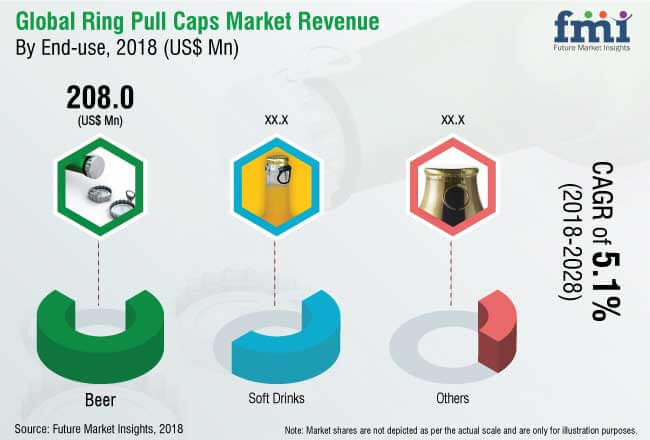
Increasing demand for convenience packaging and bottle opening solutions is projected to be a key factor pushing the global demand for ring pull caps. Ring pull caps offer convenience in opening bottles, cans, and tins by simply puling the ring on the top of the products. This also eliminates the requirement of an opener, traditionally required for opening a crown cap. Moreover, ability of ring pull caps to hold high pressure of carbonated and non-carbonated drinks, would further drive the global ring pull caps market. Expanding at a steady CAGR of 5.1% during the assessment period of 2018-2028, the global ring pull caps is expected to reach a market valuation of US$ 480.8 Mn by 2028, as per a recent market study by Future Market Insights.

Request a Complete TOC of this Report with figures: https://www.futuremarketinsights.com/toc/rep-gb-7223 

Aluminum to Remain the Most Preferred Material; Increasing Demand for Tin-Free Ring Pull Caps to Propel the Market

Ring pull caps made of aluminum are likely to hold a major market share, whereas steel ring pull caps is projected to witness higher growth over the forecast period, primarily driven by the demand of chrome plated steel caps or tin-free caps. The lower price and barrier properties of the aluminum caps are some key factors driving the adoption of aluminum ring pull caps. In terms of end-use, beer industry is expected to witness highest adoption of ring pull caps, creating highest incremental opportunity, followed by soft-drinks. Manufacturers of functional beverages, fruit juices, ciders, spirits and wines are gradually favoring ring pull caps for the glass bottles owing to rising demand for convenience.

Steel is generally coated with tin for protection from corrosion. Chrome oxide coating is gradually replacing tin coating on the steel, making the tin-free steel highly suitable for adhesion of coating, inks, and paints, further increasing the printability of the ring pull caps. With comparatively lower manufacturing cost, increasing demand for tin-free ring pull caps is likely to push the global market for ring pull caps.

ring pull caps market

Increasing Beer Production in APEJ to Open Opportunity Doors for Ring Pull Caps Manufacturers

As per a recently concluded market analyses, developing nations of APEJ and Latin America are expected to present investment opportunities to manufacturers of ring pull caps owing to rapid production of beer over the last decade, in the aforesaid regions. Since 2006, Vietnam has witnessed a growth of more than 200% in the production of beer. On the other hand, key market players are focusing on expanding their production in APEJ, considering the region produces nearly 1/3rd of the total beer production, globally. On the other hand, declining beer production in North America, Japan, and some European countries has further impacted the ring pull caps production.

Ask us your Any Queries About this Report: https://www.futuremarketinsights.com/askus/rep-gb-7223

Design Advancements to Further Fuel Ring Pull Caps Adoption

Advancements in design such as tin free caps and crown type ring pull caps will further contributed to the increasing demand for ring pull caps across the globe. To attract more end-consumers, key market players are making efforts to improve the overall the design of ring pull caps resulting in chrome plated ring pull caps, metal cap with plastic ring to reduce the overall weight of the cap, crown type ring pull cap with ring rigidly attached to the top of the cap, oxygen scavengers for the preservation of the alcoholic beverages for long a time period among others. Moreover, focus on enhancing other aesthetics is also being considered using advanced metal printing techniques such as flexo-offset hybrid printing, creating more opportunities in the global ring pull caps market. Inefficient designs including diameter and strength of the ring could restrain the growth of ring pull caps market.

Ring Pull Caps Market Key Segments Covered

  • By Material
    • Aluminum
    • Steel
  • By Cap Diameter
    • 26 mm
    • Other sizes
  • By End-use
    • Beer
    • Soft drinks
    • Others (wine, Juices, etc.)

Key Regions covered:

  • North America
    • U.S.
    • Canada
  • Latin America
    • Brazil
    • Mexico
    • Rest of Latin America
  • Western Europe
    • Germany
    • France
    • U.K.
    • Spain
    • Italy
    • Benelux
    • Nordic
    • Rest of Western Europe
  • Eastern Europe
    • Russia
    • Poland
    • Rest of Eastern Europe
  • APEJ
    • China
    • India
    • Australia & New Zealand
    • ASEAN
    • Rest of APAC
  • Japan
  • MEA
    • GCC Countries
    • Turkey
    • South Africa
    • North Africa
    • Rest of MEA

About Packaging Division at Future Market Insights

The Packaging division at FMI provides an in-depth historical analysis and granular projections of the global packaging market. Ranging from packaging materials to designs & formats, FMI has an exhaustive market research database, serving clients with unique offerings and strategic recommendations. With a repository of 750+ reports, the team analyzed the packaging industry comprehensively in 70+ countries. The team evaluates every node of the value chain and provides end-to-end research and consulting services; reach out to explore how we can help

In its recent report, Future Market Insights has also profiled key players in the global ring pull caps market. For an extensive analysis of the competitive landscape, write at press@futuremarketinsights.com