Skin Perfusion Pressure Testing Devices Market to grow at 4.5% CAGR through 2030, Says FMI Analyst

Skin perfusion pressure (SPP) assess the local pressure in the microcirculatory system. It is widely used parameter in assessment of wound healing potential in patients with limb ischemia and peripheral artery diseases. SPP testing devices have become crucial for wound healing in patients with chronic limb ischemia. Future Market Insights (FMI), in a new study has forecast the market for skin perfusion pressure testing devices to exhibit 4.6% Y-o-Y growth in 2021. Driven by rising healthcare spending, the market will continue exhibiting high demand through the forecast period, from 2020 to 2030.

Compared to other non-invasive methods such as toe blood pressure and ankle-brachial index, SPP provides more accurate results, and thus, its usage is gaining popularity among physicians. It has been observed that SPP can evaluate ischemic condition of the lower extremities which cannot be assessed by ankle-brachial index. This increases the preference of SPP over ABI, which in turn is expected to drive the skin perfusion pressure testing devices market.

Download FREE Sample Copy of Report: https://www.futuremarketinsights.com/reports/sample/rep-gb-9263

The rising prevalence of peripheral arterial disease is another major factor driving the demand growth. Peripheral arterial disease (PAD) prevents wound healing of lower extremity. The patient populations at highest-risk have ischemic disease, foot ulcers, diabetes mellitus, and/or compromised kidney function. The most widely used test is ankle brachial index (ABI), but it has limited utility in foot ulcer patients. Ankle brachial index alone is not considered effective of wound healing. For overcoming this problem, manufacturers are focusing to develop advanced skin perfusion pressure.

The COVID-19 pandemic has significantly affected the medical practices, resulting in a decrease in non-essential medical care, including the wound healing specialty. The nationwide lockdown and disrupted supply chain has limited the ability to practice wound healing in normal conditions. The pandemic in the first few months of 2020 has had a negative impact on the skin perfusion pressure testing devices market.

Manufacturers are currently focusing on designing new innovative laser dopplers that can provide better results at less cost, and at the same time give simple and reliable outputs. For instance, free flap monitoring, a new generation device provides web-based capability, whereby, recordings from a laser doppler can be transmitted directly to a smart phone. Such advancements are expected to bode well for the global market.

Request a Complete TOC of this Report with figures: https://www.futuremarketinsights.com/toc/rep-gb-9263

Key Takeaways from Skin Perfusion Pressure Testing Devices Marker Study

  • The global skin perfusion pressure testing devices market is estimated to be US$ 28.83 Mn in 2020, is expected to grow at a market CAGR of 4.5% during the forecast period (2020-2030)
  • The U.S. holds over 90% share of the North America market, but Canada is projected to expand faster at around 5.0% CAGR
  • Germany holds the largest share of the market in Europe, and will expand at a CAGR of around 4.8% through 2030
  • The U.K. will exhibit 5.3% Y-o-Y growth in 2021, emerging as a key market for SPP testing devices in Europe. France will also continue exhibiting high demand
  • Japan and South Korea are expected to emerge as key markets for SPP testing devices in East Asia

 “Growing advancements in skin perfusion pressure testing devices and rising prevalence of peripheral artery disease and chronic limb ischemia are expected to aid increasing demand for skin perfusion testing devices. Against this backdrop, manufacturers are likely to invest in innovation to facilitate advanced treatment” says the FMI Analyst

Who is Winning?

Leading players in the skin perfusion pressure testing devices market are strengthening their market position though the acquisition, partnerships and expansion. For Instance,

  • In October, 2015, Vasamed Incorporated entered into a collaboration and distribution agreement with CorVascular Diagnostics, LLC, which designs and distributes peripheral vascular diagnostic solutions.
  • In January 2019, Perimed AB announced a partnership with Radiometer Medical ApS (Radiometer) to accelerate and expand the distribution of Perimed PeriFlux 6000 tcpO2 standalone system.

Some of the key market players covered by FMI include Vasamed Incorporated, Moor Instruments, Perimed AB, ELCAT GmbH, ATYS Medical, Viasonix, and Promed Group, consolidating their positions through mergers, acquisitions and new product launches.

Get Customization in the Report, Enquire Now @ https://www.futuremarketinsights.com/customization-available/rep-gb-9263

Want more insights?

Future Market Insights brings the comprehensive research report on forecasted revenue growth at global, regional, and country levels and provides an analysis of the latest industry trends in each of the sub-segments from 2015 to 2030. The global skin perfusion pressure testing devices market is segmented in detail to cover every aspect of the market and present a complete market intelligence approach to the reader. The study provides compelling insights on skin perfusion pressure testing devices market on basis of product in detail, cover every aspects of the market such as (laser doppler skin perfusion pressure testing devices, phtoplethysmography skin perfusion pressure testing devices, and consumables), modality (portable devices, cart-based devices), and end user (hospitals, ambulatory surgical centers, wound care centers, and vascular laboratories) across seven major regions.
Retail Clinics Market will grow at a strong CAGR of over 10% during 2018-2028

According to the latest research by Future Market Insights (FMI), the global retail clinics market value will exceed US$ 8 billion towards the end of 2028, reflecting a robust CAGR of more than 10% during 2018-2028. The revenue generated from the collective demand for retail clinics for point-of-care diagnostics and vaccination accounts for a whopping market value share of nearly 75%, according to FMI’s analysis.

Increasing acceptance of the retail clinics concept, rising awareness about cost related advantages, and improving government support for walk-in clinics will collectively supplement the growth of retail clinics market over the course of coming years. The report opines that the role of governments will be vital in popularization of retail clinics, particularly in developing regional markets.

Request a Sample Report with Table of Contents and Figures: https://www.futuremarketinsights.com/reports/sample/rep-gb-9254

Convenience & Cost Benefit Collectively Pushing Prospects of Retail Clinics

Retail clinics follow a holistic care approach. In addition, their partnership with various Telehealth vendors such as Teladoc and Doctor on Demand enable healthcare delivery and services at any given place and time. For Instance, an E-commerce channel is being implemented by the US-based CVS Health, one of the leaders in the MinuteClinic chain of retail clinics.

The report has cited top three factors capturing attention of increasing consumers –

1.       Quality care

2.       Ease of access

3.       Cost efficiency and transparency

The growing demand for healthcare at relatively lesser service costs will continue to favor the growth of retail clinics market during the forecast period. A lot of major healthcare payers are considering and including retail clinics in their healthcare provider networks, motivating enrolees to opt for these clinics for convenience and quality of care.

Preview Analysis Global Retail Clinics Market Segmentation By Service Type (Reimbursement Scenario, , Procedure Codes, Reimbursement Scenario, U.S. Patient Claim Lines, Target Population for Retail Clinics, Consumer Sentiment Analysis, Available Models for Retail Clinics, Walgreens Co., Costs Per Patient Visit Comparison); By Application (Point-of-Care Diagnostics, Clinical Chemistry & Immunoassay, Vaccination, Others): https://www.futuremarketinsights.com/reports/retail-clinics-market

Challenges to Retail Clinics Penetration Still Prevail, in Developing Regions

Developed regions, the key areas for retail clinics market, account for over 80% of the global revenue. The report envisages significant growth potential in emerging East Asian economies for the retail clinics market, over the projection period.

Retail clinics have been attracting a wide consumer base across the US and the number is actively growing in other key markets such as Europe and China. However, the outreach of retail clinics continues to face challenges due to poor monitoring of penetration into several developing as well as underdeveloped regions. While retail clinics have gained attention since the past few years and are expanding their offerings prudently at a rapid pace, the report highlights that this prompts at an increased need for regulation checks over the coming years.

Our advisory services are aimed at helping you with specific, customized insights that are relevant to your specific challenges. Let us know about your challenges and our trusted advisors will connect with you: https://www.futuremarketinsights.com/askus/rep-gb-9254

Retail clinics are positioning themselves to play a crucial role in the delivery of primary care services, worldwide. This trend in the retail clinics market is expected to increase predominantly in developing regions. The potential opportunities will also create long-term challenges facing retailers, clinical laboratories, healthcare policy makers, and pathologists, as suggested by the report.

Key Players Keen on Investing Efforts in Customer Adherence

Patients face difficulties with respect to filing specialty prescriptions, which further affects their will for adherence. CVS Health also piloted a Specialty Connect Program to overcome hindrances in adherence. This program is claimed to enable patients to drop their prescriptions at any given CVS Health store and pick up their medicines once ready. The program has also initiated the delivery of these medicines at their houses or any clinician’s office.

Gastroesophageal Reflux Disease (GERD) Devices Market will observe just-over 4% CAGR over 2018-2028

Exceeding the revenue of US$ 1 billion in 2018, the global sales of gastroesophageal disease devices will witness a steady over 4% CAGR during 2018-2028. As indicated in a new intelligence outlook of Future Market Insights (FMI), esphagoscopes and gastroscopes will continue to account for most of the sales. Adoption of gastroesophageal reflux disease devices will remain maximum for diagnostic procedures, followed by fundoplication procedures.

More Patients Continue to Prefer GERD Devices over Lifestyle Modifications & PPIs

Besides the rapid expansion of geriatric population and elevating prevalence rate of obesity-driven gastroesophageal reflux diseases, FMI in a new study states that the frequent intake of asthma medications is also a strong impact factor associated with the growth of gastroesophageal reflux disease devices market.

Although industry experts recommend lifestyle modifications as the most suitable remedy for gastroesophageal diseases, the growing demand for surgeries for obesity will continue to drive sales of gastroesophageal disease devices in coming years.

Request a Sample Report with Table of Contents and Figures: https://www.futuremarketinsights.com/reports/sample/rep-gb-1741

Although industry experts recommend lifestyle modifications as the most suitable remedy for gastroesophageal diseases, the growing demand for surgeries for obesity will continue to drive sales of gastroesophageal disease devices in coming years.

The second line of treatment for gastroesophageal reflux disease includes proton pump inhibitors (PPI) therapy, which can reduce the usage of gastroesophageal reflux disease devices. Proton pump inhibitors are the drugs that regulate acid production within stomach, and thereby restrict gastroesophageal reflux.

However, the proven side effects and functional failure of proton pump inhibitors in the long run will continue to benefit the demand for surgical treatment of gastroesophageal reflux disease, favoring the overall sales of gastroesophageal reflux disease devices such as PH monitoring system and manometry system.

For More Information On This Report, Please Visit @ https://www.futuremarketinsights.com/checkout/1741

Diagnostic Centers & Private Clinics to Employ More GERD Devices

While a majority of adoption of gastroesophageal reflux disease devices prevails in hospitals, the constantly increasing number of establishments in the ambulatory surgical center and diagnostic center segments is likely to translate into a higher rate of adoption of gastroesophageal reflux disease devices within the latter two.

With the number of diagnostic centers and private practice clinics on the constant rise, it is more likely that the demand for gastroesophageal reflux disease devices will observe steady growth over the years to come. Towards the end of forecast period, global market value share of clinics and diagnostic centers will be more than 35%, as suggested by FMI’s analysis of the gastroesophageal reflux disease devices market.

Preview Analysis Global Gastroesophageal Reflux Diseases Devices Market: by Product Type – Diagnostic Devices, Manometry System, PH Monitoring System, Esophagoscopes and Gastroscopes, Treatment Devices, Ultrasonic Surgical Endostapler, Fundoplication Devices, Sphincter Augmentation Devices, Radiofrequency Ablation Devices; by Procedure Type – Diagnostic Procedures, Fundoplication Procedures, Radiofrequency Thermal Ablation, Magnetic Sphincter Augmentation: https://www.futuremarketinsights.com/reports/gastroesophageal-reflux-diseases-devices-market

Key GERD Device Manufacturers Eyeing New Product Launches

The report tracks some of the key companies operating in the Gastroesophageal Reflux Disease Devices market, such as Olympus Corporation, Pentax Medical, Medtronic Plc., Diversatek Inc. The report also tracks the key manufacturers operating in gastroesophageal reflux disease treatment devices, such as EndoGastric Solutions, Medigus Ltd., Torax Medical, Inc. and Mederi RF, Inc.

A majority of key manufacturers of gastroesophageal reflux disease devices are emphasizing new product launches. Innovation of new and advanced products is in turn shaping the growth of gastroesophageal reflux disease devices market.

According to the report findings,

  • Olympus Corporation and Pentax Medical hold the maximum company share in the gastroesophageal reflux disease devices market.
  • Olympus Corporation recently launched an advanced version of esophagoscope and gastroscope.
  • Plc. and Diversatek, Inc. are the key players of diagnostic devices for gastroesophageal reflux disease, contributing a significant share in overall gastroesophageal reflux disease devices market.
  • EsophyX Z is the new and advanced version of EsophyX gastroesophageal reflux disease device, used for the transoral incisionless fundoplication process.

Our advisory services are aimed at helping you with specific, customized insights that are relevant to your specific challenges. Let us know about your challenges and our trusted advisors will connect with you: https://www.futuremarketinsights.com/askus/rep-gb-1741

More from FMI’s Healthcare, Pharmaceuticals and Medical devices Market Intelligence:

Endoscopic Ultrasound Needles Market Research Report 2022 | Key Players Medtronic, Medi-globe, ACE Medical Devices Pvt. Ltd, Olympus Corporation

The endoscopic ultrasound needles market is witnessing the advent of wide range of products including technological advancements in FNA and FNB for solid lesions. Endoscopic ultrasound have gained wide acceptance among surgeons as minimally invasive procedure along with EUS guided needles as the safe and minimally invasive method driving endoscopic ultrasound needles market growth.

According to the latest study by Future Market Insights (FMI), the endoscopic ultrasound needles market is expected to reach nearly US$ 405.0 million by 2025 end. Although, other methods are also viable, however, the specimens collected or diagnosis done using endoscopic ultrasound needles provides histological and cytological studies of the organ affected.

Manufacturers in the endoscopic ultrasound needles market are focusing on new product launches for more precise diagnosis of tissues collected using needles. Gaining a greater share in the endoscopic ultrasound needles market with diverse portfolio is one of the key strategies of leading players. As per the report, companies in the endoscopic ultrasound needles market are also focusing on collaborating for development and distribution of advanced endoscopic ultrasound needle products. Key players in endoscopic ultrasound needles market are focusing on new product development in emerging regions including Latin America and Asia Pacific owing to the increasing prevalence of cancer and other chronic diseases.

Get a Sample Copy of Report: https://www.futuremarketinsights.com/reports/sample/rep-gb-9247

Endoscopic Ultrasound-Guided Fine Needle Aspiration to Gain Popularity with Rise in Gastrointestinal Diseases

According to the FMI report, Endoscopic Ultrasound-Guided Fine Needle Aspiration (EUS-FNA) is likely to account for largest share in the endoscopic ultrasound needles market. EUS-FNA gaining popularity for the diagnosis of gastrointestinal diseases and peri-gastrointestinal lesions. The wide application of FNA has also accelerated the growth in the endoscopic ultrasound needles market.

With the growing demand for minimally invasive procedures, doctors and surgeons are using EUS combined with FNA to collect sample fluid and tissue from chest and abdomen for diagnosis. It has also emerged as an alternative to exploratory procedure.

Meanwhile, in recent years studies conducted on Endoscopic Ultrasound-Guided Fine Needle Biopsy (EUS-FNB) have shown some promising results. As per the FMI study on endoscopic ultrasound needles market, FNB is emerging as the novel tool in diagnosis by providing information on tissue architecture.

However, FNB needles are more expensive as compared to FNA needles. Although the initial results of FNB are encouraging, more robust evidence are required to prove its superiority over FNA in endoscopic ultrasound needles market.

Request a Complete TOC of this Report with figures: https://www.futuremarketinsights.com/toc/rep-gb-9247

Endoscopic Ultrasound Needles to be used on a Large Scale by Ambulatory Surgical Centres

As per the study, ambulatory surgical centres will use endoscopic ultrasound needles on a large scale owing to the rise in number of these centres and increasing number of endoscopic ultrasound surgeries performed in ambulatory surgical centres. Being the minimally invasive and non-surgical procedure that can be performed through colon or upper GI tract, ambulatory surgical centers are gaining traction in the endoscopic ultrasound needles market.

Moreover, endoscopic ultrasound is generally considered safe when performed at ambulatory surgical centres with expert healthcare team. Various healthcare organisations are building ambulatory surgical centres within the premises in the healthcare facility offering wide range of services with technological advancements to achieve economies of scale. Increasing number of ambulatory surgical centers are offering safe, cost-effective services, especially for gastroenterology, thereby, driving the demand in the endoscopic ultrasound needles market.

According to the study, the rise in adoption of endoscopic ultrasound needles in gastroenterology is expected to accelerate the demand for enteral endoscopic ultrasound needles in the coming years.

Endoscopic Ultrasound Needles Market- Competitive Analysis

The report provides detailed profiles of the leading players in the endoscopic ultrasound needles market. Key developments and business strategies by players to remain competitive in the market are also provided in the report. Some of the key players in the endoscopic ultrasound needles market are Medtronic, Medi-globe, ACE Medical Devices Pvt. Ltd, Olympus Corporation, Cook Medical, Boston Scientific Corporation, and CONMED Corporation.

Get Customization in the Report, Enquire Now @ https://www.futuremarketinsights.com/customization-available/rep-gb-9247

Key Segment

Based on the application

  • enteral EUS needles
  • bronchial EUS needles

Based on the Region

  • Europe
  • North America
  • Asia Pacific
  • Middle East and Africa
  • Japan
  • Latin America

This FMI report also offers an accurate forecast of the endoscopic ultrasound needles market for the period between 2017 and 2025. The endoscopic ultrasound needles market is envisaged to record a CAGR of over 4.5% between 2017 and 2025. For more insights, please reach out at ress@futuremarketinsights.com

Baby Personal Care Products Market is anticipated to grow at a CAGR of 6.7% during the forecasted period of 2020 to 2030

Rising demand for baby personal care products is here to stay despite the global economic challenges posed by the COVID-19 pandemic, suggests study conducted by Future Markets Insights (FMI). Recent launches in premium products category and personalization based on demography are expected to be the key drivers for the market along with the growing concern towards skin care routine of the babies. According to a recent report published by FMI, the global baby personal care products market is anticipated to grow at a CAGR of 6.7% during the forecasted period of 2020 to 2030 and reach market value of 89 billion (US) dollars by the end of year 2030.

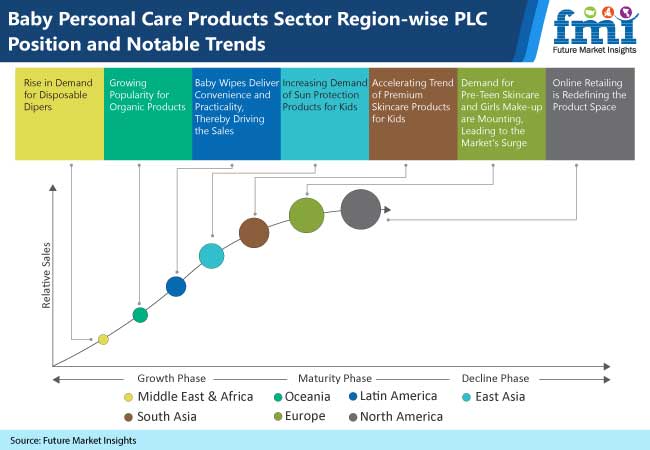
Market for baby personal care products always had a conventional customer base for personal hygiene products like diapers. However, a spike in the demand for premium products like wipes and training pants is witnessed, especially in the developing countries. This new trend has opened up a wide range of market penetration opportunities and potential for innovations in the segment for the manufacturers.

Although skin care products enjoy the number one position in the baby personal care products market, other categories like oral hygiene and hair care products are gaining popularity.

In addition to this, increase in market potential and opportunities due to these trends is getting a huge push by the growing demand for organic and natural products. Thus giving a whole new area for manufacturers to explore and find niche.

FMI’s report provides a comprehensive overview of the market, covering important market dynamics.

Baby Personal Care Products Market to Hold a High Potential for Growth by 2025 3
Baby Personal Care Products Market

Key takeaways from the report:

  • Market players are focusing on bringing innovative products, keeping in mind the demands of the consumer
  • Focus on products with ingredients that are natural and non-toxic is going to be the future of the baby personal care products industry
  • Online sales channels are seeing an upper hand over conventional stores, owing to the restrictions put forth by the pandemic
  • Skincare is gaining prominence, while personal hygiene products account for a sizeable share
  • Europe is going to be the largest market for premium products throughout the forecasted period
  • Developing countries are emerging as the potential market for baby personal care products

Steered by changing consumer preferences, leading brands are gradually shifting towards organic ingredients. With consumers more willing to spend on premium products, focus towards innovation in skincare is expected to surge,” said a lead analyst at FMI.

For Information On The Research Approach Used In The Report, Ask Analyst @ https://www.futuremarketinsights.com/ask-question/rep-gb-12688

Steady Growth Expected Despite COVID-19

As the world came to a standstill with lockdowns imposed by the governments across the world, the impact on the market of baby personal care products was significant. Retail channels being one of the worst hit due to shortage of labor and transport restrictions, major reliance on E- commerce was the only way to move ahead.

The lockdown has forced industries and online service providing platforms to join hands in order to cater to the customers. In a way, e – commerce has come to the rescue by redefining commercial activities globally.

Meanwhile the segment of population that was not open to online shopping has also shown its willingness to adapt during these turbulent times.

The lack of transport facilities in the beginning of the lockdown have left a dent in the baby personal care products market. However, experts believe that market is going to recover soon with restrictions being lifted by governments in phases across the world.

“As the industry recovers from the effects of pandemic on its business, focus on premium products and bringing in new range of organic and 100 % natural products will shape the market in a positive way in the near future” quotes a lead analyst at FMI.

Who is winning?

Some of the market players featured in the baby personal care products report are Me n Moms Pvt. Ltd., Klee Naturals, Tubby Todd Bath Co., Hindustan Unilever Limited, Johnson & Johnson, L’Oreal, Kimberly Clark, Colgate-Palmolive, Beiersdorf AG, Shiseido, Ontex Group, Biotique, Himalaya Global Holdings Ltd., Weleda Inc., The Clorox Company (Burt’s Bees), Babylist Inc. (Earth Mama Organics), among others.

Product launches will remain a key strategy adopted by market players to gain competitive advantage. The baby personal care products industry holds immense potential globally. Companies are introducing products which satisfy the kids as well as the adults. The reason being, products that are healthy and safe top the list for adults and products that are fun and attractive appeal to the kids.

For instance, Tree –Free baby wipes by Caboo are made from bamboo spun lace and are rich in vitamin E, chamomile flower and aloe Vera leaf. While this gives the baby a soothing touch, it also gives the adults satisfaction to adults of doing their tiny bit for the planet.

More Insights on Baby Personal Care Products Market

Future Market Insights, in its new report, provides an unbiased analysis of the global baby personal care products market, presenting demand data (2015-2019) and forecast analysis for 2020-2030. The study divulges compelling insights on the baby personal care products market based on the product type (skincare {creams & lotions, and face cleanser}, body care {soaps, shower gels, creams, and oils}, hair care {shampoos, conditions, hair oils, and others}, oral care {toothpaste, toothbrush, and teethers}, toiletries {diaper & training pants, and baby wipes}, fragrances & deodorants, and colour cosmetics), gender (boys, girls, unisex), age group (newborn, toddler, kids), end-user (individual, institutional), sales channel (modern trade, convenience stores, online retailers, mono brand stores, drug stores, specialty stores, departmental stores, and other sales channel) across seven major regions.

About Future Market Insights (FMI)

Future Market Insights (FMI) is a leading provider of market intelligence and consulting services, serving clients in over 150 countries. FMI is headquartered in Dubai, and has delivery centers in the UK, U.S. and India. FMI’s latest market research reports and industry analysis help businesses navigate challenges and make critical decisions with confidence and clarity amidst breakneck competition. Our customized and syndicated market research reports deliver actionable insights that drive sustainable growth. A team of expert-led analysts at FMI continuously tracks emerging trends and events in a broad range of industries to ensure that our clients prepare for the evolving needs of their consumers.

Contact:
Future Market Insights,
1602-6 Jumeirah Bay X2 Tower,
Plot No: JLT-PH2-X2A,
Jumeirah Lakes Towers, Dubai,
United Arab Emirates
For Sales Enquiries: sales@futuremarketinsights.com
For Media Enquiries:
 press@futuremarketinsights.com
Website:
 https://www.futuremarketinsights.com/

Precision Stainless Steel Market is to reach US$ 3.2 Bn dollars by 2029

The demand witnessed in the global precision stainless steel market is increasing at a rapid pace. With its use across various sectors including industrial, civil, mechanical, and others increasing, Future Market Insights (FMI) has forecast the precision stainless steel market is to reach US$ 3.2 Bn dollars by 2029.

Precision stainless steel comes in many varieties and this feature combined with its easy workability makes it popular among industries. Players are on the lookout for every type of precision stainless steel to design and manufacture their industrial goods.

Get | Download Sample Copy with Graphs & List of Figures: https://www.futuremarketinsights.com/reports/sample/rep-gb-9833

As there is a constant rise in the manufacturing of industrial goods, the growth prospect of the precision steel market seems promising. FMI’s study offers a comprehensive overview of the market. It studies the key growth drivers as well as gauges investment feasibility across various segments. Some of the key takeaways from the report are highlighted below.

Key takeaways from the precision stainless steel market:

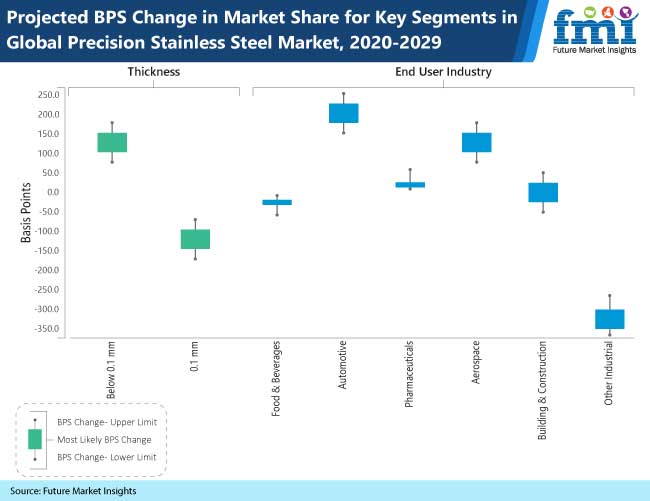
  • The under 0.1mm category is expected to take up approximately 25% of the global precision stainless steel market. It is also expected to reach 800 million dollars by 2029
  • With precision stainless steel being used for the manufacturing of seamless pipes and tubes, the automotive segment is said to have a strong foothold with a CAGR of 3.8%
  • Precision stainless steel also has its use in the electronics and transportation industry. This guarantees a 2/5th share value in the global market between 2020-2029
  • East Asia is expected to overtake other regions and create an opportunity to reach 388.7 million dollars by 2029
  • By 2029, South Asia is expected to expand by 1.4 times of current market value

“Some of the leading manufacturers operating in the global precision stainless steel market are aiming to capitalize on opportunities prevalent across high potential markets in East Asia. Expansion of automotive sector and construction activities in China, Japan, and South Korea are causing shift of focus among companies from developed to high potential markets,” said FMI analyst.

precision stainless steel market

Demand Likely to Reduce during COVID-19

The global precision stainless steel market has witnessed a reduction in demand for precision stainless steel owing to the pandemic. Covid-19 has caused a disruption in the supply chain of industries across the globe.

Request a Complete TOC of this Report with figures:  https://www.futuremarketinsights.com/toc/rep-gb-9833

Lockdown orders enforced in regions such as Europe, Asia, and North America have hampered production activities in across plants. This heavily impacted the global precision stainless steel market.

Precision Stainless Steel Market Segmentation

Material Type

  • Below 0.1 mm
  • 0.1 mm to 0.4 mm

End-user Industry

  • Food Industry
  • Automotive
  • Pharmacy
  • Construction
  • Industrial
  • Aerospace

Regional Outlook

  • North America – US, Canada
  • Latin America – Brazil, Mexico, Argentina, and the rest of Latin America
  • Europe  –  Germany, Russia, Italy, France, U.K, Spain, BENELUX, Nordic, Poland, and the rest of Europe
  • South Asia – India, Thailand, Indonesia, Malaysia, Vietnam, and the rest  of South Asia
  • East Asia – China, Japan, South Korea
  • Oceania – Australia, New Zealand

Who is winning?

Top players of precision stainless steel contribute approximately 40-45% to the global market value. Some of the leading key players are Acerinox, Baoshan Iron & Steel Co., AK Steel Corporation, Outokumpu Oyj, Jindal Stainless Group, and Aperam.

These players are trying to cope up with the after-effects of the pandemic and implement new strategies to get back to their production processes.

For More Information or Query or Customization Before Buying, Visit: https://www.futuremarketinsights.com/customization-available/rep-gb-9833

More Valuable Insights on the Precision Stainless Steel Market:

Future Market Insights (FMI) has provided an unbiased analysis of the precision stainless steel market. FMI has analyzed the global market based on historical data from 2015-2019 and opportunity assessment from 2020-2029. In terms of thickness, the precision steel market is segmented into below 0.1mm and 0.1 mm. On the basis of end-use industry, the market is segmented into food & beverages, automotive, pharmaceuticals, aerospace, building & construction, and others. Regionally, the market can be segmented into North America, Europe, Latin America, MEA, East Asia, South Asia, and Oceania.

About Future Market Insights (FMI)

Future Market Insights (FMI) is a leading provider of market intelligence and consulting services, serving clients in over 150 countries. FMI is headquartered in Dubai, and has delivery centers in the UK, U.S. and India. FMI’s latest market research reports and industry analysis help businesses navigate challenges and make critical decisions with confidence and clarity amidst breakneck competition. Our customized and syndicated market research reports deliver actionable insights that drive sustainable growth. A team of expert-led analysts at FMI continuously tracks emerging trends and events in a broad range of industries to ensure that our clients prepare for the evolving needs of their consumers.

Contact:
Future Market Insights,
1602-6 Jumeirah Bay X2 Tower,
Plot No: JLT-PH2-X2A,
Jumeirah Lakes Towers, Dubai,
United Arab Emirates
For Sales Enquiries: sales@futuremarketinsights.com
For Media Enquiries:
 press@futuremarketinsights.com
Website:
 https://www.futuremarketinsights.com/

Aluminum Foam Market will cross US$ 35 Mn by 2030

Future Market Insights (FMI) has forecasted that the global aluminum foam market will record healthy growth between 2020 and 2030, progressing at a steady CAGR of 4.5%. Furthermore, the study projects that the global value of the market will cross US$ 35 Mn by 2030.

The report attributes the growth of the market to persistent demand across automotive and construction industries, owing to the material’s superior electrical, mechanical, and structural characteristics.

Similarly, the study has identified increasing inclination towards sustainable raw materials and the growing trend of lightweight vehicles will bestow remunerative opportunities to market players.

The analysts at FMI also remark that an increasing stringency of regulations restricting the usage of plastic polymer foams is asserting end-users to seek sustainable alternatives such as aluminum foam.

However, the report opines that the COVID-19 pandemic poses a major challenge to the growth of the market owing to hampered operations in the automotive and construction industries, which are the major revenue drivers for the aluminum foam market.

Aluminum Foam Market to Witness an Outstanding Growth During 2017 – 2025 3
Aluminum Foam Market

Key Takeaways

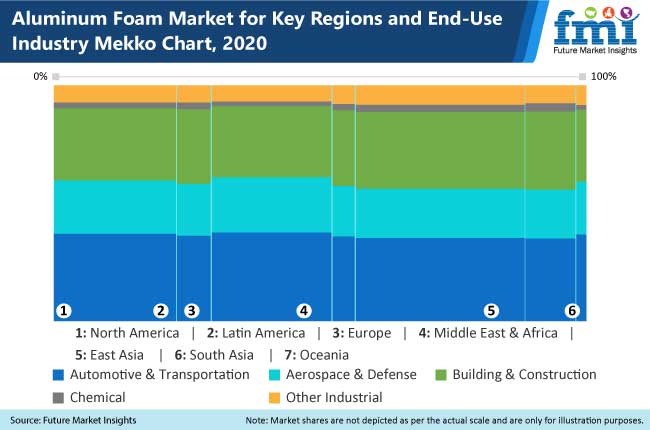
  • Open cell foam will remain the most sought variant, capturing more than 70% of market value, backed by high strength over its counterpart, closed cell foam.
  • The automotive and transportation sector is the most lucrative end-use segment, accounting for over 1/3rd of market value.
  • Aluminum foam’s application as an energy absorber, heat exchanger, and damping structure cumulatively account for 2/3rd of the market value.
  • East Asia will remain the largest region for aluminum foam, capturing over 1/3rd of value, owing to the presence of a thriving automotive industry.
  • Europe and North America will collectively capture nearly 2/5th of value, backed by high demand in aircraft and automobile production.

“Market players are focusing on adopting advanced technologies to ensure the production of superior quality aluminum foams with high strength,” remarks FMI analyst.

For Information On The Research Approach Used In The Report, Ask Analyst @ https://www.futuremarketinsights.com/ask-question/rep-gb-8402

COVID-19 Impact

The outbreak of COVID-19 has brought operations in the automotive, aviation, and construction sectors to a screeching halt, thus leading to a downtrend in the demand for several raw materials, including aluminum foam. Moreover, the demand contraction can be attributed to decreased spending on non-essential goods and cost cuttings by end-users.

Furthermore, supply-side challenges such as unavailability of raw materials and supply chain disruptions on the back of government-imposed travel restrictions are hindering the production of aluminum foams. On these lines, the growth trajectory of the aluminum foam market will behold fluctuations during the pandemic and the revamp appears to be slow and delayed.

Who is Winning?

Manufacturers of aluminum foam are enhancing their production technologies to improve the quality of end-products. Likewise, entering strategic partnerships has also been identified as a key growth strategy adopted by market players. On these lines,

  • Beihai Composite Materials Co. produces aluminum foams specifically designed for sound reduction purposes.
  • In December 2017, Cymat Technologies Ltd. entered a partnership with Spain-based Alucoil SA to produce aluminum composite panels with metallurgically-bonded aluminum foam cores.

FMI’s report includes profiles of some of the most prominent names in the market including Beihai Composite Materials Co., Ltd., Composite Materials Ltd., Cymat Technologies Ltd., American Elements Corporation, ERG Aerospace Corp., Hollomet GmbH, Pohltec Metalfoam GmbH, VIM Technology Ltd, Nanoshel LLC, Aluinvent Ltd., and Havel metal foam GmbH, among others.

To Know More About Aluminum Foam Market

A new market research report published by Future Market Insights (FMI) on the global aluminum foam market offers an executive-level blueprint of the market. It offers insights into demand trends and provides analysis of opportunities over the forecast period, 2020-2030. The report examines the market through four different segments – product type, application type, end-use, and region. The report also provides extensive assessment of pricing by different key market dynamics, life cycle analysis, and technologies that are being deployed in the supply and product adoption across several end-use industries.

About Future Market Insights (FMI)

Future Market Insights (FMI) is a leading provider of market intelligence and consulting services, serving clients in over 150 countries. FMI is headquartered in Dubai, and has delivery centers in the UK, U.S. and India. FMI’s latest market research reports and industry analysis help businesses navigate challenges and make critical decisions with confidence and clarity amidst breakneck competition. Our customized and syndicated market research reports deliver actionable insights that drive sustainable growth. A team of expert-led analysts at FMI continuously tracks emerging trends and events in a broad range of industries to ensure that our clients prepare for the evolving needs of their consumers.

Contact:
Future Market Insights,
1602-6 Jumeirah Bay X2 Tower,
Plot No: JLT-PH2-X2A,
Jumeirah Lakes Towers, Dubai,
United Arab Emirates
For Sales Enquiries: sales@futuremarketinsights.com
For Media Enquiries:
 press@futuremarketinsights.com
Website:
 https://www.futuremarketinsights.com/

Plant-Based Beef market to record a CAGR of 22.7% between 2020 and 2030

The global meat sector at present is facing unprecedented level of disruption and competition, due to mounting growth of plant-based alternatives across many categories. Earlier, plant-based meat alternative products warranted limited shelf space and were meant for niche consumers. With increased awareness of “Veganuary” multiple manufacturers have expanded new product line for plant-based products owing to increased vegan or indeed flexitarian diet.

FMI has forecast the plant based beef market to record a CAGR of 22.7% between 2020 and 2030. The overall market value is expected to reach US$ 16.13 Bn by the end of 2030. The global market value is estimated to reach US$ 2.08 Bn by the end of 2020.

The global food and beverage recent industry changes illustrate the growth in plant-based alternatives that has brought disruption. Companies across the spectrum are investing heavily in creating and acquiring new products and brands which will provide momentum to the surging consumer demand for plant-based beef products.

For more Insights into the Market, Request a Sample of this Report: https://www.futuremarketinsights.com/reports/sample/rep-gb-12682

plant based beef market

Key Takeaways from the Plant Based Beef Market Study

  • Future Market Insights (FMI) forecasts impressive growth of the Plant Based Beef market at over 22.7% CAGR between 2020 and 2030
  • Based on the source, the soy-based protein segment holds the dominance in the market for plant based beef, while wheat-based protein segments are expected to grow prominently in the forecasted period of 2020-2030
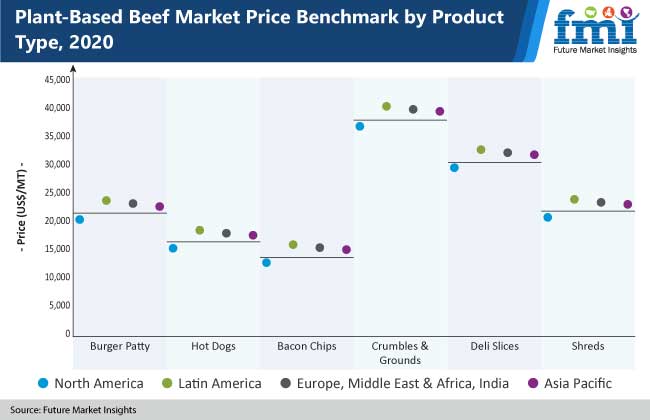
  • Based on the product type, burger patty segment holds the dominance in the market for plant based beef
  • As alternate protein gains traction in the market owing to the increasing awareness about the environmental impact of food choices consumers make, the majority of the population is shifting towards plant based beef and is expected to gain traction in near future
  • Companies across the spectrum are investing heavily in creating and acquiring new products and brands which will provide momentum to the surging consumer demand for plant-based beef products

We Offer tailor-made Solutions to fit Your Requirements, Request Customization@ https://www.futuremarketinsights.com/customization-available/rep-gb-12682

“Leading market players are focusing on launching novel tastes and textures to woo consumers. With COVID-19 tightening its noose worldwide, more companies are likely to focus on ensuring better nutrient profile, as consumers gradually move away from meat consumptions. This will bode well for the overall market,” said a lead analyst at FMI.

New Product Development Fuelling Plant-Based Products Demand

Increasing demand for innovative products has paved the way for product development across frozen, chilled and ambient segments. This innovation helps consumers with a wider choice of brands and products, and allows plant-based beef to advance improved shelf space and recognition.

UK is the global leader for vegan food launches. In 2019 approximately 18% of new food launches were vegan. Tesco has developed wicked kitchen range of meat-free products.

Who is winning?

A few of the leading players operating in the Plant Based Beef market are Impossible Foods, Inc., Gardein by Conagra Brands, MorningStar Farms, Archer Daniels Midland Company, Symrise, Roquette Frères S.A., Kellogg’s, Tyson Foods, Inc., Sotexpro SA, Crown Soya Protein Group, Puris Proteins, LLC, Ingredion Inc, Beneo GmbH, Glanbia plc, Fuji Oil Co., Ltd. and other players.

Contact Sales for Further Assistance in Purchasing this Report@ https://www.futuremarketinsights.com/checkout/12682

Key Questions Answered by the Report

  • What is the plant based beef market size?The global plant-based beef market currently holds a market value of US$ 2.08 Bn and is expected to reach US$ 16.13 Bn by 2030.
  • Which is the largest market for plant based beef?Europe, the Middle East, Africa, and India currently holds dominance backed by surging demand and production.
  • Which are the top companies in the plant based beef market?Some of the leading companies operating in the plant-based beef market are Impossible Foods, Inc., Gardein by Conagra Brands, MorningStar Farms, Archer Daniels Midland Company, Symrise, Roquette Frères S.A., Kellogg’s, Tyson Foods, Inc., Sotexpro SA, Crown Soya Protein Group, Puris Proteins, LLC, Ingredion Inc, Beneo GmbH, Glanbia plc, Fuji Oil Co., Ltd.
  • Which is the leading segment among product types in plant based beef market?The burger patty segment currently leads the market among product types. The launch of plant-based burger patty by some of the leading players is aiding expansion of the segment.
  • What is the outlook on the plant based beef market?FMI foresees positive growth for the plant-based beef market. The consistently rising demand for plant-based beef products will aid the expansion of this market.

Contact Us:                                                      

Mr. Debashish Roy
Unit No: AU-01-H Gold Tower (AU), Plot No: JLT-PH1-I3A,
Jumeirah Lakes Towers, Dubai,
United Arab Emirates
MARKET ACCESS DMCC Initiative
For Sales Enquiries: sales@futuremarketinsights.com
For Media Enquiries: press@futuremarketinsights.com
Website: https://www.futuremarketinsights.com

Pressotherapy Systems Market 2022 | Current and Future Demand, Analysis, Growth and Forecast By 2027, Report

Pressotherapy is a method related to lymphatic waste and cellulite. It is a new idea yet its appearing to have many advantages, in the evacuation of fat as well as in more different treatment ranges, for example, tattoo removal. It offers the customer solutions for lymph seepage, lessening of cellulite, expanded fat digestion and developed for efficient removal of the tattoo. Pressotherapy is conveyed by PC controlled pressure frameworks that generate loads of air situated around the appendages. The chambers inflate sequentially to help push fluid towards the lymphatics and increase draining. This also improves the venous flow around the body. The result of this sequential massage is to assist clear fluid like edema and reduce swelling. Pressotherapy is an excellent treatment on its own but can also be combined with other treatments to increase its lipo-laser and acoustic wave therapy.

Pressotherapy is a treatment that is calibrated and constant weighted rubbing or massage that advances the physiological seepage of interstitial liquid and circulation of blood. The gadget blows up specific pneumatic structures (bladders) that having a flawless anatomical correspondence, wrap appendages and abdomen. The bladders are fuelled by an electronic compressor keeping in mind the end goal to make a peristaltic wave that moves in the distal-proximal bearing in the flow of the fluid stream.

The circulatory framework is an arrangement of vessels that contains and moves some body Fluids i.e. from the blood in blood circulatory framework and the lymph in a lymphatic framework. The bladders comprise of parallel fragments that are deflated and inflated in a successive way guaranteeing a unidirectional stream, without interference or stagnation. The groupings are composed of cycles of a brief span. The weights connected to each portion, can vary from case to case, be that as it may, it must not surpass the circulatory strain, to keep away from harm to the physiological course. The lymph seepage advances blood course encouraging the expulsion of catabolites and waste from the extracellular condition and guaranteeing the supply of new supplements.

Get a Sample Copy of Report: https://www.futuremarketinsights.com/reports/sample/rep-gb-3668

Pressotherapy Systems Market: Drivers and Restraints

The key contributor to the growth of global Pressotherapy systems includes increasing number of lipo-laser and acoustic wave therapy owing to sedentary lifestyle and expanding elder population base. Poor dietary habits and fluid intake, increasing obesity levels and rising caseload of metabolic disorders may fuel the rate of market growth. Advancements in Pressotherapy system composition materials leading to minimize patient discomfort and give new favor to the market. Availability of innovative smartphone applications has boosted the growth of the market for Pressotherapy systems management and patient safety, which are useful for both physicians and patients.

Pressotherapy Systems Market: Overview

Global Pressotherapy systems market is consolidated with a several players. HEAT Spa Kur Therapy Development Inc., Unmanned Aircraft Systems, Guangzhou Creatbeauty Technology Co., Ltd., Doris Electronic Technology Co., Ltd are some of the key global players in the market. Chinese players have a major share in the Asia Pacific market owing to increasing number of emerging Pressotherapy systems manufacturers and growing demand for the therapy.

Pressotherapy Systems Market: Region-wise Outlook

Geographically, Pressotherapy systems market is segmented into regions viz. North America, Latin America, Western Europe, Eastern Europe, Asia-Pacific excluding Japan, Japan, Middle East and Africa. Developed markets like North America and Europe are expected to witness robust growth due to increasing demand and presence of the main global players in the region. Asia Pacific is projected to register positive growth owing to favorable patient demographics and developing healthcare infrastructure in the region. The lack of healthcare infrastructure and insufficient proper training is expected to impact the Pressotherapy systems market in Africa negatively.

Request Brochure of Report: https://www.futuremarketinsights.com/reports/brochure/rep-gb-3668

Pressotherapy Systems Market: Key Players

The key players in the global Pressotherapy systems market include DJO Global, Inc., Bio Matrix, Elettronica Pagani Srl, Devon Medical Products Inc., Novasonix Technology Sl., HEAT Spa Kur Therapy Development Inc., Unmanned Aircraft Systems, Guangzhou Creatbeauty Technology Co., Ltd., Doris Electronic Technology Co., Ltd and many more.

The research report presents a comprehensive assessment of the market and contains thoughtful insights, facts, historical data, and statistically supported and industry-validated market data. It also contains projections using a suitable set of assumptions and methodologies. The research report provides analysis and information according to categories such as market segments, geographies, types, technology and applications.

Pressotherapy Systems Market: Segmentation

Global Pressotherapy systems market has been segmented on the basis of application, end-user, and region.

Based on the application, the global Pressotherapy systems market is segmented into:

  • Veno-lymphatic circulation
  • Cellulite at different stages
  • Adiposity edema
  • Reduction of swelling
  • Tired legs
  • Lymphatic drainage
  • Re-modelling
  • Skin elasticity

Based on the end user, Pressotherapy Systems Market is segmented into the following:

  • Hospitals
  • Specialty Clinics

Get Customization in the Report, Enquire Now @ https://www.futuremarketinsights.com/customization-available/rep-gb-3668

About Future Market Insights (FMI)

Future Market Insights (FMI) is a leading provider of market intelligence and consulting services, serving clients in over 150 countries. FMI is headquartered in Dubai, and has delivery centers in the UK, U.S. and India. FMI’s latest market research reports and industry analysis help businesses navigate challenges and make critical decisions with confidence and clarity amidst breakneck competition. Our customized and syndicated market research reports deliver actionable insights that drive sustainable growth. A team of expert-led analysts at FMI continuously tracks emerging trends and events in a broad range of industries to ensure that our clients prepare for the evolving needs of their consumers.

Critical Care Information Systems Market Forecast 2017 – 2027 | Affiliated Computer Services Inc., All Scripts Healthcare Solutions, Inc., Cerner Corporation

Critical care information systems are used to help manage the large amount of data generated in an intensive care unit every day. Obtaining, synchronizing, assimilating, and evaluating patient data is very difficult because of incompatibilities among monitoring equipment, the absence of standard data formatting and proprietary limitations from industry. The intensive care units are a specialized section of a hospital containing the equipment, medical and nursing staff, monitoring and life support devices necessary to provide continuous care to patients that are severely ill and medically unstable. Information and communication technology has the potential to address many problems encountered in ICU care and managing large amounts of patient and research data and reducing medical errors.

Download FREE Sample Copy of Report: https://www.futuremarketinsights.com/reports/sample/rep-gb-3649

Critical Care Information Systems Market: Drivers and Restraints

The extensive use of physiological monitoring and organ support systems in critical care ensures that these areas are already technologically rich environments. This leads to a higher likelihood of acceptance of new information technology and ease in its implementation that reduces the inherent risk of information technology projects. However, clinical record keeping has been more challenging, particularly the requirement for electronic storage of a medico-legal record. Decision support ranges in its extent and requires further development. Successful integration with other hospital systems is highly desirable but may be made more difficult by the lack of rigorous technical standards in healthcare computing.

The critical care information system is fundamental to the quality improvement, research and business reporting functions. The huge amount of data, the lack of common minimal and extensive data sets, and the technical challenges of software development, all combine to make this a resource expensive venture requiring on site customization. Purchasing and implementing a critical care information system is costly in human and material resources.

Critical Care Information Systems Market: Segmentation

The critical care information system provider’s offer specialized programs to the end-users assisting in management of health plans by offering solutions to increasing costs of complexities in various treatments.

Request Brochure of Report: https://www.futuremarketinsights.com/reports/brochure/rep-gb-3649

Critical Care Information Systems Market: Overview

The critical care information system has been implemented in 201 adult and pediatric Level 3 and Level 2 critical care units. The system provides an important medium for monitoring and managing the province’s critical care resources more effectively, as well as highlighting opportunities for implementing quality improvement initiatives at individual hospitals and across the LHINs.  Additionally, critical care information system supports the ventilator associated pneumonia and central line infection data collection under the ministry’s patient safety initiative. The data captured in critical information system is also used to develop quarterly reports to inform health care system improvements.

Critical Care Information Systems Market: Region-wise Outlook

Geographically, the market is segmented into North America, Eastern Europe, Western Europe, Asia Pacific excluding Japan, Japan, Latin America, and Middle East and Africa. North America is the largest market for critical care information systems owing to extensive technological advancements in this region. Countries such as the U.S. and Canada have been successful in implementing eHealth and health in their healthcare system, which as a result will boost the market growth. Also presence of developed healthcare and IT infrastructure, promising government initiatives in executing critical care information system in the current healthcare infrastructure and constantly improving reimbursement scenario is further propelling the market growth. Followed by North America is Europe market in the critical care information system owing to enhanced digitization of the healthcare processes and implementation of telehealth in this region. Asia Pacific include the acceptance and demand for high end medical. Countries like China, Japan and India are developing countries and hence fuel the market growth for critical care information system. Countries in Latin America like as Brazil and Mexico are the regions that have significant potential for growth due to evolving medical structure in the critical care information systems.

Critical Care Information Systems Market: Key Players

Some of the major market players include Affiliated Computer Services Inc., All Scripts Healthcare Solutions, Inc., Cerner Corporation, CompuGroup Medical, Computer Sciences Corporation, iSOFT Group Limited, Picis Clinical Solutions, Inc., Optum, Inc., McKesson Corporation and Siemens Healthcare. The companies in this market are adopting various strategies like agreements, expansions, and product deployment to increase their share and create a strong position in the critical care information system market.

The research report presents a comprehensive assessment of the market and contains thoughtful insights, facts, historical data, and statistically supported and industry-validated market data. It also contains projections using a suitable set of assumptions and methodologies. The research report provides analysis and information according to market segments such as geographies, application, and industry.

Feel free to ask your queries at https://www.futuremarketinsights.com/ask-question/rep-gb-3649

Critical Care Information Systems Market: Segmentation

On the basis of component the critical care information systems market can be segmented into

  • Hardware
  • Software
  • Services

On the basis of deployment the critical care information systems market can be segmented into

  • On-Premise
  • Cloud-Based

On the basis of end-user the critical care information systems market can be segmented into,

  • Hospitals
  • oLevel 2 ICU’s
  • oLevel 3 ICU’s
  • Clinics
  • Nursing Homes
  • Others