In terms of revenue, the marking coatings market is expected to generate USD 177.70 billion by 2022. By 2032, the market is projected to grow to USD 238.81 billion, with a compound annual growth rate (CAGR) of 3%.
Manufacturers are focusing on developing temperature-sensitive paints capable of withstanding harsh weather conditions, such as snowfall and heavy rain. These marking coatings consist of a catalyst and a colored resin base, offering an economical and reliable alternative to plastic. Known for their excellent durability, these anti-slip traffic paints are ideal for highway applications.
To meet the increasing demand for long-lasting paints, marking coatings manufacturers are expanding their production capabilities by setting up new manufacturing units. This expansion will enable companies to produce more ready-to-use thermoplastic road marking paint, including marking spray paint. Industrial aerosol paint producers are offering highly durable marking coatings that protect against corrosion, abrasion, and rust. Applying industrial aerosol paint requires specialized technical skills beyond those needed for standard marking spray paint.
Several major companies have introduced innovative paints for large-area markings, such as green bike lanes. These advanced coatings combine the durability and reliability of a two-component system with the ease of application and sprayability of a waterborne solution. Such product innovations are aimed at providing safe options for multimodal mobility, contributing to the well-being of the economy’s residents.
A coating is a layer applied to a substrate to serve decorative, functional, or both purposes. Paints and coatings are specifically formulated to meet their intended use. Functional coatings are applied to alter the surface properties of the substrate, enhancing characteristics such as adhesion, corrosion resistance, or wettability.
Marking coatings are specialized coatings used to mark traffic zones on roads or to demarcate production areas from walking aisles in factories and storage areas in warehouses. These coatings are crucial in various industries, with one of the primary requirements being pigment brightness.
Titanium dioxide is a key raw material in the production of marking coatings. It provides a bright white color, making the coating highly visible and suitable for marking purposes.
The marking coatings market is primarily driven by the need to mark traffic zones, road shoulders, footpaths, pavements, speed breakers, and zebra crossings. Additionally, marking coatings are essential for marking aircraft landing areas on tarmacs.
In manufacturing plants and warehouses, marking coatings are extensively used. Modern inventory control methods require visual monitoring to reorder stocks. Marking coatings facilitate this by indicating reorder levels in large containers holding small volume materials like nuts and bolts.
In manufacturing plants, marking coatings demarcate safe walking areas for operators and highlight high radiation zones in laboratories. However, the emission of volatile organic compounds (VOCs) from coatings poses a health concern and restrains market growth.
Research efforts are ongoing to reduce VOC levels in coatings. Various grades of coatings with different VOC levels are commercially available. Continued research to eliminate VOCs from coatings is expected to open new opportunities in the marking coatings market.
Future Market Insights, Inc. (ESOMAR certified, recipient of the Stevie Award, and a member of the Greater New York Chamber of Commerce) offers profound insights into the driving factors that are boosting demand in the market. FMI stands as the leading global provider of market intelligence, advisory services, consulting, and events for the Packaging, Food and Beverage, Consumer Technology, Healthcare, Industrial, and Chemicals markets. With a vast team of 400 analysts worldwide, FMI provides global, regional, and local expertise on diverse domains and industry trends across more than 110 countries.
In countless industries, the ability to generate immense force is essential. Enter high-pressure pumps, the workhorses that convert mechanical energy into powerful fluid streams. From car washes to oil refineries, these pumps are the driving force behind a surprising array of applications. The high-pressure pumps market, fueled by growing industrial activity and technological advancements, is experiencing steady growth. Let’s explore the diverse applications of high-pressure pumps and delve into the exciting opportunities shaping this market.
Powering Up Across Industries: Applications of High-Pressure Pumps
High-pressure pumps serve a multitude of purposes in various sectors:
Industrial Processes: In manufacturing, high-pressure pumps play a vital role in tasks like die casting, metal forming, and injection molding. They also find application in processes like cleaning, surface preparation, and material handling.
Oil and Gas: The oil and gas industry relies on high-pressure pumps for various applications, including well drilling, fluid injection for enhanced oil recovery, and hydrocracking in refineries.
Power Generation: High-pressure pumps are crucial components in power plants, feeding water into boilers for steam generation and powering hydraulic systems for critical equipment.
Construction: Water jetting, a technique utilizing high-pressure water streams, relies on these pumps for tasks like concrete removal, surface cleaning, and underwater excavation.
Environmental Applications: High-pressure pumps are used in wastewater treatment plants, pollution control systems, and desalination facilities for various processes requiring high-pressure fluid movement.
The high-pressure pumps market is brimming with opportunities driven by several key trends:
Rising Industrial Automation: The increasing adoption of automation in various industries necessitates reliable and efficient high-pressure pumps for powering automated machinery and processes.
Focus on Energy Efficiency: Advancements in pump technology are leading to the development of more energy-efficient high-pressure pumps, catering to the growing focus on sustainability and reduced operating costs.
Development of New Materials: The use of innovative materials like advanced ceramics and wear-resistant alloys allows for high-pressure pumps that can handle harsher operating environments and more demanding fluids.
Expanding Applications in Emerging Markets: The growth of manufacturing and infrastructure development in emerging economies creates a significant demand for high-pressure pumps for diverse industrial applications.
Integration with Smart Technologies: The integration of sensors and control systems with high-pressure pumps enables real-time monitoring, predictive maintenance, and optimized performance, improving overall efficiency and reducing downtime.
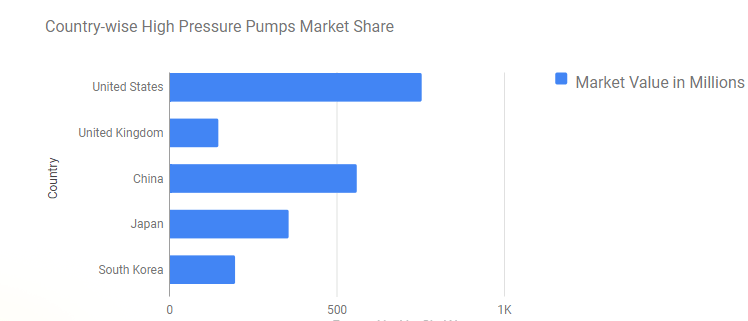
The global high pressure pumps market is estimated to grow from USD 2.7 billion in 2022 to USD 2.8 billion by 2023. Over the forecast period, there’s a projected 3.5% compound annual growth rate (CAGR) in global demand for high pressure pumps. By 2033, the total market valuation is anticipated to reach about USD 4.0 billion.
Challenges and Considerations
The high-pressure pumps market also faces some challenges:
High Initial Investment: The upfront cost of high-pressure pumps can be significant, especially for pumps designed for extreme pressures or specialized applications.
Maintenance Needs: These pumps require regular maintenance to ensure optimal performance and prevent costly failures. Balancing user-friendly maintenance procedures with system complexity is crucial.
Energy Consumption: High-pressure pumps can be energy-intensive. Selecting the right pump for the application and exploring energy-efficient models are essential for reducing operational costs and environmental impact.
The global electric submersible pumps market registered an astonishing CAGR of 5.3% in the historical period between 2018 and 2022. The global electric submersible pumps market will likely total USD 12.1 billion by 2033. It is estimated to record a steady CAGR of 3.6% in the review period 2023 to 2033. It is expected to reach USD 8.5 billion in 2023.
The electric submersible pump (ESP) market is a wider global pump industry segment. ESPs are dedicated pumps designed to be immersed in a fluid to lift or move it. These pumps have several applications in diverse industries, with particular prominence in the oil and gas sector.
ESP is used to pump or lift fluids, primarily in cases where the fluid is located in deep wells or reservoirs. They work on altering electrical energy into mechanical energy, which is then used to move fluids. The oil and gas industry is the key industry driving demand for ESP. They are essential for artificial lift systems, which aid in extracting hydrocarbons from wells where natural pressure has decreased. In addition to oil and gas, ESP is used in several applications, including water management, mining, agriculture, and others.
An ESP system usually includes three key components: motors, pumps, and electrical cables. Hermetic motors convert electrical energy into mechanical energy. The impeller then harnesses this mechanical energy to transport the fluid. The power cable links the system to an external power source.
ESP is designed to handle a variety of fluids, such as crude oil, brine, water, and other fluids. They are designated based on their capability to handle specific fluid things such as viscosity, temperature, and chemical composition. Continuous research and development in engine technology, materials, and digitalization are driving innovations in ESP systems. These advances aim to improve pump performance, increase reliability, and reduce operating costs.
Key Takeaways from the Electric Submersible Pumps Market Report:
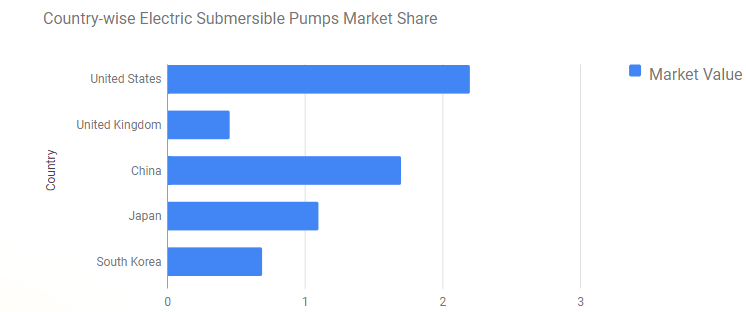
The United States electric submersible pumps industry is projected to reach US$ 2.2 billion in the forecast period.
The United Kingdom electric submersible pumps industry is set to be valued at US$ 455.2 million by 2033.
China’s electric submersible pumps industry is likely to total US$ 1.7 billion by 2033.
Japan’s electric submersible pumps industry is estimated to register US$ 1.1 billion by 2033.
Based on end-users, the on-shore segment is set to witness a CAGR of 3.4% from 2023 to 2033.
Competitive Landscape:
Leading manufacturers and companies want to expand their product and service portfolios by introducing and launching new products. They will also use several growth approaches, such as acquisitions, partnerships, transactions, and mergers to maintain a prominent position in the market.
In February 2022, Calentix Technologies introduced the Upwing “MDS” magnetic drive system, which isolates all susceptible electrical components from aggressive production fluids by assigning them in the well circle as an indispensable part.
In June 2021, Oil Dynamics GmbH upgraded the first 2 of 10 production wells for an oil operator that decided to innovate and improve the pumping gear in Germany.
According to a Future Market Insights (FMI) report, the street and roadway lighting market is forecasted to garner revenue of USD 16.4 Billion by 2033, up from USD 9.7 Billion in 2023. The market is expected to advance at a CAGR of 5.4% from 2023 to 2033.
With the accelerating global urbanization, cities are at the forefront of this transformation, investing in smart city initiatives that prioritize energy-efficient and intelligent street and roadway lighting.
These initiatives aim to enhance urban living by optimizing lighting patterns, reducing energy consumption, and improving public safety. The adoption of IoT in lighting systems allows for real-time monitoring and adaptive lighting control, making cities more responsive to varying conditions such as traffic flow, weather, and pedestrian activity.
Governments worldwide are enacting regulations and offering incentives to promote the use of LED and other energy-efficient lighting technologies. This market’s trajectory also considers broader urban planning and environmental sustainability goals, as the data collected from smart lighting systems can inform decision-making processes.
The insights gained from these systems can be instrumental in optimizing urban development, resource allocation, and infrastructure planning, fostering the creation of more livable, efficient, and environmentally responsible cities.
Key Takeaways from Street and Roadway Lighting Market Report:
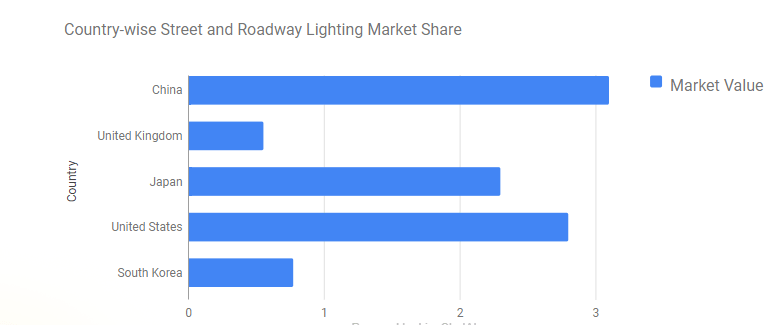
By 2033, the United States will hold a revenue share of US$ 2.8 Billion in the street and roadway lighting industry.
The market in Japan is expected to account for a significant revenue share of US$ 2.3 Billion by 2033 on a global level.
From 2023 to 2033, the below 50 W sub-segment is anticipated to secure a 2%CAGR based on wattage type.
The market for street and roadway lighting secured a growth rate of 8% from 2018 to 2022.
Based on end-use, the streets and roadways sub-segment is predicted to grow at a 9% CAGR over the forecast period.
The market for street and roadway lighting in China is likely to advance at a 2% CAGR from 2023 to 2033.
How Intense is the Competition in the Street and Roadway Lighting Industry?
The competition in the street and roadway lighting industry is characterized by its intensity, with a multitude of regional and global players vying for market share. This fiercely competitive landscape is driven by the growing demand for energy-efficient and smart lighting solutions, with companies continually innovating to stay ahead.
Governments’ focus on sustainability and urban development further amplifies this competition, as businesses strive to offer cutting-edge technologies and cost-effective solutions to meet the evolving needs of municipalities, businesses, and communities.
The competitive landscape is also influenced by factors like regulatory compliance, cost-effectiveness, and the integration of IoT technologies.
As the market continues to evolve, established and emerging players alike are actively investing in research and development, partnerships, and strategic acquisitions to maintain their competitive edge, making it a highly dynamic and fiercely contested industry.
Key Companies Profiled in Street and Roadway Lighting Market Report:
According to a Future Market Insights (FMI) report, the industrial wireless transmitters market is forecasted to be valued at USD 9.2 Billion in 2033 the market is expected to advance at a CAGR of 6.4% from 2023 to 2033. The current market valuation is USD 4.9 Billion in 2023.
The industrial wireless transmitters market is experiencing a remarkable surge driven by the rapid adoption of IoT (Internet of Things) technology across various industries.
These wireless transmitters, crucial components in industrial automation and monitoring, are witnessing increasing demand due to their ability to provide real-time data insights, enhance operational efficiency, and enable remote monitoring.
As industries embrace the era of IoT integration, industrial wireless transmitters play a pivotal role in facilitating seamless connectivity and data exchange, thereby revolutionizing industrial processes and contributing to a dynamic market landscape.
The applications of industrial wireless transmitters span a wide spectrum of industries, showcasing their versatility. In the oil and gas sector, for instance, these transmitters are deployed in remote drilling sites to monitor critical parameters, ensuring safety and efficient operations.
In manufacturing, they are instrumental in tracking production lines, managing inventory, and enhancing quality control. Even in healthcare, industrial wireless transmitters are used to monitor and regulate vital medical equipment, underscoring their significance in ensuring patient well-being.
Key Takeaways from Industrial Wireless Transmitters Market Report:
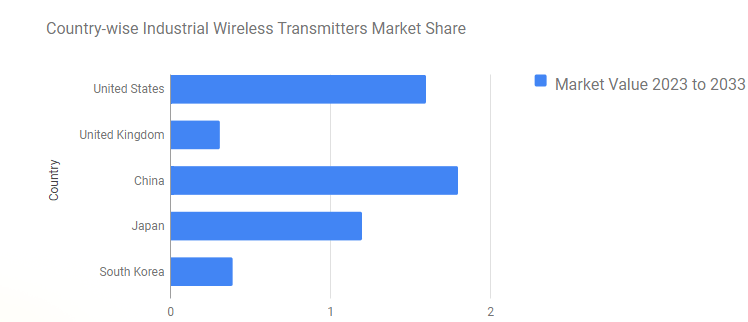
The United States market is expected to hold a revenue share of US$ 1.6 Billion by 2033.
The market size in South Korea is expected to account for US$ 391.5 Million by 2033 on a global level.
Based on type, the pressure transmitter’s sub-segment is likely to advance at 2% CAGR from 2023 to 2033.
During the forecast period, the market in China is anticipated to move ahead at a 3% growth rate.
The market for industrial wireless transmitters in the United Kingdom is likely to secure a 6% CAGR from 2023 to 2033.
How is the Competition Landscape Structured in the Industrial Wireless Transmitters Market?
The competition landscape in the industrial wireless transmitters market is characterized by a diverse array of players, ranging from established industry giants to innovative startups. Key market leaders continually drive innovation, expanding their global presence and product portfolios. However, the industry’s openness to innovation and evolving technologies mean that smaller, agile companies also have a significant role to play.
This competitive environment fosters a continuous cycle of product advancements, creating a dynamic market where innovative and customer-centric solutions are preferred.
In addition to established players and startups, the competitive landscape in the industrial wireless transmitters market also includes partnerships and collaborations between technology providers, sensor manufacturers, and communication network companies.
These strategic alliances aim to harness the strengths of each partner, creating integrated solutions that cater to diverse industrial needs while fostering innovation and expanding market reach.
Key Players Profiled in Industrial Wireless Transmitters Market Report:
The global molding starch market is on a robust growth trajectory, driven by rising demand from the confectionery industry. From 2023 to 2033, the market is expected to grow at a compound annual growth rate (CAGR) of 5%, with its value increasing from USD 493.0 million in 2023 to surpass USD 901 million by 2033. This surge in demand is largely due to the expanding confectionery sector, increasing consumer preference for natural and clean label products, and innovative uses of molding starch in various food applications.
Molding starch, a fine white powder primarily derived from native corn starch, is gaining traction for its versatility in molding, depositing, and drying processes of confectionery products such as jellies and gummies. Its ability to absorb moisture, enhance texture, and extend shelf life makes it a preferred choice among food manufacturers. The rising trend of veganism and the demand for natural ingredients in food products further boost the market, as molding starch offers an excellent alternative to animal-derived substances like gelatin.
The global rise in confectionery consumption is a major driver of the molding starch market. The product’s low moisture content, ability to prevent stickiness, and retention of product shape make it essential in confectionery manufacturing.
Growing consumer awareness about the health risks associated with synthetic additives has led to a preference for natural ingredients. Molding starch, being a natural product, is seen as a healthier alternative to synthetic thickeners and stabilizers.
The rising popularity of veganism and demand for clean label products are propelling the use of molding starch as a substitute for animal-derived ingredients. This aligns with the increasing consumer demand for transparent and non-GMO food ingredients.
Urbanization and busy lifestyles are driving the demand for convenience foods, which in turn boosts the need for molding starch used in ready-to-eat and processed food products.
The market is witnessing a shift towards environmentally friendly packaging solutions, with molding starch being utilized in the production of biodegradable packaging materials, helping reduce the carbon footprint of the food industry.
Country-wise Analysis:
1. Asia Pacific:
China: The market in China is poised for significant growth, driven by increasing disposable incomes, changing consumer preferences, and a rising demand for healthier, natural ingredients. Major players are investing in sustainable packaging solutions and innovative product lines to cater to the growing market.
India: The Indian market is expected to proliferate rapidly, driven by consumer demand for gluten-free foods and government initiatives promoting domestic production. The “Make in India” campaign has significantly boosted local manufacturing, contributing to market growth.
Japan: The demand for plant-based foods and vegan products is driving the market in Japan. Consumers’ preference for natural, additive-free products has led to increased adoption of molding starch in various food applications.
2. North America:
United States: The U.S. holds a significant share of the global market, driven by the demand for processed and convenience foods. Innovations by key market players, such as the introduction of clean-label starches, have helped boost market growth.
3. Middle East and Africa:
Countries like Saudi Arabia, Turkey, and the UAE are witnessing strong demand for molding starch due to changing consumer preferences and increasing youth inclination towards confectionery products. The region’s growing urbanization and rising disposable incomes further support market expansion.
4. Europe:
Germany and other European countries are experiencing steady market growth due to the rising demand for natural and clean label products. The presence of leading market players and innovations in product applications are key factors driving market growth.
Competitive Landscape
To fulfill the rising demand for clean-label and plant-based food components, manufacturers in the molding starch market are concentrating on creating innovative products. A potential substitute for classic components like gelatin that the food industry is looking for is molding starch. The texture, stability, and shelf life of molding starch products are also being improved by manufacturers through research and development. This makes molding starch more suited for usage in a variety of food applications, such as baked goods, meat products, and confectionery. Technology developments are also being used by manufacturers to boost productivity and save costs.
Recent Developments
Tereos Group announced in 2021 that it planned to sell YKA Group its stake in the starch business in China.
To support the company’s continuing BioSolutions platform growth, ADM revealed in 2022 that it planned on investing to significantly boost starch output at its Marshall, Minnesota, facility.
Key Segments Profiled in the Molding Starch Industry Survey
Molding Starch Industry By End Use:
Candies
Jellies
Gummies
Marshmallows
Others (e.g., Rock Candy, Caramels, etc.)
About Future Market Insights (FMI)
Future Market Insights, Inc. (ESOMAR certified, recipient of the Stevie Award, and a member of the Greater New York Chamber of Commerce) offers profound insights into the driving factors that are boosting demand in the market. FMI stands as the leading global provider of market intelligence, advisory services, consulting, and events for the Packaging, Food and Beverage, Consumer Technology, Healthcare, Industrial, and Chemicals markets. With a vast team of over 400 analysts worldwide, FMI provides global, regional, and local expertise on diverse domains and industry trends across more than 110 countries.
The world around us relies on a hidden force – hydraulic power. And at the heart of this force lies the hydraulic pump, the unsung hero that converts mechanical energy into the lifeblood of countless machines. From powering construction giants to steering our cars, hydraulic pumps play a crucial role in diverse applications. The hydraulic pumps market, driven by the ever-expanding reach of hydraulics, is experiencing steady growth. Let’s explore the applications of hydraulic pumps and delve into the exciting opportunities shaping this market.
Powering Movement Across Industries: Applications of Hydraulic Pumps
Hydraulic pumps find themselves embedded in a wide range of applications, silently driving movement and exerting force across various sectors:
Construction: Hydraulic pumps are the workhorses of construction equipment, powering excavators, loaders, cranes, and bulldozers. They enable the precise and powerful movements needed for earthmoving, demolition, and construction tasks.
Manufacturing: From industrial presses and forging machines to injection molding equipment and robotic arms, hydraulic pumps provide the muscle for various manufacturing processes. They ensure smooth and controlled operation, enabling precise manipulation of materials.
Agriculture: Modern agriculture heavily relies on hydraulics. Tractors, harvesters, and material handling equipment all utilize hydraulic pumps for functions like actuating steering systems, lifting and lowering implements, and controlling attachments.
Mining: The demanding environment of mines necessitates robust hydraulic systems. Hydraulic pumps power mining machinery for tasks like rock drilling, material extraction, and underground support systems.
Transportation: Beyond construction equipment, hydraulic pumps play a vital role in some transportation vehicles. They power steering systems in heavy-duty trucks and construction vehicles, enabling precise maneuvering and control.
The hydraulic pumps market is brimming with opportunities fueled by several key trends:
Rise of Automation: The growing adoption of automation across industries necessitates reliable and efficient hydraulic systems. This, in turn, drives demand for advanced and high-performance hydraulic pumps.
Focus on Infrastructure Development: Investments in infrastructure projects globally create a surge in demand for construction equipment, which translates to a rise in hydraulic pump requirements.
Demand for Efficiency and Sustainability: Manufacturers are developing hydraulic pumps with improved efficiency and reduced energy consumption, catering to a growing focus on environmental sustainability.
Mobile Application Growth: The increasing use of hydraulics in mobile machinery, such as agricultural and construction equipment, creates a significant market potential for compact and robust hydraulic pumps.
Advancements in Material Science: Developments in material science are leading to the creation of more durable and wear-resistant hydraulic pump components, improving overall system lifespan and performance.
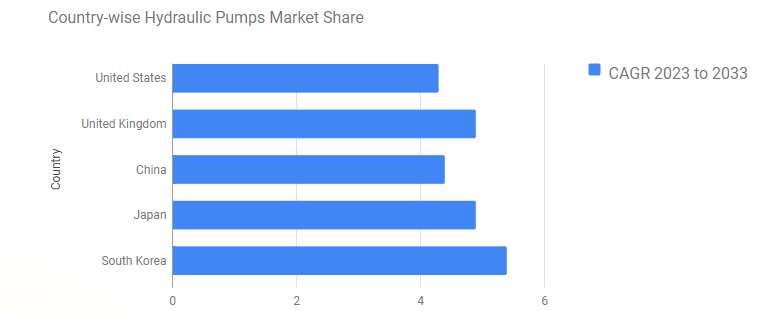
The global hydraulic pumps market size reached USD 10.7 billion in 2022. Revenue generated by hydraulic pump sales is likely to hit USD 11.2 billion in 2023. Sales are poised to soar by 4.0% CAGR over the forecast period between 2023 and 2033. Sales are anticipated to reach US$ 16.6 billion by 2033.
Challenges and Considerations
The hydraulic pumps market also faces some challenges:
Leakage and Contamination: Hydraulic systems are susceptible to leaks, which can lead to efficiency losses and environmental concerns. Developing leak-proof and contamination-resistant components remains a priority.
Maintenance Needs: Hydraulic pumps require regular maintenance to ensure optimal performance. Balancing user-friendly maintenance procedures with system complexity is crucial.
Fluctuating Raw Material Costs: The hydraulic pump industry relies on various raw materials, and price fluctuations can impact overall production costs. Exploring alternative materials and cost-optimization strategies are essential.
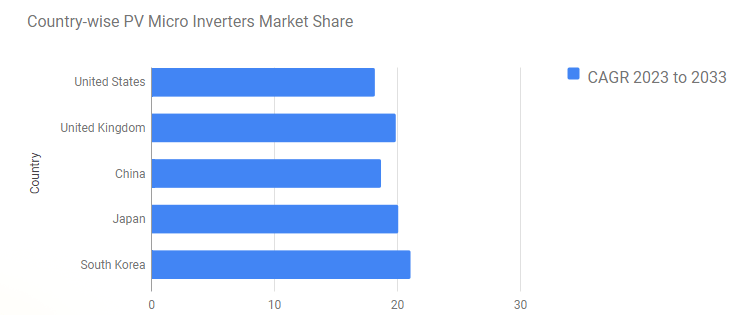
According to a Future Market Insights (FMI) report, the global PV micro inverters market value is estimated to increase from USD 1132.6 Million in 2023 to USD 4630.0 Million by 2033. Overall sales of PV micro inverters are likely to surge at 15.1% CAGR during the assessment period.
Standalone systems are expected to witness a higher demand in the market through 2033. This is attributable to their attractive benefits, including design flexibility. The target segment is projected to exhibit a CAGR of 14.8% during the assessment period.
Several factors are expected to drive the global PV micro inverters industry forward during the assessment period. These include the rising solar energy sector, increasing rooftop solar PV installation, and favorable government policies & incentives.
Several governments worldwide are offering incentives and subsidies to encourage the adoption of solar energy. This is believed to create lucrative opportunities for PV micro inverter manufacturers.
The ultimate search for cleaner and eco-friendly energy sources puts solutions such as solar PV systems into the spotlight. People are increasingly installing these systems in their houses, commercial buildings, and farms as a source of electricity. This is expected to uplift global PV micro inverter demand through 2033.
PV micro inverters are devices used in PV solar energy systems for converting DC electricity into AC electricity. They are gaining wider popularity due to their benefits, including easy installation, high performance, and monitoring capabilities.
Another prominent factor expected to fuel PV micro inverter demand is the declining cost of solar panels and microinverters. Companies continuously strive to reduce the cost of their products to make them appealing to customers.
Key Takeaways from the PV Micro Inverters Market Report:
The global PV micro inverters industry is forecast to total US$ 4630.0 Million by 2033.
Based on system, standalone system segment is set to expand at 8%CAGR through 2033.
By end user, residential segment is expected to progress at 6% CAGR during the assessment period.
The United States market value is estimated to reach US$ 844.6 Million by 2033.
Demand in South Korea is predicted to rise at 1% CAGR over the forecast period.
Sales revenue in China is projected to total US$ 747.3 Million by 2033.
Japan market size is expected to reach US$ 502.2 Million by
The United Kingdom is poised to exhibit a CAGR of 4% through 2033.
Competitive Landscape:
ABB Ltd, Darfon Electronics Corporation, Enphase Energy, Inc, Shenzhen KSTAR Science and Technology Co., Ltd, and Sungrow Power Supply Co., Ltd are few of the top PV micro inverter manufacturers listed in the report.
Leading companies leverage several strategies to boost revenues and expand their global footprint. These include new product launches, partnerships, collaborations, contracts, distribution agreements, mergers, and acquisitions.
Recent PV Micro Inverters Market Developments:
In March 2023, SG125CX-P2, a new-generation commercial & industrial PV inverter solution was launched by Sungrow for South African market.
In June 2023, SOFAR PowerNano, a groundbreaking microinverter system to meet home energy demand was unveiled by Sofar.
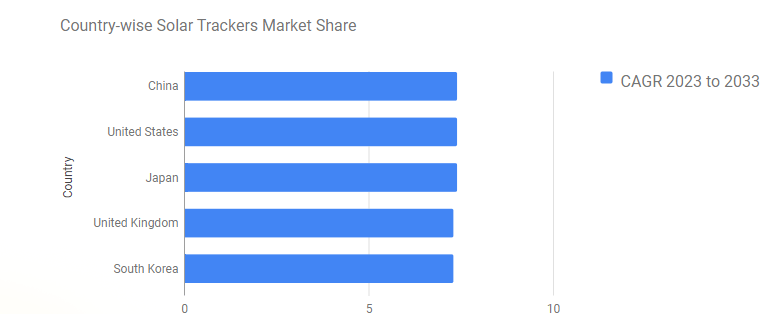
The global solar trackers market has witnessed significant growth, with a valuation of USD 3.2 billion in 2022. Projections suggest a robust surge at a CAGR of 7.5% by 2033, culminating in a value of approximately USD 7.2 billion by that year.
As awareness of energy conservation and the shift towards renewable energy sources continues to rise, the demand for solar trackers is expected to escalate. These trackers rely on a variety of electrical components, including counting motors, actuators, and sensors, to precisely orient solar cells for optimal sunlight capture.
The harvested sunlight is then converted into electricity, catering to various end-user segments. With the declining cost of solar panels, the adoption of solar energy as a viable source for commercial power generation has gained momentum, further propelling the growth of the solar trackers market.
The expansion of market capacity has significantly reduced the cost of generating electricity through solar trackers, making them increasingly competitive with traditional energy sources. This, coupled with supportive government policies, has spurred the widespread adoption of solar energy across the country.
Innovations in tracking system technologies by key industry players are expected to drive further growth in the solar trackers market. Given the market’s price competitiveness, companies operating in this space must prioritize efficiency and strategic planning to thrive.
As solar tracking technologies have become more widespread, they have also become more reliable and advanced. Intense competition among manufacturers has led to price decreases and enhanced features, making solar trackers accessible to a broader range of projects. Manufacturers are now focusing on sustainability by using eco-friendly materials and improving designs to minimize the ecological footprint of solar tracking systems.
The global probiotic strains market valuation will be USD 5,781.2 million in 2023 and is expected to reach USD 11,983.5 million by 2033. The global market is likely to grow at a CAGR of 8% during the forecast period.
Key Aspects Driving the Probiotic Strains Market
Growing Health Awareness:
The growing concern for health and well-being is the demand for probiotic strains. Health-conscious consumers take serious note of their lifestyles and consume probiotic strains.
Focus on Natural Health: Increasing consumer demand for healthy immune systems is stimulating the adoption of natural products. Consumers are attracted to probiotic products due to their improved digestion and organic ingredients.
Demand for Functional Foods: Consumers maintain their health by adding functional foods to their daily routine. The rising demand for nutrition that offers health benefits is driving sales of probiotic strains.
Regulatory Environment: The food & beverages sector follows strict regulations to reduce toxicity and improve the safety of products. These regulations vary from country to country.
Fermented Beverages Increasing Consumption is resulting in the Surge in the Demand for Probiotic Strains
Several countries in the European region consume fermented milk products traditionally, in a significantly high amount. The global probiotic strains market driven by the substantial high consumption of fermented milks by these European countries.
Also, other food and beverage products including frozen yogurt, yogurt drinks, kefire, and bakery products use probiotic strains. The consumption of these products is high in the North American and European countries, compared to the rest of the world. However, due to the adoption of Western lifestyle, evolving eating habits, and increase in the affordability of these products, probiotic strains market is growing at a rapid pace in Latin America and Asia.
The global probiotic strains market is driven by the ever increasing popularity of the dietary supplements throughout the world. Probiotic food and beverage products are excellent in maintaining the general digestive health and support gastrointestinal micro-biota. Various functions of the human body are directly connected to the health of the intestinal tract and gut, which fuels the demand for healthy products. Probiotic strains market is propelled by the increasing demand for the dietary supplement.
Probiotic Strains Market: Regional Analysis
At present, the global market of the probiotic strains is majorly occupied by the North Americans and European countries. The majority of the fermented beverages producing manufacturers are present in these regions, which leads to the large share.
However, Asia and Middle East and Africa region will have significant share of the global probiotic strains market in the future. This is supported by the increasing population, awareness and health benefits of the products, expanding food and beverage industry, and increasing purchasing power of the consumers. Asia region is anticipated to witness highest growth rate over the forecast period.
Some of the market participants in the Probiotic Strains market are:
Hansen Holding A/S
Probi
Aumgene Bioscience
Virchow Biotech Private Limited
Merck KGaA
I. du Pont de Nemours and Company
Koninklijke DSM N.V.
BioGaia
Morinaga Milk Industry Co., Ltd.
Snow Board Milk Products Co., Ltd.
Danone
Kerry Plc
Culturelle
Urex Biotech
The research report presents a comprehensive assessment of the Probiotic Strains market and contains thoughtful insights, facts, historical data, and statistically supported and industry-validated market data. It also contains projections using a suitable set of assumptions and methodologies. The research report provides analysis and information according to market segments such as form, grade, and end use.
Regional analysis includes
North America (U.S., Canada)
Latin America (Mexico, Brazil)
Europe (Germany, U.K., France, Italy, Spain, Poland, Russia)
East Asia (China, Japan, South Korea)
South Asia (India, Thailand, Malaysia, Vietnam, Indonesia)
Oceania (Australia, New Zealand)
Middle East & Africa (GCC Countries, Turkey, Northern Africa, South Africa)
The report is a compilation of first-hand information, qualitative and quantitative assessment by industry analysts, inputs from industry experts and industry participants across the value chain. The report provides in-depth analysis of parent market trends, macro-economic indicators and governing factors along with market attractiveness as per segments. The report also maps the qualitative impact of various market factors on market segments and geographies.
Probiotic Strains Market Segmentation
On the basis of type, the probiotic strains market can be segmented as:
Lactobacillus acidophilus
Lactobacillus rhamnosus GG
Bifidobacterium bifidum
Other
On the basis of form, the probiotic strains market can be segmented as:
Dry
Liquid
On the basis of end-use, the probiotic strains market can be segmented as:
Food and Beverages
Yogurt Drink and Fermented Milk
Fruit Juice
Bakery
Meat Products
Pharmaceuticals
Functional Food
Animal Feed
Dietary Supplement
About Future Market Insights (FMI)
Future Market Insights, Inc. (ESOMAR certified, recipient of the Stevie Award, and a member of the Greater New York Chamber of Commerce) offers profound insights into the driving factors that are boosting demand in the market. FMI stands as the leading global provider of market intelligence, advisory services, consulting, and events for the Packaging, Food and Beverage, Consumer Technology, Healthcare, Industrial, and Chemicals markets. With a vast team of over 400 analysts worldwide, FMI provides global, regional, and local expertise on diverse domains and industry trends across more than 110 countries.