Smart Motors Market Set to Achieve a Remarkable US$ 3.2 Billion Milestone by 2033 with a Steady 5.2% CAGR

The smart motors market is forecasted to garner revenue of US$ 3.2 billion by 2033, up from US$ 1.9 billion in 2023 advancing at a rate of 5.2% from 2023 to 2033.

The smart motors market has been witnessing significant growth in recent years, driven by the increasing adoption of industrial automation and the integration of Internet of Things (IoT) technologies.

Smart motors, equipped with advanced control systems and communication capabilities, offer enhanced efficiency, improved performance, and seamless integration within automated systems.

The rapid expansion of industrial automation across various sectors has fueled the demand for smart motors.

Get an overview about growth opportunities from 2023 to 2033 – Download this sample report:
https://www.futuremarketinsights.com/reports/sample/rep-gb-17421

The ability of smart motors to optimize energy consumption, enables precise control, and improve overall system efficiency has made them indispensable in modern industrial processes.

Stringent energy efficiency regulations imposed by governments worldwide have propelled the adoption of smart motors.

The government regulations aim to reduce energy consumption and carbon emissions, making energy-efficient solutions like smart motors an attractive choice for industries seeking to comply with environmental standards.

The market is also confronted with challenges such as the upfront costs associated with implementing smart motors which hinder some organizations.

The advanced features and technologies embedded in smart motors often come with a higher price tag, requiring businesses to carefully evaluate the long-term benefits and return on investment.

The transition towards renewable energy sources presents a significant opportunity for smart motors.

As the world focuses on reducing carbon emissions and achieving sustainability goals, the integration of smart motors in renewable energy generation and distribution systems can optimize efficiency, enhance control, and facilitate seamless integration with smart grids.

The growing industrialization and infrastructure development in emerging markets offer promising opportunities for smart motor manufacturers.

As various regions embrace automation and seek energy-efficient solutions, the demand for smart motors is expected to surge, creating a lucrative market for industry players.

Key Takeaways:

  • The market in the United States of America is forecasted to hold revenue of US$ 1 billion in 2033.
  • The market in the United Kingdom is likely to account for a value share of US$ 153.7 million in 2033 on a global level.
  • During the forecast period, the 24V sub-segment is projected to advance at 5.1% CAGR based on product type.
  • Based on application, the industrial sub-segment is predicted to move forward at a rate of 5.0% from 2023 to 2033.
  • The market for smart motors in China is likely to secure a market share of US$ 257.3 million by 2033.

How Fierce is the Competition in the Smart Motors Industry?

The smart motors industry is highly competitive, characterized by intense rivalry among major players such as Rockwell Automation, Moog, Inc, Fuji Electric Co., Ltd., ABB Ltd, and Siemens AG.

The market is crowded with numerous companies vying for market share and striving to gain a competitive edge. The competition is driven by factors such as technological advancements, product innovation, pricing strategies, and customer satisfaction.

Major companies in the industry are continuously investing in research and development to enhance their product offerings and stay ahead of the competition.

They are focusing on developing advanced features and functionalities to meet the evolving demands of customers. Additionally, strategic partnerships, mergers, and acquisitions are common strategies employed by market players to expand their market presence and gain a competitive advantage.

The industry’s competitive landscape is also shaped by factors such as brand reputation, distribution networks, and after-sales services. Companies are emphasizing customer-centric approaches to differentiate themselves and build long-term relationships with their clients.

Key Players in the Market

  • Rockwell Automation
  • Moog, Inc.
  • Fuji Electric Co., Ltd.
  • ABB Ltd.
  • Siemens AG
  • Schneider Electric SE
  • General Electric
  • Dunkermotoren GmbH
  • Technosoft SA
  • RobotShop, Inc.
  • Roboteq, Inc.

Direct Purchase of this Report: https://www.futuremarketinsights.com/checkout/17421

Market Segmentation by Category

By Product:

  • 24V
  • 18V
  • 36V
  • 48.24V

By Application:

  • Industrial
  • Automotive
  • Consumer Electronics
  • Aerospace and Defense
  • Others

By Region:

  • North America
  • Latin America
  • Europe
  • Asia Pacific
  • The Middle East and Africa

Author

Nikhil Kaitwade (Associate Vice President at Future Market Insights, Inc.) has over a decade of experience in market research and business consulting. He has successfully delivered 1500+ client assignments, predominantly in Automotive, Chemicals, Industrial Equipment, Oil & Gas, and Service industries.

His core competency circles around developing research methodology, creating a unique analysis framework, statistical data models for pricing analysis, competition mapping, and market feasibility analysis. His expertise also extends wide and beyond analysis, advising clients on identifying growth potential in established and niche market segments, investment/divestment decisions, and market entry decision-making.

Nikhil holds an MBA degree in Marketing and IT and a Graduate in Mechanical Engineering. Nikhil has authored several publications and quoted in journals like EMS Now, EPR Magazine, and EE Times.

About Future Market Insights (FMI)

Future Market Insights, Inc. (ESOMAR certified, recipient of the Stevie Award, and a member of the Greater New York Chamber of Commerce) offers profound insights into the driving factors that are boosting demand in the market. FMI stands as the leading global provider of market intelligence, advisory services, consulting, and events for the Packaging, Food and Beverage, Consumer, Technology, Healthcare, Industrial, and Chemicals markets. With a vast team of over 5000 analysts worldwide, FMI provides global, regional, and local expertise on diverse domains and industry trends across more than 110 countries.

Contact Us:        

Nandini Singh Sawlani   

Future Market Insights Inc.
Christiana Corporate, 200 Continental Drive,
Suite 401, Newark, Delaware – 19713, USA
T: +1-845-579-5705
For Sales Enquiries: 
sales@futuremarketinsights.com
Website: https://www.futuremarketinsights.com
LinkedInTwitterBlogs | YouTube

Automotive Wheel Hub Bearing Aftermarket Set to Surge at 5.0% CAGR from 2023 to 2033, Projected Market Value to Reach US$ 1,810.7 Million by 2033

Global aftermarket automotive wheel hub bearing sales are set to total over US$ 1,114.2 million in 2023, as per Future Market Insights (FMI). The Automotive Wheel Hub Bearing Aftermarket is expected to expand at a value CAGR of 5.0% from 2023 to 2033, reaching a valuation of US$ 1,810.7 million by 2033.

Rising demand for vehicles is a prominent factor driving growth in the automotive wheel hub bearing aftermarket.

Growing economies and improved access to financing options have contributed to higher vehicle ownership rates in several regions. This in turn is creating a conducive environment for the development of the target market.

Over time, wear and tear, environmental factors, and general usage can lead to the deterioration of wheel hub bearings, necessitating replacements. As the global vehicle fleet continues to age, demand for aftermarket wheel hub bearings is likely to rise rapidly.

Drivers and challenges have an impact on market dynamics, which can impact businesses. Find more insights in this sample report:
https://www.futuremarketinsights.com/reports/sample/rep-gb-17337

Development of new automotive wheel hub bearings integrated with novel technologies is another key factor boosting the market.

In terms of the sales channel, Original Equipment Manufacturers (OEMs) play a significant role in the aftermarket for automotive wheel hub bearings.

Wheel hub bearings must comply with strict quality standards to be manufactured and supplied by original equipment manufacturers. By creating high-quality bearings, OEMs increase consumer confidence and ensure that replacement components are dependable and perform at their peak levels.

Wheel hub bearing warranties are typically provided by original equipment manufacturers. Customers are more confident thanks to this warranty coverage because they are protected against manufacturing flaws or premature failures. These aspects are likely to foster a positive environment to drive the market throughout the projection period.

Key Takeaways:

The worldwide demand for aftermarket automotive wheel hub bearings is forecast to thrive at 5.0% CAGR through 2033.

By product type, ball bearing segment holds a dominant share of around 43.0% in 2023.

Based on sales channel, the independent aftermarket segment is expected to progress at 6.0% CAGR through 2033.

By vehicle type, IC engine segment is estimated to have a dominant share of around 97.2% in 2023.

The United States automotive wheel hub bearing aftermarket value is expected to reach US$ 215 million by 2033.

Demand in China for automotive wheel hub bearings in the aftermarket is likely to rise at 4.8% CAGR.

Israel aftermarket is anticipated to exhibit a CAGR of 6.7% from 2023 to 2033.

“Demand for automotive wheel hub bearings in the aftermarket is growing, primarily motivated by the requirements of an aging global vehicular fleet. Regulatory standards are also undergoing constant updates to provide better safety to consumers. Offering protection through warranties and other schemes are likely to benefit suppliers of aftermarket automotive wheel hub bearings by increasing consumer confidence,” – says a lead analyst at Future Market Insights (FMI).

Who is Winning?

The automotive wheel hub bearing aftermarket is moderately consolidated with few top companies holding around 40% to 45% of the market shares. These players are likely to invest in new technology developments and expansion of their distribution networks to maintain their market presence.

Few of the key players in this industry include Continental AG, Tenneco Inc., Schaeffler AG, Mahle GmbH, The Timken Company, NSK Ltd., JTEKT Corp, Rheinmetall AG, NTN Corporation, NRB bearings Ltd., Nachi-Fujikoshi Corp., and others.

Recent developments:

  • In 2019, a next-generation durable bearing was introduced by JTEKT Corporation that is intended for use in harsh conditions.

Find More Valuable Insights:

The research report analyzes the demand for automotive wheel hub bearings in the aftermarket. The global automotive wheel hub bearing aftermarket has been analyzed with the COVID-19 impact, various macroeconomic factors, market trends, and market background.

As per Future Market Insights (FMI), the aftermarket has been analyzed based on product type, vehicle type, inner diameter, sales channel, and Region. The report provides qualitative and quantitative information on various players in this market. This report also tracks the market by both supply-side and demand factors.

Direct Purchase of this Report: https://www.futuremarketinsights.com/checkout/17337

Key Segmentations:

By Vehicle Type:

  • EV
    • Passenger Car
    • LCV
    • HCV
  • IC Engine
    • Passenger Car
    • LCV
    • HCV
  • Two Wheelers
    • EV
    • IC Engine

By Inner Diameter:

  • 12 mm to 25 mm
  • 26 mm to 50 mm
  • 51 mm to 100 mm
  • Above 100 mm

By Product Type:

  • Ball Bearing
  • Tapered Roller Bearing
  • Cylindrical Roller Bearing
  • Angular Contact Ball Bearings
  • Needle Roller Bearings

By Sales Channel:

  • Original Equipment Manufacturer (OEM)
  • Independent Aftermarket

By Region:

  • North America
  • Latin America
  • Western Europe
  • Eastern Europe
  • Central Asia
  • Russia & Belarus
  • Balkan & Baltics Countries
  • East Asia
  • South Asia & Pacific
  • Middle East & Africa

Explore FMI’s Comprehensive Coverage of the Automotive Landscape

Automotive ECU Market:
https://www.futuremarketinsights.com/reports/automotive-ecu-market

EV Charging Cables Market:

https://www.futuremarketinsights.com/reports/ev-charging-cables-market

Micro-mobility Charging Infrastructure Market:

https://www.futuremarketinsights.com/reports/micro-mobility-charging-infrastructure-market

About Future Market Insights (FMI):

Future Market Insights, Inc. (ESOMAR certified, Stevie Award – recipient market research organization and a member of Greater New York Chamber of Commerce) provides in-depth insights into governing factors elevating the demand in the market. It discloses opportunities that will favor the market growth in various segments on the basis of Source, Application, Sales Channel and End Use over the next 10 years.

Contact Us:

Future Market Insights, Inc.

Christiana Corporate, 200 Continental Drive,

Suite 401, Newark, Delaware – 19713, USA

T: +1-845-579-5705

LinkedIn | Twitter | Blogs | YouTube
For Sales Enquiries: sales@futuremarketinsights.com


Global Friction Modifier Additives Market Surges to a Staggering US$ 1,617.8 Million in 2023, Predicts Future Growth to Reach US$ 2,464.7 Million by 2033

The market could expand at a CAGR of around 4.3% from 2023 to 2033 with the continued spike in demand for friction modifier additives. FMI further anticipates the global market may be rising to a sizeable valuation of US$ 2,464.7 million by 2033 from US$ 1,617.8 million in 2023. These additives have become essential for lowering wear in car engines and gearboxes, which improves fuel economy, reduces pollutants, and lengthens engine life.

The historical period from 2018 to 2022 saw moderate expansion in the sales of friction modifier additives globally, with a CAGR of about 3.2%. This growth resulted from friction modifier additives being used more often across various new end-use sectors and industries. Traditionally, friction modifier additives find extensive application in aviation lubricants, aiding in better engine performance and fuel economy.

The demand for friction modifier additives is expected to grow, offering profitable prospects for businesses in the manufacturing industries. Moreover, these additives have drawn a lot of interest in recent years because of their capacity to increase the effectiveness and performance of lubricants. So, as it lengthens the total operating lifespan of machinery and equipment, the automobile sector is the leading consumer of friction modifier chemicals nowadays.

Request Your Sample Report Now! https://www.futuremarketinsights.com/reports/sample/rep-gb-1656

With an increase in commercial and freight flights, the aerospace sector is expanding significantly, and the use of friction modifier chemicals is anticipated to increase dramatically. Likewise, the rail transportation sector is another significant contributor to the demand for friction modifier additives as it enhances operational efficiency and minimizes maintenance costs.

Concerns about the environmental effect of the rising usage of friction modifier additives may arise, particularly in light of possible pollution and disposal challenges. The price and availability of the raw materials might vary, which can also affect production costs and, in turn, product pricing.

Key Takeaways from the Global Friction Modifier Additives Market Study Report by FMI

  • The sales of friction modifier additives in the United States were higher in comparison to other countries, and in 2022, it captured 15% of the global market share.
  • Germany is the leading producer and supplier of friction modifier additives in Europe, with a 6.7% global market share in 2022.
  • As a result of their broad use across several sectors, friction modifier additives are enjoying substantial expansion in the Asia Pacific countries. China and India, for instance, are projected to witness CAGRs of 4.8% and 5.1% respectively over the forecast years.

Competitive Landscape for the Friction Modifier Additives Market Players

Some top market players

  • Adeka Corp
  • BRB International BV
  • King Industries Inc
  • Croda International Inc.
  • Chevron Corp
  • Lubrizol Corporation
  • BASF SE
  • Afton Chemicals Corporation
  • CSW Industrial
  • Wynn’s
  • Dorf Ketal
  • DOG Chemie
  • ABITEC
  • Lanxess

Continuous research and development efforts by these leading market players have introduced innovative friction modifier additives with enhanced properties.

The need for sophisticated lubricants with friction modifier additives has increased as a result of the expanding global automobile industry and strict environmental requirements. To fulfill the changing needs of end consumers and gain a competitive edge, new players may take advantage of the innovations made by existing manufacturers. Moreover, they should focus on burgeoning industrialization and expanding automotive and aviation industries in emerging regions to broaden their clientele.

Drive Your Business Growth Strategy: Purchase the Report for Key Insights! https://www.futuremarketinsights.com/checkout/1656

Friction Modifier Additives Market Segmentation

By Product Type:

  • Organic
  • Polymer
  • Fatty Acids
  • Esters & Amides
  • Inorganic
  • MoDTC
  • MoS2
  • Graphite
  • Other Product Types

By Application:

  • Automobile Lubricants
  • Industrial Lubricants
  • Rail Lubricants
  • Aviation Lubricants
  • Power Generation Lubricants
  • Others

By Region:

  • North America
  • Latin America
  • Europe
  • East Asia
  • South Asia & Pacific
  • The Middle East & Africa (MEA)

About Future Market Insights (FMI)

Future Market Insights, Inc. (ESOMAR certified, recipient of the Stevie Award, and a member of the Greater New York Chamber of Commerce) offers profound insights into the driving factors that are boosting demand in the market. FMI stands as the leading global provider of market intelligence, advisory services, consulting, and events for the Packaging, Food and Beverage, Consumer Technology, Healthcare, Industrial, and Chemicals markets. With a vast team of over 400 analysts worldwide, FMI provides global, regional, and local expertise on diverse domains and industry trends across more than 110 countries.

Contact Us:       

Nandini Singh Sawlani  

Future Market Insights Inc.
Christiana Corporate, 200 Continental Drive,
Suite 401, Newark, Delaware – 19713, USA
T: +1-845-579-5705
For Sales Enquiries: sales@futuremarketinsights.com
Website: https://www.futuremarketinsights.com
LinkedInTwitterBlogs | YouTube

Global Polymer Coated Fabrics Market Set to Surge to US$ 35,835.30 Million by 2033, Fueled by Automotive, Textile, and Furniture Sectors

In 2023, the polymer coated fabrics industry is poised to be valued at a substantial US$ 21,791.30 million, and it is projected to maintain a noteworthy Compound Annual Growth Rate (CAGR) of 5.1% from 2023 to 2033. By the year 2033, this dynamic industry is anticipated to achieve a significant milestone, soaring to an impressive market value of US$ 35,835.30 million, reflecting its robust and sustained growth over the coming decade.

The polymer coated fabrics market is witnessing a surge in popularity due to its waterproof, UV-resistant, abrasion-resistant, and durable characteristics. In addition, the product is experiencing significant demand in applications such as awning pool covers, roof protectors, tarpaulins, and marine covers. It is driven by its excellent physical properties, impermeability to dirt & oil, and corrosion resistance. This strong demand is expected to propel considerable market growth.

Protective Clothing Market Soars with Growing Industrialization in Emerging Economies

Rapid industrialization in developing countries has led to an increasing demand for protective clothing to ensure worker safety in hostile environments. Further, the demand is driven by cultural, sociological, and psychological factors, with stringent government regulations in the Middle East and Asia Pacific making safety precautions mandatory.  As a result, there is a growing need for lightweight, comfortable, and highly heat-resistant protective clothing, leading to an upsurge in demand for coated fabrics.

Coated fabrics with high flame resistance are particularly utilized in manufacturing protective clothing for firefighters. Also, the rising focus on safety measures in transportation applications is expected to boost the polymer coated fabrics market growth.

Request Your Sample Report Now! https://www.futuremarketinsights.com/reports/sample/rep-gb-2270

Eco-Conscious Consumers and Coated Fabrics: Addressing Environmental Concerns

Stringent government regulations have been imposed due to the release of hazardous air pollutants during the manufacturing process of coated fabrics, posing environmental concerns. Also, the growing consumer awareness about the ecological impact of non-recyclable products and disposal issues hampers polymer coated fabrics market growth.

For manufacturers, properly disposing of waste materials remains a significant challenge, as chemical recycling of coated textiles proves costly and leads to logistical issues and limited process flexibility.

The production of coated fabrics, particularly toxic solvents, is the primary source of hazardous air pollutants emitted at various stages of the industrial process. Consequently, these environmental concerns are expected to restrain the market growth of polymer coated fabrics during the forecast period.

Regional Outlook

The Asia Pacific region is poised to dominate the global polymer coated fabrics market due to rapid industrial growth and urbanization in key countries like China and India. Additionally, the demand from transportation, protective clothing, and industrial sectors is fueling market growth. Japan and South Korea are significant contributors.

Developing countries’ booming automotive industry and increased use in household furniture manufacturing boost demand. Also, innovations like shape memory polymers for smart textiles fuel growth. Small countries in Asia with low labor costs and relaxed regulations are projected to show substantial industrial development, enhancing the region’s export and production activities.

Key Takeaways 

  • The PU-coated fabrics segment in the product type category is likely to grab a share of 70% from 2023 to 2033.
  • In the textile material category, the knitted segment is to acquire a market share of 60% between 2023 and 2033.
  • The United States polymer coated fabrics business is expected to acquire a share of 30% by 2023.
  • Germany’s polymer coated fabrics industry is to grab a share of 40% by 2023.
  • Japan’s polymer coated fabrics business is anticipated to hold a share of 00% by 2023.
  • Australia’s polymer coated fabrics industry is predicted to capture a share of 40% by 2023.
  • China’s polymer coated fabrics business is expected to secure a CAGR of 50% through 2033.
  • India’s polymer coated fabrics sales are estimated to develop at a CAGR of 00% from 2023 to 2033.
  • The United Kingdom polymer coated fabrics business is to evolve at a CAGR of 20% through 2033.

Competitive Landscape

Companies covered in the global polymer coated fabrics market include

  • BASF SE
  • Akzo Nobel NV
  • Saint-Gobain
  • PPG Industries, Inc
  • Nippon Paint Holdings Co., Ltd
  • The Sherwin-Williams Company
  • The Valspar Corp.
  • E I du Pont de Nemours and Company
  • Bayer AG
  • 3M
  • Takata Corporation
  • Trelleborg AB
  • Spradling International Inc
  • Serge Ferrari Group
  • Sioen Industries NV
  • Continental AG
  • Cooley Group Holdings
  • Dickson Constant
  • Seaman Corporation
  • SRF Limited

Market growth is fueled by initiatives taken by participants.

Novel Breakthroughs

  • In Dec 2021, Trelleborg Group acquired a division of Alpha Engineered Composites, a US-based company specializing in polymer-coated fabrics for niche applications in transportation, aerospace, and engineered industrial products.
  • In April 2020, Synthomer acquired OMNOVA Solutions Inc., significantly bolstering its presence in North America and expanding its reach in Europe and Asia. The acquisition established a leading global specialty chemicals company with substantial scale and a solid foundation for future investments and growth.

Drive Your Business Growth Strategy: Purchase the Report for Key Insights! https://www.futuremarketinsights.com/checkout/2270

Key Segmentation

By Product Type :

  • Vinyl Coated Fabrics
  • PU Coated Fabrics
  • PE Coated Fabrics
  • Others (acrylic, nylon 6, nylon 6-6, PA, PC, PEEK, PBT, and PET)

By Textile Material Type :

  • Knitted
  • Woven
  • Non-Woven

By Application :

  • Transportation
  • Protective Clothing
  • Industrial
  • Roofing
  • Awnings & Canopies
  • Furniture & Seating
  • Others (Agriculture, Geotextiles, Medical, Sports & Leisure, And Packaging)

By Region :

  • North America
  • Latin America
  • Europe
  • East Asia
  • South Asia & Pacific
  • The Middle East & Africa (MEA)

About Future Market Insights (FMI)

Future Market Insights, Inc. (ESOMAR certified, recipient of the Stevie Award, and a member of the Greater New York Chamber of Commerce) offers profound insights into the driving factors that are boosting demand in the market. FMI stands as the leading global provider of market intelligence, advisory services, consulting, and events for the Packaging, Food and Beverage, Consumer Technology, Healthcare, Industrial, and Chemicals markets. With a vast team of over 400 analysts worldwide, FMI provides global, regional, and local expertise on diverse domains and industry trends across more than 110 countries.

Contact Us:       

Nandini Singh Sawlani  

Future Market Insights Inc.
Christiana Corporate, 200 Continental Drive,
Suite 401, Newark, Delaware – 19713, USA
T: +1-845-579-5705
For Sales Enquiries: sales@futuremarketinsights.com
Website: https://www.futuremarketinsights.com
LinkedInTwitterBlogs | YouTube

Paint Additives Market Set to Soar, Anticipates US$ 14,877.8 Million Valuation by 2032, Fueled by Their Transformative Impact on Paint Performance and Application

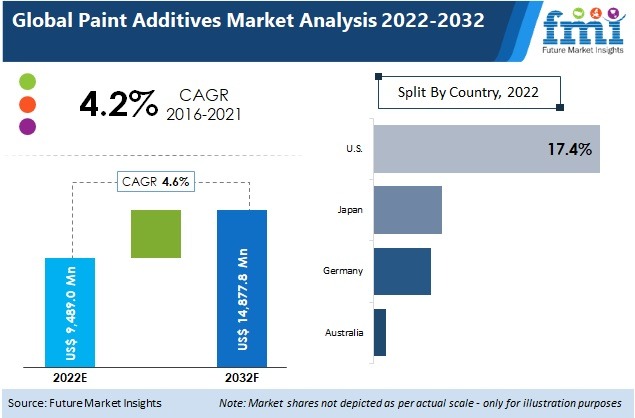
The global paint additives industry is expected to be worth US$ 14,877.8 million by 2032, with total demand increasing at a moderate CAGR of 4.6% from 2022 to 2032. The paint additives market is expected to reach an estimated US$ 9,489.0 Million by 2022, driven by increasing usage in various industry verticals such as automotive, architectural, wood & furniture, and others. Over the projected period, the building and construction industry will be one of the key growth drivers for the paint additives market.

Paint additives are specialist compounds that are mixed into the paint to improve its quality. These additives can boost durability, adhesion, color retention, and resistance to elements such as moisture, UV radiation, and abrasion. They can also produce unique effects such as texture or shine. Manufacturers and do-it-yourself painters alike can achieve desired aesthetics, protection, and performance in a variety of settings and applications by tailoring paint compositions with additives.

Paint additives help enhance the performance, efficacy, and usefulness of paint while addressing flaws, and increasing functionality. These additives remove deficiencies in the coating, boost abrasion resistance, stem the growth of microbes, and bestow distinctive properties to the paint, which are not easily attained. The escalating demand for paints and coatings is mainly because of the swift growth witnessed in the automotive and construction sectors. Further, the growing need to improve the efficiency and functionality of paints is expected to continue to play a vital role in the rising demand for paint additives throughout the upcoming decade.

Request Your Sample Report Now! https://www.futuremarketinsights.com/reports/sample/rep-gb-4956

One of the primary end-user and growth drivers of the paint additives market is the building & construction sector. A wide range of paints and coatings are used to beautify and shield the details on the building surface. The paint additives market is growing at a rapid rate due to the extensive usage of paint additives in commercial and residential construction. These additives provide water resistance, corrosion resistance, abrasion resistance, and thermal resistance. The growth of infrastructure activities like highways and dams, particularly in developing countries, is further propelling the growth of the target market.

In addition to this, elevated demand for low-VOC paints also augments the sales of paint additives in the global market. Low VOC paints ensure cleaner air, easier cleanup, greater durability and longevity as well as economic effectiveness.  All of these aforementioned factors work in tandem to provide a positive market atmosphere for paint additives over the forecast period.

“Expanding construction and building sector including infrastructure projects in developing countries will propel the market growth of the paint additives over the forecast period,” – FMI analyst

Key Takeaways in the Paint Additives Market Report:

  • The rising adoption of paint additives in automotive, wood & furniture, and other industries will facilitate market growth.
  • Strict environmental regulations may hinder the expansion of the paint additives market.
  • China accounts for over 50% of the market share.
  • In 2022, the US will hold about 17.4% of the global market share.
  • Based on the application, the rheology modification application segment will account for the largest market share.
  • Water based paint additive segment is expected to dominate the market.

Competitive Landscape in the Paint Additives Market

Some of the major players in the paint additives market are profiled in the full version of the report

  • AkzoNobel N.V.
  • Arkema SA
  • Asahi Glass Co. Ltd.
  • Ashland Inc.
  • BASF SE
  • BYK-Chemie
  • Dow Chemical
  • Evonik Industries
  • Arch Chemicals
  • Lonza
  • Daikin Industries

Leading market players are focusing on expanding their manufacturing capacities to cater to the growing demand. Mergers, acquisitions, collaboration, product releases, and facility expansions are some of the other strategies employed by these organizations.

Drive Your Business Growth Strategy: Purchase the Report for Key Insights! https://www.futuremarketinsights.com/checkout/4956

More Insights into Paint Additives Market Report

In its latest report, FMI offers an unbiased analysis of the global paint additives market, providing historical data from 2016 to 2021 and forecast statistics for 2022 to 2032. To understand the global market potential, growth, and scope, the market is segmented on the basis of product type (acrylics, fluoropolymers, urethanes, metallic additives, others (epoxy, polyalkyds, and amines), formulation (solvent-based, water-based), application (rheology modification, biocides impact modification, wetting & dispersion, anti-foaming, others (flexibility, curing, slip & rub)), end use (industrial, automotive, architectural, wood & furniture, others), and region.

According to the latest FMI reports, based on segmentation, the rheology modification segment is predicted to remain one of the most common applications in the paint additives market. In terms of formulation, water-based paint additives will gain traction over the forecast period.

Based on region, the paint additives market in China is anticipated to exhibit significant growth over the assessment period. The country is expected to dominate the Asia Pacific regional market, accounting for over 50% of the market share. The rapid growth of the automotive sector coupled with the expansion of the construction industry are accountable for the market growth of paint additives during 2022-2032.

Key Segmentation

By Product Type:

  • Acrylics
  • Fluoropolymers
  • Urethanes
  • Metallic Additive
  • Others (Epoxy, Polyalkyds, and Amines)

By Formulation:

  • Solvent Based
  • Water Based

By Application:

  • Rheology Modification
  • Biocides Impact Modification
  • Wetting & Dispersion
  • Anti-Foaming
  • Others (Flexibility, Curing, Slip & Rub)

By End Use:

  • Industrial
  • Automotive
  • Architectural
  • Wood & Furniture
  • Others

By Region:

  • North America
  • Latin America
  • Europe
  • East Asia
  • South Asia & Pacific
  • Middle East & Africa

About Future Market Insights (FMI)

Future Market Insights, Inc. (ESOMAR certified, recipient of the Stevie Award, and a member of the Greater New York Chamber of Commerce) offers profound insights into the driving factors that are boosting demand in the market. FMI stands as the leading global provider of market intelligence, advisory services, consulting, and events for the Packaging, Food and Beverage, Consumer Technology, Healthcare, Industrial, and Chemicals markets. With a vast team of over 400 analysts worldwide, FMI provides global, regional, and local expertise on diverse domains and industry trends across more than 110 countries.

Contact Us:      

Nandini Singh Sawlani 

Future Market Insights Inc.
Christiana Corporate, 200 Continental Drive,
Suite 401, Newark, Delaware – 19713, USA
T: +1-845-579-5705
For Sales Enquiries: sales@futuremarketinsights.com
Website: https://www.futuremarketinsights.com
LinkedInTwitterBlogs | YouTube

Coating Additives Market Set to Skyrocket to US$ 17.77 Billion by 2033, Fueled by Technological Advancements and Green Initiatives

Coating Additives
Coating Additives

The coating additives industry is anticipated to thrive at an average CAGR of 4.8% between 2023 and 2033. The market is estimated to be valued at US$ 11.12 billion in 2023, with a market share of US$ 17.77 billion by 2033.

  • Anti-foaming characteristics, biocides, and impact modifiers are all anticipated to add value to the market structure. Furthermore, market expansion is expected to favor additives for the automotive and packaging sectors.
  • The OEM coatings, primers, monolayer topcoats, and other coatings improve surface properties. The higher demand for customized layers with specific detailing, chemicals, and elements is anticipated to flourish the market success.
  • The stringent zero-VOC emission regulations and government support to automotive businesses contribute to market dynamics. Alongside this, the improved wettability, UV protection, and advanced chemical resistance are likely to help industries get the best out of these additives.
  • New vendors are focusing on building their products through different chemicals and elements that limit microbial growth and prevent corrosion. Alongside this, the high-end research and development facilities and extensive usage of raw materials are increasing the demand for coating additives.
  • The fluctuation in raw material prices makes manufacturing smooth and unique, Though the strict government regulations limit the market growth.
  • The surge in rheology modification operations is expected to help the market widen its boundaries. The construction application of coating additives involves delivering durability and texture.

Get an overview of market drivers and challenges affecting this industry: https://www.futuremarketinsights.com/reports/sample/rep-gb-275

Key Points

  1. The United States market leads the North American coating additives market in terms of market share in North America. The United States held a healthy market share of 17.0% in 2022. The factors attributed to the growth are increased automotive operations, higher construction activities, and adoption of advanced coatings.
  2. The German coating additives market held an average market share of 5.2% in 2022. The market growth is caused by higher automotive applications due to the large manufacturing sites.
  3. The Indian market thrives at a healthy CAGR of 5.9% between 2023 and 2033. The growth is attributed to higher economic activities and higher construction activities.
  4. Based on formulation type, the solvent-based segment held the leading market share of 58.7% in 2022.
  5. Based on application, the rheology led as it held a market share of 33.7% in 2022.

Competitive Landscape

The key suppliers focus on improving texture, enhanced color, and longer protection. The competitors also merge, acquire, and partner with other companies to increase their supply chain and distribution channel.

Recent Market Developments

  • Evonik Industries AG has introduced its business line-based traditional additives such as defoamers, wetting and dispersing, deaerators, and matting agents.
  • Momentive Performance Materials, Inc. Has launched coating additives for applications such as Coat OSil 1770 and CoatOSil 3505. Their applications involve wetting waterborne systems on standard and hard-to-wet substrates, auto refinishing, and leather goods.

Top Key Players in the Market

  • Akzo Nobel NV
  • Arkema SA.
  • Ashland Global Holdings Inc.
  • BASF SE
  • BYK-Chemie GmbH
  • Asahi Glass Co., Ltd.
  • Dow Chemical
  • Evonik Industries AG
  • Solvay SA
  • Momentive Performance Materials, Inc.
  • Arch Chemicals
  • Lonza Group AG

Drive Your Business Growth Strategy: Purchase the Report for Key Insights! https://www.futuremarketinsights.com/checkout/275

Key Segmentation

By Product Type:

  • Acrylics
  • Fluoropolymers
  • Urethanes
  • Metallic Additive
  • Others (Epoxy, Polyalkyds, and Amines)

By Formulation Type:

  • Solvent-Based
  • Water-Based

By End Use Industry:

  • Automotive
  • Architectural
  • Industrial
  • Wood & Furniture
  • Others

Key Regions Covered:

  • North America
  • Latin America
  • Europe
  • Japan
  • Asia Pacific Excluding Japan
  • The Middle East and Africa

About Future Market Insights (FMI)

Future Market Insights, Inc. (ESOMAR certified, recipient of the Stevie Award, and a member of the Greater New York Chamber of Commerce) offers profound insights into the driving factors that are boosting demand in the market. FMI stands as the leading global provider of market intelligence, advisory services, consulting, and events for the Packaging, Food and Beverage, Consumer Technology, Healthcare, Industrial, and Chemicals markets. With a vast team of over 400 analysts worldwide, FMI provides global, regional, and local expertise on diverse domains and industry trends across more than 110 countries.

Contact Us:      

Nandini Singh Sawlani 

Future Market Insights Inc.
Christiana Corporate, 200 Continental Drive,
Suite 401, Newark, Delaware – 19713, USA
T: +1-845-579-5705
For Sales Enquiries: sales@futuremarketinsights.com
Website: https://www.futuremarketinsights.com
LinkedInTwitterBlogs | YouTube

Elemental Sulfur Market Projected Revenues to Soar to US$ 9,135.4 Million by 2033, Fueled by Agricultural and Chemical Industry Demands

The elemental sulfur industry is anticipated to experience significant growth, with a projected value of US$ 6,667 million in 2023, expected to surge to US$ 9,135.4 million by 2033. This robust expansion follows a steady compound annual growth rate (CAGR) of 2.9% in demand from 2018 to 2022, reflecting the increasing importance of elemental sulfur in various industries and applications.

The agricultural sector is anticipated to fuel the market’s expansion throughout the projected period due to its strong growth rate and rising investments and production. A significant problem connected with sulfur recovery is the release of undesirable hydrogen sulfide and sulfur dioxide emissions, restraining the market’s expansion over the projection period.

Production must maintain pace with consumption’s ongoing expansion. The expanding world population is likely to increase future demand for elementary sulfur. Eventually, food prices must be high enough to encourage spending and production growth. The generation of H2SO4, primarily used to create fertilizer, is one of the many industrial uses for elemental sulfur.

The Middle East and the mainland now have new facilities for the elemental sulfur process. Due to China’s growing coal chemical industry and the strict environmental regulations it has spawned, multiple recovery plants have been built, increasing production by 8%.

Request Your Sample Report Now! https://www.futuremarketinsights.com/reports/sample/rep-gb-3957

Key Takeaways

  • By 2033, the elemental sulfur market in the United Kingdom is likely to expand, with a CAGR of 2.2%.
  • In 2023, the United States is projected to dominate the market share of 12% in the elemental sulfur sector.
  • The elemental sulfur market was significantly expanding, with a size of US$ 6,467 million in 2022.
  • By 2033, the elemental sulfur market in China is projected to expand, with a CAGR of 3.9%.
  • In 2023, Germany is expected to expand significantly in the elemental sulfur business, with an expected share of 4.1%.
  • By 2033, India is projected to grow considerably in the elemental sulfur market, with a share of 4.5%.
  • In 2023, Australia is likely to develop substantially in the elemental sulfur business, with an expected share of 1.2%.
  • Japan’s elemental sulfur industry share is likely to expand significantly, with a 4.6% share in 2023.
  • In 2023, the oil segment is expected to lead the market with a share of 49.6% and is likely to hold a top spot in the market in terms of source by 2033.
  • Agrochemicals are predicted to hold the top rank in the market in terms of application by 2033 and to have a market share of 53.5% in 2023.

Competitors Winning Strategies

Elementary sulfur manufacturers are introducing cutting-edge sulfur-based fertilizers to take advantage of the rising demand as knowledge of the value of sulfur in fertilizers continues to increase. Key elemental sulfur businesses compete with several local players and emerging start-ups regarding production capacity, technical improvements, and customer connections to obtain a competitive edge in the market.

Recent Developments:

  • Northern Nutrients stated in June 2021 that it intended to construct a new plant using Shell Thiogro technology to produce improved urea fertilizer utilizing elemental sulfur. When it became operational in 2022, this production plant enabled the corporation to manufacture its elemental sulfur urea fertilizer brand in Canada.
  • In August 2020, Gazprom Export, a sizable division of Gazprom, boosted export volume in August 2020. The business provided over 1.3 million tonnes to customers abroad.

Top Key Players in the Global Market

  • The Saudi Arabian Oil Company
  • Marathon Petroleum Corporation
  • Exxon Mobil Corporation
  • Tengizchevroil
  • Valero Energy Corporation
  • Sinopec Corp.
  • Royal Dutch Shell Plc.
  • Pemex
  • OAO Gazprom
  • Abu Dhabi National Oil Company

Drive Your Business Growth Strategy: Purchase the Report for Key Insights! https://www.futuremarketinsights.com/checkout/3957

Key Segmentation of the Elemental Sulfur Market

By Application:

  • Agrochemicals
  • Chemical & Petroleum Refining
  • Rubber & Plastics
  • Mining & Metallurgy
  • Paper & Pulp

By Source:

  • Gas-Based
  • Oil-Based
  • Mining

Region:

  • North America
  • Latin America
  • Europe
  • East Asia
  • South Asia
  • Oceania
  • Middle East & Africa

About Future Market Insights (FMI)

Future Market Insights, Inc. (ESOMAR certified, recipient of the Stevie Award, and a member of the Greater New York Chamber of Commerce) offers profound insights into the driving factors that are boosting demand in the market. FMI stands as the leading global provider of market intelligence, advisory services, consulting, and events for the Packaging, Food and Beverage, Consumer Technology, Healthcare, Industrial, and Chemicals markets. With a vast team of over 400 analysts worldwide, FMI provides global, regional, and local expertise on diverse domains and industry trends across more than 110 countries.

Contact Us:       

Nandini Singh Sawlani  

Future Market Insights Inc.
Christiana Corporate, 200 Continental Drive,
Suite 401, Newark, Delaware – 19713, USA
T: +1-845-579-5705
For Sales Enquiries: sales@futuremarketinsights.com
Website: https://www.futuremarketinsights.com
LinkedInTwitterBlogs | YouTube

Global Bamboos Market Forecasts Predict a Staggering US$ 184,40 Million Valuation by 2033, Fueled by Sustainable Development and Eco-Conscious Consumer Trends

Bamboos Market
Bamboos Market

Bamboo, a versatile and multipurpose forest product, plays a crucial role in global home and industrial economies. Its availability and adaptability make it suitable for various indoor and outdoor applications. Bamboo is considered an alternative to timber and industry feedstock, serving both advanced production and traditional cottage industries. With its wide range of applications, the demand for bamboo is expected to experience significant growth across all sectors in the foreseeable future.

The global bamboos industry is anticipated to attain a valuation of US$ 6,533.11 million in 2023 and is estimated to reach US$ 18,440 million by 2033, trailing a CAGR of 10.9% during the forecast period. The global industry is expected to expand because of increased infrastructure development investments and expanding consumer awareness of sustainable, durable, and eco-friendly products.

Because of the economic and environmental benefits of bamboo, governments around the world have initiated measures to promote its production and use. Recent examples include Kenya’s National Bamboo Policy and India’s National Bamboo Mission, both of which strive to increase bamboo production. Bamboo’s market penetration and adoption have expanded significantly as a result of greater awareness of its benefits.

The utilization of bamboo in various environmental applications, such as constructing watercraft and structures, is driven by its lightweight and superior strength compared to other woods. Bamboo is also easily shaped and machined for practical purposes. Moreover, the increasing demand for green construction in developed nations is expected to fuel the growing preference for bamboo, resulting in significant growth in the coming years.

Request Your Sample Report Now! https://www.futuremarketinsights.com/reports/sample/rep-gb-347

The global population and urbanization are on the rise, leading to increased housing construction. Bamboo is widely used in the construction industry for various purposes, including equipment, flooring, and other materials. This growing construction trend is driving the expansion of the bamboo market.

Key Takeaways

  • The market in China is projected to grow with a promising CAGR of 11.4% during the forecast period.
  • The demand for bamboo in the United States is expected to grow with a significant CAGR of 10.2% during the forecast period.
  • The market in China is expected to be worth USD 8540 million by the end of the forecast period.
  • By end-use industry, the pulp & paper segment is expected to generate demand with a CAGR of 12.8% during the forecast period.

“Increasing use of bamboo as a substitute for timber and industrial feedstock is expected to drive market growth during the forecast period,” comments an FMI Analyst

Competitive Landscape

The market for bamboos is highly competitive, with various prominent industry players making substantial investments in increasing their manufacturing capabilities.

The key industry players are

  • Moso International BV
  • Shanghai Tenbro Bamboo Textile Co. Ltd
  • Kerala State Bamboo Corporation Ltd,
  • Bamboo Australia Pty. Ltd.
  • Ecoplanet Bamboo
  • Smith & Fong Co. Inc.
  • Jiangxi Kangda Bamboo Ware Group Co. Ltd.
  • Fujian Jianou Huayu Bamboo Industry Co. Ltd.
  • Jiangxi Shanyou Industry Co. Ltd.
  • Tengda Bamboo-Wood Co. Ltd.
  • Higuera Hardwoods LLC
  • Dasso Industrial Group Co. Ltd.
  • Xingli Bamboo Products Company
  • China Bamboo Textile Company Ltd.
  • Bamboo Bio Composites Sdn Bhd
  • Southern Bamboo Inc.
  • Jiangxi Feiyu Industry Co. Ltd.
  • Terragreen LLC
  • Anji Tianzhen Bamboo Flooring Co. Ltd.

Some recent developments in the bamboo market are:

  • In 2022, Libas Consumer Products Ltd revealed a rights issue and the launch of KNG, an organic innerwear brand made from bamboo.
  • In 2021, Nestlé announced plans to plant 3.5 million natural bamboo bunches and trees in the Philippines as part of their forestry program. This initiative aligns with Nestlé’s goal of planting 200 million trees by 2030 and supports its strategy to promote regenerative agriculture, implement environmental alternatives to reduce carbon emissions and work towards its net-zero target by 2050.
  • In June 2021, UK flooring products company Victoria PLC acquired Cali Bamboo Holdings for $76.1 million. This acquisition enabled Victoria to expand its distribution in the US, develop new products, and maintain a strong focus on products, people, and relationships.

Drive Your Business Growth Strategy: Purchase the Report for Key Insights! https://www.futuremarketinsights.com/checkout/347

Key Segmentation

By End Use Industry:

  • Wood and Furniture
  • Construction
  • Food (bamboo shoots)
  • Pulp & Paper
  • Textile
  • Agriculture
  • Others (charcoal & handicrafts)

By Region:

  • North America
  • Latin America
  • Europe
  • Asia Pacific
  • Middle East and Africa

About Future Market Insights (FMI)

Future Market Insights, Inc. (ESOMAR certified, recipient of the Stevie Award, and a member of the Greater New York Chamber of Commerce) offers profound insights into the driving factors that are boosting demand in the market. FMI stands as the leading global provider of market intelligence, advisory services, consulting, and events for the Packaging, Food and Beverage, Consumer Technology, Healthcare, Industrial, and Chemicals markets. With a vast team of over 400 analysts worldwide, FMI provides global, regional, and local expertise on diverse domains and industry trends across more than 110 countries.

Contact Us:      

Nandini Singh Sawlani 

Future Market Insights Inc.
Christiana Corporate, 200 Continental Drive,
Suite 401, Newark, Delaware – 19713, USA
T: +1-845-579-5705
For Sales Enquiries: sales@futuremarketinsights.com
Website: https://www.futuremarketinsights.com
LinkedInTwitterBlogs | YouTube

Insightful Analysis Reveals Dynamics of Solvent-borne and Water-borne Systems Driving Wood Preservative Coatings Market Amidst Residential Resurgence and Material Diversity

The global wood preservative coatings industry is expected to grow at a 4.9% CAGR between 2021 and 2027.

Future Market Insights has walked through these facts with future perspectives in its latest market study entitled ‘Wood Preservative Coatings Market’. It has its team of analysts and consultants to deploy a bottom-up approach in its primary, secondary, and tertiary modes of research.

Choice pertaining to wood preservative coatings does depend on the kind of wood as well as biological hazards to which the wood would be subject. When solvent gets used for dispersing a resin (binder), it’s termed as ‘solvent-borne’. When the solvent is replaced with water, it’s termed as ‘water-borne’.

With construction vertical flourishing, the global wood preservative coatings market is likely to grow on a gracious note in the forecast period. Siding, decking, and furniture can’t be imagined without preservative coatings in the present scenario.

Interior protection rendered by wood preservative coatings caters to decay and mold/fungi/insects. External protection implies the one from swampy weather.

Paint is amongst the dominant product categories in door, window, and siding applications. Stains and sealers are broadly used on furniture, flooring, decks, and cabinets. At the same time, oil-based wood preservative coatings that include creosote and penta are used in railroad products and utility poles; whereas water-based wood preservative coatings types like copper azole and ACQ are used for treating wood intended for residential and non-industrial applications.

Request Your Sample Report Now!  https://www.futuremarketinsights.com/reports/sample/rep-gb-4103

Single-family housing models are in greater demand these days. This calls for more furniture; thereby accelerating the wood preservative coatings market going forward.

Wood is looked upon as a least energy-intensive building material in comparison with other building materials like concrete, steel, plastic, and likewise. Plus, it’s available at lower costs. These factors are expected to drive the wood preservative coatings market in the near future.

Canada is home to nearly 30% of boreal forests around the world. They constitute pine, poplar, larch, etc. The country is home to large-scale production of softwood. The Canadian Wood Council says that forests in Canada hold the distinction of having independent certifications and being the most protected ones all across.

The Energy and Environmental Design programme of the US Green Building Council does certify wood preservative coating products having lower VOCs and free from formaldehyde. Restrictions have been imposed to check the presence of carcinogenic ingredients and toxins. UV wood preservative coatings are used in various industries due to higher production efficiency and quick curing. Solid technology, as the name suggests, implies less usage of solvents and more solids, with not that strong odor. Amongst the preservatives, insect repellant is preferred due to durability of wood ascertained.

Key Takeaways from the Wood Preservative Coatings Market

  • North America holds the largest market share with the US being subject to growing applications of wooden furniture.
  • Europe holds the second-largest market share with Italy leading from the front and the scenario is expected to remain unchanged even in the forecast period.
  • The Asia-Pacific is expected to witness growth at a rapid pace in the upcoming period due to increasing awareness regarding increasing the durability of wooden products through usage of preservative coatings.

Competitive Coatings in Wood Preservative Coatings Market

  • Dow Chemical is known for its waterborne wood coatings. The coatings in stains, wood paints, and sealers do help in protecting it from discoloration, scratching, stains, and the other forms of wear and tear.
  • HMG Paints is known for its superlative performance coatings.

Key players

Akzo Nobel N.V., BASF SE, The Dow Chemical Company, The Sherwin-Williams Company, PPG Industries, Inc, Valspar Corporation, Industrias Quimicas Kupsa S.L., RPM International Inc., Lonza Group Ltd, KMG Chemicals, Inc.

What does the Report coat itself?

  • The research study is based on system type (solvent-borne and water-borne), by coating type (preservative (water repellent, fire retardant, and insect repellent), stains, varnishes, shellacs, and others), and by end-use (furniture, marine, construction, and likewise).
  • Increasing awareness about the importance of rendering protection from dubious weather is expected to take the wood preservative coatings market by storm in the forecast period.

Drive Your Business Growth Strategy: Purchase the Report for Key Insights! https://www.futuremarketinsights.com/checkout/4103

Key Segments Covered

By Regions:

  • North America
  • Latin America
  • Eastern Europe
  • Western Europe
  • Asia-Pacific Excluding Japan
  • Japan
  • Middle East and Africa

By System Type:

  • Solvent borne
  • Water borne

By Applications:

  • Preservative
    • Water Repellant
    • Fire Retardant
    • Insect/Fungi Repellant
  • Stains
  • Varnishes
  • Shellacs
  • Others (Oil, Wax, etc.)

About Future Market Insights (FMI)

Future Market Insights, Inc. (ESOMAR certified, recipient of the Stevie Award, and a member of the Greater New York Chamber of Commerce) offers profound insights into the driving factors that are boosting demand in the market. FMI stands as the leading global provider of market intelligence, advisory services, consulting, and events for the Packaging, Food and Beverage, Consumer Technology, Healthcare, Industrial, and Chemicals markets. With a vast team of over 400 analysts worldwide, FMI provides global, regional, and local expertise on diverse domains and industry trends across more than 110 countries.

Contact Us:      

Nandini Singh Sawlani 

Future Market Insights Inc.
Christiana Corporate, 200 Continental Drive,
Suite 401, Newark, Delaware – 19713, USA
T: +1-845-579-5705
For Sales Enquiries: sales@futuremarketinsights.com
Website: https://www.futuremarketinsights.com
LinkedInTwitterBlogs | YouTube

Textile Auxiliaries Market Projected to Exceed US$ 16,589.3 Million by 2032, Fueled by Rising Demand for Specialty Chemicals in Textile Manufacturing

The industry for textile auxiliaries is expected to develop at a moderate CAGR of 5.2% from 2022 to 2032 when it is valued at US$ 16,589.3 million. The target market is expected to grow from its 2021 value of US$ 9,491.1 Million to an estimated US$ 9,992.4 Million in 2022. During the projected period, the growing market for textile chemicals is expected to support the expansion of the market for textile auxiliaries.

The constant demand and growth of the textile chemicals industry is a prime growth driver of the global textile auxiliaries market. In addition to this, the increasing adoption of technical textiles in various industries is likely to promote the growth of the textile auxiliaries market. Technical textiles provide strength, and resistance, and ensure protection from different pollutants and environmental factors.

These textiles are in high demand from the rising infrastructural development and rapid urbanization. This is because technical textiles are more durable and effective as compared to traditional textile materials. This ultimately leads to the expansion of the target market.

Request Your Sample Report Now! https://www.futuremarketinsights.com/reports/sample/rep-gb-4006

The expanding automotive sector, increasing environmental awareness and rising application of technical textiles in environmental protection initiatives like erosion protection, waste treatment/recycling, and domestic water sewerage plants are some of the other factors that are promoting the growth of the textile auxiliaries market during the forecast period.

“Heightened popularity as well as rising application of technical textiles in multiple industry verticals is expected to drive the global growth of the textile auxiliaries market over the forecast period,” says an FMI analyst.

Key Takeaways:

  • Stringent environmental regulations will likely stunt market growth over the forecast period.
  • Asia Pacific is offering multiple lucrative opportunities to the textile auxiliaries market.
  • Major player of the market are keen on investing more into developing eco-friendly, energy-efficient, and affordable chemicals.
  • In 2022, the pre-treatment agents subsegment will account for 38.1% of the global sales of textile auxiliaries market.
  • The dyestuff segment is predicted to register a 5.3% CAGR during the forecast period.

Competitive Landscape 

Some of the major players in the textile auxiliaries market are profiled in the full version of the report

  • Huntsman Corporation
  • Solvay
  • Tata Chemicals
  • DyStar Singapore Pte Ltd.
  • The Dow Chemical Company
  • Akzo Nobel N.V.
  • Evonik Industries AG
  • Archroma Limited
  • Zschimmer and Schwarz GmbH & Co KG
  • Rudolph GmbH
  • ChemDyes Sdn Bhd
  • Oleon
  • Fibro Chem LLC
  • Covestro AG
  • Camex Ltd.
  • Fineotex Group
  • Croda International Plc
  • OMNOVA Solutions Inc.
  • Kemin Industries

Major market players are concentrating on increasing investment in research and development activities to introduce innovative products in the market. These players are keen on expanding their capacity and entering new markets in emerging economies. Acquisition of other firms is another strategy employed by these organizations to gain a stronghold in the international market.

  • In june 2022, Cosmo Speciality Chemicals, a subsidiary of Cosmo Films, launched a new cost-effective finishing textile auxiliary, Silky SF – a cationic softener that enables excellent softening effect on all kinds of textile and offers a silky touch to the fabric.
  • In April 2022, Garmon Chemicals, the Kemin Textile Auxiliaries business unit introduced a sustainable “Power Saving” approach that combines processes and chemicals to improve the efficiency of garment-finishing treatments, reduce costs and resource consumption.

Drive Your Business Growth Strategy: Purchase the Report for Key Insights! https://www.futuremarketinsights.com/checkout/4006

Textile Auxiliaries Market Segmentation

By Product Type:

  • Pre-Treatment Agents
  • Dye-Stuffs
  • Finishing Agents
  • Softening Agents
  • Anti-Foaming Agents
  • Odour Absorbers
  • Corrosion Inhibitors

By End Use:

  • Apparel
  • Home and Institutional
  • Technical Textiles
  • Digital Printing

By Region:

  • North America
  • Latin America
  • Europe
  • East Asia
  • South Asia & Pacific
  • Middle East & Africa

About Future Market Insights (FMI)

Future Market Insights, Inc. (ESOMAR certified, recipient of the Stevie Award, and a member of the Greater New York Chamber of Commerce) offers profound insights into the driving factors that are boosting demand in the market. FMI stands as the leading global provider of market intelligence, advisory services, consulting, and events for the Packaging, Food and Beverage, Consumer Technology, Healthcare, Industrial, and Chemicals markets. With a vast team of over 400 analysts worldwide, FMI provides global, regional, and local expertise on diverse domains and industry trends across more than 110 countries.

Contact Us:       

Nandini Singh Sawlani  

Future Market Insights Inc.
Christiana Corporate, 200 Continental Drive,
Suite 401, Newark, Delaware – 19713, USA
T: +1-845-579-5705
For Sales Enquiries: sales@futuremarketinsights.com
Website: https://www.futuremarketinsights.com
LinkedInTwitterBlogs | YouTube