Rising Demand for Silent Generators Driven by Power Interruptions and Urbanization

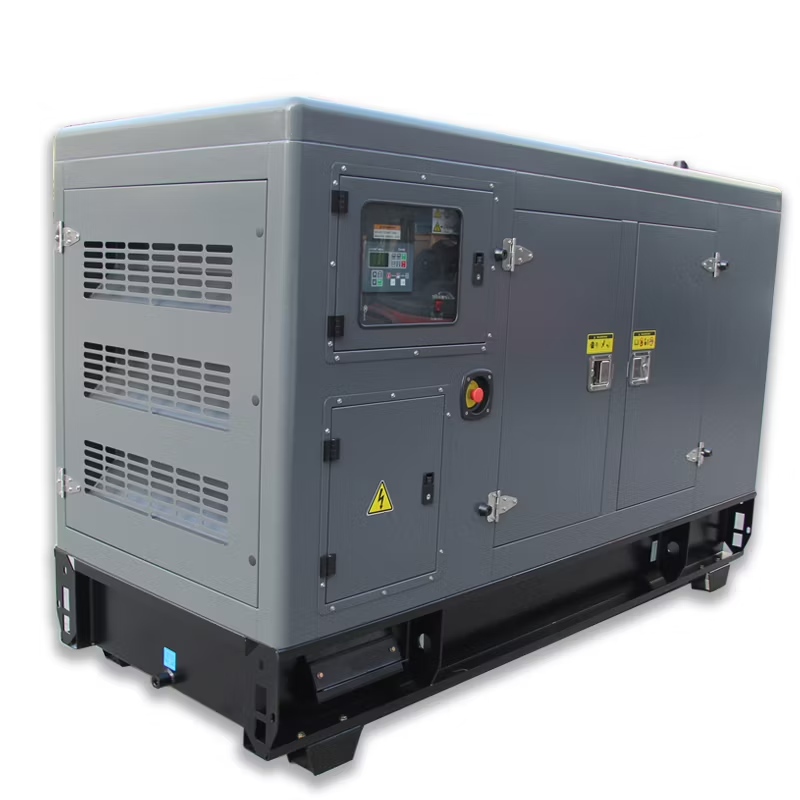
The global silent generator market is poised for significant growth from 2023 to 2033, with an anticipated compound annual growth rate (CAGR) of 6.0%. According to a newly published report by Future Market Insights, the market, valued at approximately USD 3,026.0 million in 2023, is projected to exceed USD 5,419.1 million by 2033, driven by factors such as increasing power disruptions, the rise of urbanization, and the growing demand for quieter, more efficient energy solutions.

Surge in Demand Due to Frequent Power Cut-Offs

In recent years, the world has witnessed a surge in power cut-offs and disruptions, particularly due to the depletion of coal resources in thermal power plants globally. As electricity supply becomes more unreliable, households, hospitals, and businesses are increasingly turning to silent generators as an alternative power source. This trend is especially pronounced in rapidly growing urban areas, where the demand for reliable, noise-free power solutions is critical.

Key Factors Driving Market Growth

  • Urbanization & Growing Infrastructure: Rapid urbanization, coupled with the construction of new residential and commercial buildings, is boosting the demand for silent diesel and electric generators. Particularly, there is a growing demand for smaller, portable generators for residential applications and recreational use such as camping.
  • Advancements in Technology: The use of advanced soundproofing materials and efficient mufflers has made it possible to develop quieter generators without compromising on performance. Additionally, hybrid and electric generator technologies are gaining traction, further diversifying the market and attracting environmentally-conscious consumers.
  • Environmental Concerns: With the increasing emphasis on sustainability and reduced environmental impact, silent generators, especially natural gas-powered and electric variants, are witnessing a surge in demand. These models offer a cleaner, more eco-friendly solution compared to traditional fossil fuel-based generators.
  • Rising Popularity of Hybrid and Electric Vehicles: As the global shift towards electric and hybrid vehicles accelerates, silent electric generators are expected to see significant growth, providing an alternative power source with minimal environmental impact.

Market Segmentation Insights

  • By Fuel Type: Silent diesel generators remain the dominant segment, driven by widespread adoption in residential and commercial sectors. However, natural gas generators are gaining momentum due to their lower carbon footprint and government incentives for cleaner technologies. Electric silent generators, while still in the nascent stages, are poised to experience substantial growth over the forecast period.
  • By Application: Commercial establishments represent the largest demand segment, accounting for over 42% of the market share in 2022. As urbanization continues, the demand for quiet, reliable power sources in offices, hospitals, and large businesses is expected to accelerate.
  • By Noise Level: Generators producing noise levels below 60 to 70 decibels are expected to be the fastest-growing segment. This trend is driven by increasing consumer preference for quieter solutions for both residential and commercial use.

Key Players in the Global Market

  • Rolls-Royce Holdings
  • Atlas COPCO
  • Generac Power Systems
  • Honda
  • Mahindra Powerol
  • Kirloskar Oil Engines Ltd. (KOEL)
  • Multipurpose Inc.
  • Greaves Cotton Ltd.
  • Yanmar, Huu Toan Corporation
  • Himoinsa

Recent Developments

  • In February 2023, Caterpillar introduced a new mobile generator set that meets modern global emission norms. The new Cat XQ330 mobile diesel generator set comes equipped with a digital control panel. The EMCP 4.4, offers all controls and system indicators in a single interface.
  • For recreational vehicles, Cummins Inc of the United States launched a new type of generator in January 2021 by the name of QG 2800i and 2500i. This advanced type of small silent generator runs on gasoline and liquid propane (LP) making it suitable for truck campers.
  • An industrial steam and water boiler company in the Netherlands by the name of Eco Steam and Heating Solutions was acquired by Atlas Copco of Sweden in May 2021. This acquisition is aimed to help the company in strengthening its consumer base of mini silent generators other than its traditional areas of operation.

Get Strategic Guidance from Our Analyst Contact us on: +1-347-918-3531

Market Segmentation

By Sound Level:

  • Silent
  • Super Silent

By Type:

  • Portable
  • Stationary

By Phase:

  • Single Phase
  • Three Phase

By Power Rating:

  • Upto 25kVA
  • 25kVA to 49kVA
  • 50kVA to 99kVA
  • 100kVA to 499kVA
  • Above 500kVA

By Fuel:

  • Diesel
  • Natural Gas
  • Others

By Application:

  • Standby and Peak
  • Prime Mover

By End User:

  • Residential
  • Commercial
  • Industrial

By Region:

  • North America
  • Latin America
  • Europe
  • Asia Pacific
  • The Middle East & Africa (MEA)

About Future Market Insights (FMI)

Future Market Insights, Inc. (ESOMAR certified, recipient of the Stevie Award, and a member of the Greater New York Chamber of Commerce) offers profound insights into the driving factors that are boosting demand in the market. FMI stands as the leading global provider of market intelligence, advisory services, consulting, and events for the Packaging, Food and Beverage, Consumer Technology, Healthcare, Industrial, and Chemicals markets. With a vast team of over 400 analysts worldwide, FMI provides global, regional, and local expertise on diverse domains and industry trends across more than 110 countries.

Contact Us:

Future Market Insights Inc.
Christiana Corporate, 200 Continental Drive,
Suite 401, Newark, Delaware – 19713, USA
T: +1-347-918-3531
For Sales Enquiries: sales@futuremarketinsights.com
Website: https://www.futuremarketinsights.com
LinkedInTwitterBlogs | YouTube

Global Solar District Heating Market Set for Robust Growth Driven by Sustainability and Technological Advancements

The global solar district heating market is set to expand at a healthy compound annual growth rate (CAGR) of 6.6% during the forecast period, from USD 2.77 billion in 2023 to over USD 5.26 billion by 2033. This remarkable growth is driven by increasing demand for sustainable heating solutions, growing urbanization, and a concerted effort by governments worldwide to reduce carbon emissions and encourage clean energy sources.

Key Drivers of Growth in the Solar District Heating Market

The solar district heating sector is experiencing significant momentum due to several critical factors:

  • Government Regulations and Incentives: Global pressure to meet stricter carbon emissions reduction targets is prompting governments to support and incentivize renewable energy solutions. As part of the green energy transition, solar district heating systems are seen as a viable solution to reduce reliance on traditional fossil fuel-based heating systems.
  • Environmental Awareness: There is a marked shift among businesses and governmental bodies towards adopting solar-powered district heating systems. This change is driven by growing concerns about environmental sustainability and the carbon footprint of traditional heating methods.
  • Urbanization and Infrastructure Development: Rapid urbanization, particularly in emerging economies, is spurring the demand for energy-efficient and low-carbon heating solutions. Solar district heating systems offer an efficient alternative to conventional methods, especially in newly developing urban areas where energy demand is rising rapidly.
  • Technological Advancements: With the advent of smart technologies, such as smart meters and demand-based heating solutions, solar district heating systems are becoming more efficient and cost-effective. These innovations are accelerating the digitalization of heating networks and improving their performance and reliability.

Market Trends and Innovations

  • Integration with Smart Cities: Solar district heating is poised to become a key element in the development of smart cities. New infrastructure developments, such as smart grids and energy-efficient buildings, are creating vast opportunities for solar district heating providers. These systems can easily integrate into modern energy solutions, offering both economic and environmental benefits.
  • Hybrid Heating Solutions: Solar district heating systems are highly flexible and can integrate multiple heat sources, including surplus heat from industrial processes or waste heat from combined heat and power (CHP) plants. This adaptability allows solar district heating to compete effectively with other traditional heating methods and helps maintain cost-effectiveness even in changing market conditions.
  • Emphasis on Cost Efficiency: As energy costs continue to rise, solar district heating systems offer a cost-effective alternative by leveraging the free and renewable energy source of sunlight. This capability makes them particularly attractive for large-scale applications in commercial and industrial sectors.

Challenges Facing the Solar District Heating Market

Despite its growth potential, the solar district heating market faces several challenges:

  • High Initial Investment: The upfront costs for setting up solar district heating systems, including the installation of solar panels, heat exchangers, and distribution networks, are significant. Although these systems offer long-term savings, the capital required for installation may deter some potential investors.
  • Heat Loss in Distribution: Ensuring minimal heat loss during distribution is a critical concern for solar district heating systems. Advanced materials and technologies, such as smart meters and efficient heat exchangers, are essential to maintaining energy efficiency.
  • Competition from Other Heating Solutions: While solar district heating systems offer numerous benefits, they face competition from other renewable energy sources, such as geothermal and biomass heating systems, which also present low-carbon alternatives.

Competitive Landscape

The solar district heating market is not highly competitive, but it is characterized by the presence of several prominent global and regional players. These companies are heavily investing in research and development to innovate new solutions, forge strategic partnerships, and pursue both organic and inorganic growth strategies to maintain a competitive edge in the coming years.

Market Developments

  •  If you want to buy energy for 10 years, you will have to buy it from Vattenfall or Power & Air Solutions, a subsidiary of Deutsche Telekom. This is called an energy supply contract (CPPA), and it is based on solar power. The customer built a new solar park in Mecklenburg-Western Pomerania in mid-2021. The electricity comes from the new solar park. The plant might be able to produce 60 megawatts of electricity when it is fully built (MW).
  • In February 2020 ENGIE Africa and its subsidiary, AUSAR Energy, started building eight hybrid solar power plants in Gabon’s northwest. They did this with the help of the Caisse des Dépôts ET Consignment du Gabon, a bank in Gabon. It is a big pilot project that aims to get energy to remote villages and help the environment.
  • Aalborg CSP has added new affordable ways of installation through CSP parabolic troughs, flat-plate solar collectors, combination plants, and accumulation tanks.

Key Players Working in the Solar District Heating Market

  • LOGSTOR A/S
  • Orsted A/S
  • NRG Energy
  • Aalborg CSP
  • Statkraft
  • STEAG GmbH

Get Connected with Our Expert Analyst on Email: sales@futuremarketinsights.com

Key Segments Covered

By System:

  • Small systems
  • Large systems

By Application:

  • Residential
  • Commercial
    • College/university
    • Office Buildings
    • Government/Military
    • Others
  • Industrial
    • Chemical
    • Refinery
    • Paper

Key Regions Covered:

  • North America
    • The United States
    • Canada
  • Latin America
    • Brazil
    • Mexico
    • Rest of Latin America
  • Europe
    • Germany
    • The United Kingdom
    • France
    • Spain
    • Russia
    • Rest of Europe
  • Japan
  • Asia Pacific Excluding Japan(APEJ)
    • China
    • India
    • Malaysia
    • Singapore
    • Australia
    • Rest of Asia Pacific Excluding Japan (APEJ)
  • The Middle East and Africa
    • GCC Countries
    • Israel
    • South Africa
    • The Middle East and Africa (MEA)

About Future Market Insights (FMI)

Future Market Insights, Inc. (ESOMAR certified, recipient of the Stevie Award, and a member of the Greater New York Chamber of Commerce) offers profound insights into the driving factors that are boosting demand in the market. FMI stands as the leading global provider of market intelligence, advisory services, consulting, and events for the Packaging, Food and Beverage, Consumer Technology, Healthcare, Industrial, and Chemicals markets. With a vast team of over 400 analysts worldwide, FMI provides global, regional, and local expertise on diverse domains and industry trends across more than 110 countries.

Contact Us:

Future Market Insights Inc.
Christiana Corporate, 200 Continental Drive,
Suite 401, Newark, Delaware – 19713, USA
T: +1-347-918-3531
For Sales Enquiries: sales@futuremarketinsights.com
Website: https://www.futuremarketinsights.com
LinkedInTwitterBlogs | YouTube

Global Custom Packaging Box Industry is Expected to Generate USD 8.9 Billion by 2034: Future Market Insights, Inc.

The global market for custom packaging boxes has seen impressive growth, reaching a substantial USD 6.1 billion in 2024. With a projected compound annual growth rate (CAGR) of 3.8% from 2024 to 2034, the market is set to surge to USD 8.9 billion by 2034.

Following a challenging period due to the recent economic downturn and the impacts of the COVID-19 pandemic, the packaging industry is gradually regaining its momentum. This resurgence presents a promising opportunity for custom packaging box manufacturers, with a rising demand from various sectors, particularly in e-commerce, which has become the largest consumer of these solutions.

See How Things Have Changed: Access the Old Source for This Report!

E-commerce companies increasingly rely on custom packaging boxes as branded packaging solutions that not only enhance their product presentation but also ensure the protection of goods during transportation. These packaging solutions help safeguard items from damage during transit, an essential feature as global trade and logistics continue to scale.

Countries with established manufacturing capabilities, such as China, India, and the United States, lead the charge as the largest consumers of custom packaging boxes, fueling the market’s growth. As businesses across industries seek cost-effective, efficient, and sustainable packaging options, the demand for custom packaging solutions is expected to continue rising, further solidifying the growth trajectory of this vital sector.

Key Takeaways: Custom Packaging Box Market

  • India is projected to be a highly profitable market, with an estimated CAGR of 5.5% from 2024 to 2034.
  • China remains one of the largest markets for custom packaging boxes, with a forecasted CAGR of 4.8% over the next decade.
  • The United States is expected to show a slower but steady growth in the custom packaging box industry, with a CAGR of 3% in the upcoming decade.
  • Custom packaging boxes are produced from a variety of materials, including metal, glass, paper, paperboard, and plastic, with paper and paperboard accounting for the largest market share (29.2%).
  • The cosmetics and personal goods sector holds a significant share (23.4%) of the custom packaging box market, thanks to its diverse applications across industries.

Prominent Drivers of the Custom Packaging Box Market

  • E-Commerce Growth: The surge in online shopping has led to a higher demand for custom packaging boxes, as businesses seek unique, branded packaging that enhances customer experience and product protection during shipping.
  • Sustainability Demand: As sustainability becomes a key focus for both consumers and businesses, custom packaging boxes made from eco-friendly, recyclable, and biodegradable materials are increasingly in demand to meet both regulatory standards and customer preferences.
  • Brand Differentiation: Custom packaging allows businesses to stand out in a competitive market. Unique, tailored packaging helps brands create a memorable impression, enhance product appeal, and foster customer loyalty.
  • Rising Consumer Expectations: Consumers expect a more personalized shopping experience, which includes packaging that reflects the brand’s identity. Custom packaging enables businesses to meet these expectations by providing distinct, high-quality solutions that add value to the product.
  • Cost Efficiency and Versatility: Advances in manufacturing technologies have made custom packaging boxes more affordable and flexible. The ability to produce small to large quantities, along with customizable shapes, sizes, and designs, makes it a viable option for businesses of all sizes.

Competition Outlook

The custom packaging box market is quite competitive. It is teeming with corporations all aiming for global dominance. Because of their vast financial resources, industry behemoths are introducing new inventions to the market. Meanwhile, smaller businesses face obstacles such as low profit margins, a limited consumer base, and so on. Companies are also focused on creating zero-waste boxes to meet the demands of environmentally concerned consumers and enterprises.

Prominent Companies

  • Westrock Company
  • DS Smith Packaging Ltd
  • Smurfit Kappa Group
  • Interpak Holding B.V.
  • Mayr-Melnhof Karton AG
  • Robinson plc
  • Stora Enso Oyj
  • Metsa Board Oyj
  • Graphic Packaging International, LLC
  • Quintessential Canada Inc
  • Polmac (UK) Ltd.

Key Industrial Developments

  • In March, 2024, UK-based packaging distributor Kite Packaging launched an advanced custom-size box tool, offering standard custom boxes and die-cut boxes. The tool provides customers with the option to specify board grade, color, and dimensions for their desired box, enhancing the overall customer experience.
  • In July, 2024, Axiom Print unveiled its latest offering: custom printed subscription boxes. The new boxes featured premium quality printing, sustainable materials, and complete customization, providing businesses with a tool to increase brand recognition and customer satisfaction.

Key Segments of Market Report

By Material:

The market by material metal, glass, paper and paperboard, plastic, etc.

By End Use:

By end use, the market is divided into consumer goods, electrical and electronics, cosmetics and personal goods, fashion accessories and apparel, healthcare, food and beverages, etc.

By Inserts:

Regarding inserts, the market is categorized into with and without inserts.

By Region:

The sector has been analyzed with the following regions covered: North America, Latin America, Europe, South Asia & Pacific, East Asia, and the Middle East and Africa.

About Future Market Insights (FMI)

Future Market Insights, Inc. (ESOMAR certified, recipient of the Stevie Award, and a member of the Greater New York Chamber of Commerce) offers profound insights into the driving factors that are boosting demand in the market. FMI stands as the leading global provider of market intelligence, advisory services, consulting, and events for the Packaging, Food and Beverage, Consumer Technology, Healthcare, Industrial, and Chemicals markets. With a vast team of over 400 analysts worldwide, FMI provides global, regional, and local expertise on diverse domains and industry trends across more than 110 countries.

Contact Us:     

Future Market Insights Inc.
Christiana Corporate, 200 Continental Drive,
Suite 401, Newark, Delaware – 19713, USA
T: +1-347-918-3531
For Sales Enquiries: sales@futuremarketinsights.com
Website: https://www.futuremarketinsights.com
LinkedInTwitterBlogs | YouTube

Automotive Interior Ambient Lighting System Industry: Shaping the Future of Vehicle Interiors | FMI Reports

Automotive Interior Ambient Lighting System Industry

The automotive interior ambient lighting system industry was valued at USD 36.2 billion in 2022 and is estimated to reach USD 37.23 billion in 2023. The growing recognition of these systems is primarily driven by their comfort and safety features. This increase in demand is largely attributed to the rise in sales of ultra-luxury vehicles and advancements in automotive interior lighting technology, which are further fueling the industry growth.

The Automotive Interior Ambient Lighting System Industry is experiencing significant growth, driven by the rising demand for advanced in-vehicle experiences and premium aesthetics. Ambient lighting systems, designed to enhance vehicle interiors through strategically placed illumination, not only provide aesthetic appeal but also improve functionality and passenger comfort.

As automakers increasingly focus on personalization and connected car technologies, interior ambient lighting systems are evolving to offer energy-efficient, customizable, and mood-enhancing solutions. These systems are now integral to luxury, mid-range, and electric vehicles (EVs), highlighting their universal appeal across the automotive spectrum.

Exhaustive Market Report: A Complete Study

Key Drivers of Growth

  • Growing Demand for Luxury Features: Consumers’ preference for premium and sophisticated vehicle interiors is fueling the adoption of ambient lighting systems.
  • Technological Advancements: Integration of advanced technologies like RGB LEDs, customizable lighting themes, and synchronization with infotainment systems enhances user experience.
  • Rising Popularity of EVs: Electric vehicles are incorporating innovative lighting designs to redefine the concept of futuristic interiors.
  • Focus on Passenger Comfort and Safety: Ambient lighting improves visibility and creates a relaxed environment, contributing to overall passenger satisfaction.
  • Customization and Personalization: Automakers are offering tailored lighting options to meet consumer preferences and enhance brand identity.

Key Takeaways

  • Industry Growth: The automotive interior ambient lighting system Industry is projected to grow at a robust CAGR of 7.5% from 2023 to 2030, reaching a valuation of approximately USD 6.8 billion by 2030.
  • Luxury Segment Dominance: Premium and luxury vehicles lead the adoption, but mid-range cars are increasingly incorporating ambient lighting due to competitive pricing and consumer demand.
  • Regional Insights: Europe and North America dominate the Industry due to the high penetration of luxury vehicles, while the Asia-Pacific region shows rapid growth, driven by rising disposable incomes and expanding automotive Industrys.
  • Energy Efficiency Focus: LED technology dominates the Industry due to its energy efficiency, longevity, and design versatility.
  • Smart Integration: Ambient lighting systems are being integrated with IoT and voice-activated controls, offering seamless interaction with other in-car technologies

Competitive Scenario

Key Players Profiled in the Market

  • Valeo SA
  • HELLA KGaAHueck& Co.
  • OSRAM Licht AG
  • LSI Industries Inc
  • Everlight Electronics Co., Ltd
  • Toshiba Corporation
  • DRÄXLMAIER Group.
  • Oshino Lamps Limited
  • Innotec Group
  • Grupo Antolin
  • DOMINANT Opto Technologies Sdn. Bhd

Automotive Interior Ambient Lighting System Market Segmentation

By Technology:

  • LED
  • Others

By Vehicle Type:

  • Compact
  • Sedan
  • Executive
  • SUV/MUV
  • Luxury
  • Sports
  • LCV
  • HCV

By Application:

  • Centre Console and Dashboard
  • Doors
  • Roof
  • Floor
  • Others

By Sales Channel:

  • OEM
  • Aftermarket

By Region:

  • North America
  • Latin America
  • Europe
  • South Asia
  • East Asia
  • Oceania
  • The Middle East and Africa

About Future Market Insights (FMI)

Future Market Insights, Inc. (ESOMAR certified, recipient of the Stevie Award, and a member of the Greater New York Chamber of Commerce) offers profound insights into the driving factors that are boosting demand in the market. FMI stands as the leading global provider of market intelligence, advisory services, consulting, and events for the Packaging, Food and Beverage, Consumer Technology, Healthcare, Industrial, and Chemicals markets. With a vast team of 400 analysts worldwide, FMI provides global, regional, and local expertise on diverse domains and industry trends across more than 110 countries.

Contact Us:      

Future Market Insights Inc.
Christiana Corporate, 200 Continental Drive,
Suite 401, Newark, Delaware – 19713, USA
T: +1-347-918-3531
For Sales Enquiries: sales@futuremarketinsights.com
Website: https://www.futuremarketinsights.com
LinkedInTwitterBlogs | YouTube

Automotive Engine Valve Industry: Boosting Efficiency and Performance in Next-Generation Engines | FMI Reports

Automotive Engine Valve Industry

The automotive engine valve industry was valued at USD 5.89 billion in 2021 and rose to USD 6.2 billion in 2022. It is projected to grow at a CAGR of 2.3% during the forecast period, reaching an estimated USD 7.78 billion by 2032.

The Automotive Engine Valve Industry is set to witness sustained growth as the demand for efficient, high-performance, and low-emission vehicles continues to rise globally. Engine valves, critical components in the internal combustion engine (ICE), regulate the flow of fuel and air into the combustion chamber and exhaust gases out of the engine, ensuring optimal performance and fuel efficiency.

Technological advancements, stringent emission norms, and the evolution of hybrid powertrains are transforming the Industry dynamics. With the increasing adoption of lightweight and durable materials, manufacturers are focusing on enhancing engine valve efficiency to meet the growing expectations of automakers and consumers.

Exhaustive Market Report: A Complete Study

Key Drivers of Growth

  • Stringent Emission Norms: Global regulations targeting reduced vehicle emissions drive the development of advanced engine valves that enhance combustion efficiency.
  • Rise in Vehicle Production: Increasing production of passenger and commercial vehicles in emerging economies boosts demand for high-quality engine valves.
  • Technological Advancements: Innovations in valve technologies, such as variable valve timing (VVT) and cylinder deactivation, are reshaping the Industry landscape.
  • Hybrid and Alternative Fuel Vehicles: The transition to hybrid and CNG/LPG-powered vehicles expands the scope for specialized engine valves.
  • Lightweight Material Adoption: The use of titanium and other lightweight, durable materials in valve manufacturing reduces engine weight, improving performance and fuel economy.

Key Takeaways

  • Industry Growth: The automotive engine valve Industry is projected to grow at a CAGR of 5.2% from 2023 to 2030, reaching a Industry valuation of approximately USD 7.8 billion by 2030.
  • Dominant Segments: Intake and exhaust valves remain essential components, with the demand for variable valve systems growing rapidly.
  • Regional Insights: Asia-Pacific dominates the Industry due to high vehicle production in countries like China, India, and Japan, while Europe and North America benefit from a focus on fuel efficiency and emission control.
  • Material Trends: Titanium and other lightweight alloys are gaining popularity for engine valves to improve durability and thermal efficiency.
  • ICE Sustainability: While the EV transition continues, the ICE Industry remains significant, with hybrid engines and alternative fuel vehicles creating demand for specialized valve technologies.

Key Companies Profiled in the Automotive Engine Valve Market

  • Mahle Group
  • Knorr-Bremse AG
  • Hitachi Ltd.
  • FUJI OOZX Inc.
  • FTE automotive GmbH
  • Federal-Mogul Holdings Corp
  • Eaton Corporation Plc.
  • Denso Corporation
  • Delphi Automotive PLC
  • Continental AG

Key Segments in the Automotive Engine Valve Market

By Product Type:

  • Mono Metallic Valves
  • Bimetallic Valves
  • Hollow Valves

By Vehicle Type:

  • Compact Passenger Cars
  • Mid-Sized Passenger Cars
  • Premium Passenger Cars

By Material Type:

  • Steel
  • Titanium
  • Nickel Alloy

By Sales Channel:

  • OEM
  • Aftermarket

By Region:

  • North America
  • Latin America
  • Asia Pacific
  • Middle East & Africa (MEA)
  • Europe

About Future Market Insights (FMI)

Future Market Insights, Inc. (ESOMAR certified, recipient of the Stevie Award, and a member of the Greater New York Chamber of Commerce) offers profound insights into the driving factors that are boosting demand in the market. FMI stands as the leading global provider of market intelligence, advisory services, consulting, and events for the Packaging, Food and Beverage, Consumer Technology, Healthcare, Industrial, and Chemicals markets. With a vast team of 400 analysts worldwide, FMI provides global, regional, and local expertise on diverse domains and industry trends across more than 110 countries.

Contact Us:      

Future Market Insights Inc.
Christiana Corporate, 200 Continental Drive,
Suite 401, Newark, Delaware – 19713, USA
T: +1-347-918-3531
For Sales Enquiries: sales@futuremarketinsights.com
Website: https://www.futuremarketinsights.com
LinkedInTwitterBlogs | YouTube

Automotive Brake Valve Industry: Enhancing Safety and Performance in Modern Vehicles | FMI Reports

Automotive Brake Valve Industry

The automotive brake valve industry was valued at approximately USD 12,109 million in 2022. It is forecasted to grow at a CAGR of 5.9% from 2023 to 2033, reaching an estimated USD 22,598.7 million by 2033. During this period, ABS modular valves and combination valves are expected to constitute over 43.3% and 21.1% of the industry, respectively.

The Automotive Brake Valve Industry is witnessing steady growth as safety and performance take center stage in the global automotive industry. Brake valves play a critical role in ensuring effective braking systems by controlling and regulating brake fluid flow, enhancing vehicle stability, and providing precise braking control.

As automotive manufacturers focus on advanced safety technologies, brake valve systems are evolving to meet stringent safety standards and consumer expectations. The growing adoption of electric and autonomous vehicles, coupled with rising awareness about vehicle safety, is further boosting demand for innovative and reliable brake valve solutions.

Exhaustive Market Report: A Complete Study

Key Drivers of Growth

  • Rising Safety Standards: Stringent government regulations mandating advanced braking systems, such as anti-lock braking systems (ABS) and electronic stability control (ESC), drive the demand for advanced brake valves.
  • Growth of Electric Vehicles (EVs): EVs require specialized braking systems, creating opportunities for innovative brake valve designs tailored for regenerative braking and lightweight structures.
  • Technological Advancements: Integration of intelligent control systems, such as brake-by-wire and electronic brake valves, is reshaping the industry landscape.
  • Increasing Vehicle Production: The global rise in automotive production, especially in emerging Industrys, fuels demand for brake valve systems across various vehicle segments.
  • Focus on Lightweight Components: Automakers are prioritizing lightweight brake valve materials to improve fuel efficiency and align with emission standards.

Key Takeaways

  • Industry Growth: The automotive brake valve Industry is projected to grow at a CAGR of 6% from 2023 to 2030, reaching a valuation of approximately USD 4.5 billion by 2030.
  • Dominant Segments: Passenger cars account for the largest share of the Industry, but the demand for brake valves in commercial vehicles is also rising due to increased focus on safety.
  • Regional Insights: Asia-Pacific leads the Industry due to robust automotive manufacturing in countries like China, India, and Japan, while Europe and North America benefit from stringent safety regulations.
  • Technological Trends: The adoption of electronic and regenerative braking systems is propelling the development of advanced brake valves.
  • Sustainability Focus: Manufacturers are increasingly using recyclable materials and energy-efficient production methods to meet sustainability goals.

Competitive Landscape

Leading players operating in the market are forming partnerships and aiming for mergers among distributors and suppliers to increase their product offerings. They are also focusing on establishing partnerships and joint ventures with foreign local companies to guarantee proper local marketing of the products and gain a competitive edge over rivals.Wabtec Corporation; Master Power Brake Valves; PARKER HANNIFIN CORP; Poclain; Continental AG; Hitachi Ltd; Denso Corporation; Delphi Automotive; Sundoz Co. Ltd; Alfmeier Precision SE; MAHLE Gmbh; Brake Valve Systems Inc; Qingdao MABCC International Trade Co., Ltd; Haldex; Mico Inc. (a Wabco Company); Knorr-Bremse AG

Key Segments Covered in Automotive Brake Valve Industry Analysis

Product Type:

  • Combination Valves
  • Quick Release Valves
  • Metering Valves
  • ABS Modular Valves
  • Foot & Hand Valves
  • Parking Brake Valves
  • Emergency Valves
  • Check Valves
  • Spring valves
  • Proportional valves

Vehicle Type:

  • Compact Cars
  • Mid-Sized
  • Luxury Cars
  • SUVs
  • HCVs
  • LCVs

Material Type:

  • Steel
  • Copper
  • Brass
  • Alloys

Sales Channel:

  • OEM
  • Aftermarket

Region:

  • North America
  • Latin America
  • Europe
  • East Asia
  • South Asia & Pacific
  • Middle East & Africa (MEA)

About Future Market Insights (FMI)

Future Market Insights, Inc. (ESOMAR certified, recipient of the Stevie Award, and a member of the Greater New York Chamber of Commerce) offers profound insights into the driving factors that are boosting demand in the market. FMI stands as the leading global provider of market intelligence, advisory services, consulting, and events for the Packaging, Food and Beverage, Consumer Technology, Healthcare, Industrial, and Chemicals markets. With a vast team of 400 analysts worldwide, FMI provides global, regional, and local expertise on diverse domains and industry trends across more than 110 countries.

Contact Us:      

Future Market Insights Inc.
Christiana Corporate, 200 Continental Drive,
Suite 401, Newark, Delaware – 19713, USA
T: +1-347-918-3531
For Sales Enquiries: sales@futuremarketinsights.com
Website: https://www.futuremarketinsights.com
LinkedInTwitterBlogs | YouTube

Automotive Microcontroller Industry: Driving Innovation in Smart Vehicle Technology | FMI Reports

Automotive Microcontroller Industry

The automotive microcontroller industry is projected to be valued at USD 14.32 billion in 2024. It is expected to grow at a CAGR of 8.27% throughout the forecast period, with the industry reaching an estimated value of nearly USD 31.7 billion by 2034.

The Automotive Microcontroller Industry is experiencing remarkable growth, fueled by the surge in demand for advanced automotive electronics, smart vehicle functionalities, and the rapid transition to electric vehicles (EVs). Automotive microcontrollers, essential for vehicle control systems, ensure enhanced safety, connectivity, and energy efficiency, positioning them at the core of modern automotive innovation.

As the automotive industry embraces autonomous driving technologies, connected vehicles, and stringent emission regulations, the role of microcontrollers in enabling these features is becoming increasingly critical. Manufacturers are focusing on developing high-performance, energy-efficient, and secure microcontrollers to meet the dynamic needs of next-generation vehicles.

Exhaustive Market Report: A Complete Study

Key Drivers of Growth

  • Increased Adoption of Advanced Driver Assistance Systems (ADAS): The growing integration of safety features such as lane-keeping assist, adaptive cruise control, and automated parking relies heavily on automotive microcontrollers.
  • Rising Demand for Electric Vehicles: EVs require sophisticated microcontrollers for battery management, motor control, and overall system efficiency, driving significant demand.
  • Proliferation of Connected Cars: The expansion of IoT in the automotive sector, including vehicle-to-everything (V2X) communication, is boosting the need for powerful microcontrollers.
  • Regulatory Compliance: Stringent emission standards and safety regulations globally necessitate advanced control systems powered by microcontrollers.
  • Technological Advancements: Development of low-power, high-performance microcontrollers with enhanced processing capabilities supports modern vehicle architectures.

Key Takeaways

  • Industry Growth: The automotive microcontroller Industry is projected to grow at a CAGR of 8% from 2023 to 2030, with Industry revenues anticipated to surpass USD 20 billion by 2030.
  • Dominant Applications: ADAS and electric powertrains are the leading application areas, accounting for a substantial share of microcontroller usage.
  • Regional Insights: Asia-Pacific leads the Industry, driven by high automotive production in countries like China, Japan, and India, while North America and Europe show steady growth due to strong adoption of advanced automotive technologies.
  • Focus on Security: The increasing need for cybersecurity in connected vehicles is driving the development of secure automotive microcontrollers.
  • Electrification Trends: As automakers invest heavily in EVs, microcontroller manufacturers are focusing on energy-efficient solutions tailored for electric powertrains.

Key Players

  • Texas Instruments Incorporated
  • NXP Semiconductors NV
  • STMicroelectronics NV
  • Microchip Technology Inc.
  • Renesas Electronics Corporation
  • Silicon Labs Private Limited
  • Fujitsu Limited
  • Maxim Integrated Products, Inc.
  • Infineon Technologies
  • Toshiba Corporation

Key Segments Covered in the Automotive Microcontroller Industry Survey Report

By Material Type:

  • Tinned Steel
  • Nickel-Cobalt Ferrous Alloy
  • Copper Alloy

By Vehicle Type:

  • Compact Passenger Cars
  • Mid-sized Passenger Cars
  • Premium Passenger Cars
  • Luxury Passenger Cars
  • Light Commercial Vehicles
  • Heavy Commercial Vehicles
  • Electric vehicle

By Application:

  • Advanced Driver Assistance System
  • Parking Assist System
  • Brake control system
  • Electric Control Suspension
  • Airbags
  • Functional Safety Technology
  • Transmission Control
  • Start-Stop System
  • Electronic Power Steering System
  • Other Applications

By Region:

  • North America
  • Latin America
  • Europe
  • East Asia
  • South Asia and Pacific
  • Middle East and Africa (MEA)

About Future Market Insights (FMI)

Future Market Insights, Inc. (ESOMAR certified, recipient of the Stevie Award, and a member of the Greater New York Chamber of Commerce) offers profound insights into the driving factors that are boosting demand in the market. FMI stands as the leading global provider of market intelligence, advisory services, consulting, and events for the Packaging, Food and Beverage, Consumer Technology, Healthcare, Industrial, and Chemicals markets. With a vast team of 400 analysts worldwide, FMI provides global, regional, and local expertise on diverse domains and industry trends across more than 110 countries.

Contact Us:      

Future Market Insights Inc.
Christiana Corporate, 200 Continental Drive,
Suite 401, Newark, Delaware – 19713, USA
T: +1-347-918-3531
For Sales Enquiries: sales@futuremarketinsights.com
Website: https://www.futuremarketinsights.com
LinkedInTwitterBlogs | YouTube

Auto Ventilated Seats Industry: Elevating Comfort and Luxury in Modern Vehicles | FMI Reports

Auto Ventilated Seats Industry

The auto ventilated seats industry is anticipated to be valued at USD 8,560.1 million in 2023 and is projected to increase to USD 18,429.3 million by 2033. The industry is expected to experience a substantial CAGR of 8.0% over the forecast period.

The Auto Ventilated Seats Industry is experiencing rapid growth as automakers and consumers prioritize comfort, health, and advanced vehicle features. Ventilated seating systems, designed to enhance passenger comfort by regulating temperature, are becoming a standard offering in luxury and mid-range vehicles.

With the increasing demand for premium automotive interiors and advanced climate control technologies, ventilated seats are gaining popularity across diverse vehicle segments. The integration of these systems enhances passenger comfort, particularly in extreme weather conditions, contributing to a superior driving experience.

Exhaustive Market Report: A Complete Study

Key Drivers of Growth

  • Rising Demand for Vehicle Comfort and Luxury: Increasing consumer preference for vehicles with advanced comfort features is driving demand for ventilated seats.
  • Technological Advancements: Integration of smart technologies, such as climate-controlled and automated ventilation systems, is enhancing product appeal.
  • Growth of the Automotive Industry: Expansion in global vehicle production, especially in luxury and electric vehicles, is bolstering the Industry.
  • Increased Awareness of Health Benefits: Ventilated seats reduce perspiration and maintain optimal temperature, improving passenger health and comfort during long journeys.
  • Evolving Automotive Interior Trends: OEMs are investing in innovative materials and designs for ventilated seats to enhance aesthetics and functionality.

Key Takeaways

  • Industry Growth: The auto ventilated seats Industry is projected to grow at a CAGR of over 6.5% from 2023 to 2030, reaching a Industry valuation of approximately USD 7 billion.
  • Rising Integration in Electric Vehicles (EVs): EV manufacturers are increasingly incorporating ventilated seats as part of advanced interior features to differentiate their offerings.
  • Premium Segment Dominance: Luxury and premium car segments dominate the Industry, but the trend is expanding into mid-range vehicles due to competitive pricing and consumer demand.
  • Regional Trends: North America and Europe lead the Industry with high adoption rates, while the Asia-Pacific region shows significant growth potential due to rising disposable incomes and automotive sales.
  • Material Innovations: Lightweight and eco-friendly materials for seat manufacturing are gaining traction to meet sustainability goals.

Competitive Landscape

Numerous large companies, like Lear Corporation; Adient Plc; Magna International Inc.; Toyota Boshoku Corporation; Dura Automotive Systems; Gentherm; TS Tech Co., Ltd; Faurecia SA; Brose Fahrzeugteile GmbH and Co.; NHK Spring Co. Ltd.; Continental AG; Grammer AG; Hyundai Transys, etc., dominate the auto-ventilated seats market. Collaborations with car manufacturers and OEMs, as well as technical and financial partnerships for technology development, are the primary means by which major companies generate money.

Recent Developments

Faurecia opened its Hanover Marienwerder Technology & Customer Center in March 2022. Former Faurecia Seating R&D in Stadthagen and Faurecia Interiors R&D in Peine, along with all German Faurecia Holding services, have been relocated to a new building in Hanover’s Science Area 30X. (Faurecia Automotive GmbH). Over eight hundred and fifty individuals are employed at this location.

The redesigned LEXUS LX, introduced by Toyota Motor Corporation in January 2022, features ventilated seats and door trims, which were created by Toyota Boshoku Corporation in March 2022.

Lear Corporation, in October 2021, announced that it has signed a definitive agreement to acquire Kongsberg Automotive’s Interior Comfort Systems (ICS) business segment in its entirety. The ICS division of Kongsberg Automotive is an industry pioneer in the expansion of massage, lumbar, heated, and ventilated seats, as well as other comfortable seating options.

Key Segments Covered in the Auto Ventilated Seats Market Report

By Vehicle Type:

  • Economy Cars
  • Mid-size Cars
  • Luxury Cars

By End User:

  • OEMs
  • Aftermarket

By Fan Type:

  • Axial Fan
  • Radial Fan

By Region:

  • North America
  • Latin America
  • Western Europe
  • Eastern Europe
  • Asia Pacific excluding Japan (APEJ)
  • Japan
  • Middle East & Africa (MEA)

About Future Market Insights (FMI)

Future Market Insights, Inc. (ESOMAR certified, recipient of the Stevie Award, and a member of the Greater New York Chamber of Commerce) offers profound insights into the driving factors that are boosting demand in the market. FMI stands as the leading global provider of market intelligence, advisory services, consulting, and events for the Packaging, Food and Beverage, Consumer Technology, Healthcare, Industrial, and Chemicals markets. With a vast team of 400 analysts worldwide, FMI provides global, regional, and local expertise on diverse domains and industry trends across more than 110 countries.

Contact Us:      

Future Market Insights Inc.
Christiana Corporate, 200 Continental Drive,
Suite 401, Newark, Delaware – 19713, USA
T: +1-347-918-3531
For Sales Enquiries: sales@futuremarketinsights.com
Website: https://www.futuremarketinsights.com
LinkedInTwitterBlogs | YouTube

Global Liquid Biopsy Market Set to Skyrocket to USD 10,938.6 Million by 2033 with a CAGR of 21.7%

The global liquid biopsy market is on a trajectory of unprecedented growth, with revenues projected to soar from USD 1,538.3 million in 2023 to an astounding USD 10,938.6 million by 2033, representing a robust CAGR of 21.7%. This dynamic expansion is attributed to technological advancements, increasing awareness of non-invasive diagnostic techniques, and the rising prevalence of chronic diseases such as cancer.

Liquid Biopsy Market Dynamics:

Market Driver: Benefits of Liquid Biopsy Over Conventional Procedures

Liquid biopsies are revolutionizing cancer diagnostics by offering distinct advantages over traditional incisional biopsy methods. These include being minimally invasive, cost-effective, convenient for disease monitoring, and enabling early cancer detection. The growing awareness of these benefits has driven widespread adoption across diverse medical fields. As healthcare professionals increasingly recognize the advantages of liquid biopsies, their acceptance is accelerating the development and adoption of innovative products and services in this market.

Market Restraint: Sensitivity and Specificity Challenges

Despite their advantages, certain liquid biopsy procedures face limitations in sensitivity, particularly in detecting circulating tumor DNA (ctDNA). This can result in false negatives, where ctDNA present at low levels in plasma remains undetected. Such challenges compromise the reliability of liquid biopsies in diagnosing cancer and monitoring tumor recurrence in its early stages. The low abundance of ctDNA in patient samples underscores the need for further advancements to enhance the accuracy of these tests.

Market Opportunity: Expanding Role of Companion Diagnostics

The growing demand for specialized and safer therapeutic solutions has spotlighted the significance of companion diagnostics. As pharmaceutical companies increasingly collaborate with diagnostic firms to develop targeted and effective therapies, the companion diagnostics sector is emerging as a vital area of growth for the liquid biopsy market. These partnerships aim to streamline the development of precision medicine, offering immense potential for the expansion of liquid biopsy applications.

Market Challenge: Complex Reimbursement Landscape

Navigating the reimbursement processes for molecular testing presents a considerable hurdle. The high costs of liquid biopsies, coupled with the specialized expertise required for interpreting test results, create challenges for both patients and providers. Many insurance payers cover multi-gene tests but may restrict coverage to specific genes, leaving patients to shoulder significant out-of-pocket expenses. The lack of clarity in reimbursement policies emphasizes the need for streamlined processes to ensure broader access to these advanced diagnostic tools.

Accelerated Market Demand: Find Comprehensive Insights and Trends in Our Full Report

Regional Insights: North America Leads the Market in 2023

In 2023, North America dominated the liquid biopsy market, driven by advanced healthcare systems in the US and Canada. These countries benefit from a robust infrastructure for cancer research, diagnosis, and treatment, facilitating the rapid adoption of innovative technologies like liquid biopsy. This regional leadership underscores the pivotal role of well-established healthcare ecosystems in propelling market growth.

Key Players in the Liquid Biopsy Ecosystem:

  • BIOCEPT, INC.
  • Qiagen N.V.
  • Trovagene, Inc
  • Janssen Global Services, LLC
  • MDxHealth SA
  • Natera, Inc
  • F. Hoffmann-La Roche Ltd
  • Silicon Biosystems
  • Pathway Genomics Corporation
  • Sysmex Corporation

Key Segments Profiled in the Liquid Biopsy Industry Survey:

By Biomarker Type:

  • CTCs (Circulating Tumour Cells)
  • ctNA (Circulating tumor Nucleic Acids)
  • Exosomes

By Sample Type:

  • Blood Liquid Biopsy
  • Urine Liquid Biopsy
  • Other (Plasma, Saliva, CSF) Liquid Biopsy

By Application Type:

  • Liquid Biopsy for Lung Cancer
  • Liquid Biopsy for Gastrointestinal Cancer
  • Liquid Biopsy for Prostate Cancer
  • Liquid Biopsy for Breast Cancer
  • Liquid Biopsy for Colorectal Cancer
  • Liquid Biopsy for Leukemia

By Region:

  • North America
  • Latin America
  • Western Europe
  • Eastern Europe
  • Asia Pacific Excluding Japan
  • Japan
  • Middle East and Africa

About Future Market Insights (FMI)

Future Market Insights, Inc. (ESOMAR certified, recipient of the Stevie Award, and a member of the Greater New York Chamber of Commerce) offers profound insights into the driving factors that are boosting demand in the market. FMI stands as the leading global provider of market intelligence, advisory services, consulting, and events for the Packaging, Food and Beverage, Consumer Technology, Healthcare, Industrial, and Chemicals markets. With a vast team of over 400 analysts worldwide, FMI provides global, regional, and local expertise on diverse domains and industry trends across more than 110 countries.

Contact Us:        

Future Market Insights Inc.
Christiana Corporate, 200 Continental Drive,
Suite 401, Newark, Delaware – 19713, USA
T: +1-347-918-3531
For Sales Enquiries: 
sales@futuremarketinsights.com
Website: https://www.futuremarketinsights.com
LinkedInTwitterBlogs | YouTube

Global Softgel Capsules Market Set to Surge with to reach USD 1.9 Billion Valuation by 2032 expand at a CAGR of 6.0%

The global softgel capsules market is poised for significant growth, with a projected Compound Annual Growth Rate (CAGR) of 6.0% from 2022 to 2032. According to a recent study by Future Market Insights, the market, valued at USD 1.1 billion in 2022, is expected to exceed USD 1.9 billion by 2032. This robust growth underscores the increasing adoption and demand for softgel capsules across various sectors.

Gelatin softgel capsules, holding a dominant market share of approximately 75.4% in 2021, continue to lead the industry. The global softgel capsules market has demonstrated a historical growth rate of about 3.9% from 2012 to 2021, with softgel capsules constituting approximately 35.5% of the overall USD 3.1 billion global gelatin capsules market in 2021.

Benefits Driving Market Expansion:

Softgel capsules offer numerous advantages over conventional oral solid dosage forms, contributing to their rising acceptance. These capsules, designed to mask unpleasant tastes and odors, are preferred by consumers due to their ease of swallowing and diverse forms, including chewable and meltable variants. The gelatin shells of softgel capsules not only protect the contents from external contaminants and UV light but also enhance operator safety by minimizing dust handling.

Innovations and Opportunities:

The market is witnessing a shift towards vegetarian softgel capsules made from pullulan, starch, and HPMC. This trend is expected to drive product personalization in the pharmaceutical, cosmetic, and nutraceutical industries, creating lucrative opportunities for manufacturers. Additionally, the precise compounding and blending of liquid fill ingredients ensure superior accuracy and consistency in API dosing, while the inert encapsulation process enhances the stability of the pharmaceuticals.

The softgel capsules market is set to thrive, driven by consumer preference for enhanced dosage forms and ongoing innovations in capsule technology. As the industry continues to evolve, manufacturers are positioned to capitalize on emerging trends and meet the growing demands of diverse applications.

Stay Ahead with Softgel Capsules: Delve into Our Full Report for Extensive Trends and Insights!

Competitive Landscape:

Primary companies participating in the global softgel capsules market are continuing to invest in technologies that provide alternatives to traditional drug delivery systems as the market for softgel products is still in its infancy. However, some businesses continue to only offer hard and soft gelatin capsules in their product offering. If these companies add softgel capsules, vegetarian capsules, and other capsules made from plant-based gelatin to their product line, they can anticipate significant incremental growth prospects.

The presence of numerous competitors in the softgel capsules industry is making the market highly fragmented. To meet consumer demand and expand their clientele, these companies are using tactics including acquisitions and mergers partnerships and collaborations, and the introduction of new products.

Aenova began construction of a new structure for highly potent active substances at its Regensburg location in April 2022. Modern manufacturing facilities produce extremely effective pharmaceuticals, particularly those for cancer. Aenova released VegaGels, their most recent vegan soft capsules, in November 2020. They adhere to Chinese, European Union, and American regulatory requirements.

Therefore, the introduction of new technologies to the market, such as the 3D printing of softgel capsules, will be a game-changer, and would further present the global market with lucrative opportunities for expansion.

Recent Developments:

Softgel capsule producers are increasing their product lines to offer a variety of vegan softgel capsules with improved attributes such as faster disintegration, increased gastric acid resistance, enteric coating, and specially developed capsules for clinical studies in order to maximize their revenue.

SGC technology is predicted to be relatively expensive to manufacturers, which is likely to rise consumer prices. Various pharmaceutical businesses lack the specialized equipment necessary to fill SGCs, hence they generally rely on contract laboratories/manufacturers for supplies.

Another upcoming issue with the adoption of soft gelatin capsule products is that some people have dietary restrictions that preclude them from eating animal products contained in SGCs. Gelatin is typically derived from pig and cow bones, skins, and other animal parts. Many vegetarians avoid using capsule shells since they are manufactured from animal tissues.

More Insights into the Softgel Capsules Market:

The U.S. is expected to dominate the softgel capsules market as it accounted for a total of 88.4% in 2021. The North American region is expected to continue its dominance over the assessment period.

Key Companies Profiled:

  • Aenova Group GmbH
  • Fuji Capsule Co., Ltd
  • Sirio Pharma Company Limited
  • Catalent, Inc
  • EuroCaps Ltd
  • Guangdong Yichao Biological Co., Ltd.
  • Elnova Pharma
  • Captek Softgel International Inc
  • Hunan Er-Kang Pharmaceutical Co., Ltd
  • Soft Gel Technologies Inc.
  • Patheon
  • United Labs
  • Curtis Health Caps
  • Delpharm Evreux
  • Procaps Group

Key Market Segments Covered in Softgel Capsules Industry Research

By Product:

  • Gelatin Softgel Capsules
  • Vegetarian Softgel Capsules

By Raw Material:

  • Type-A Gelatin (Pork Skin)
  • Type-B Gelatin (Animal Bones & Skin)
  • Fish Bone Gelatin
  • Cellulose Derivatives
  • Starch Material

By Application:

  • Antacid & Antiflatulent Preparations
  • Antianemic Preparations Hematinic Preparations)
  • Anti-inflammatory Drugs
  • Antibiotic & Antibacterial Drugs
  • Cough & Cold Preparations
  • Cardiovascular Therapy Drugs
  • Health Supplements
  • Vitamin & Dietary Supplements
  • Other Therapeutic Applications

By End User:

  • In-house Manufacturing
    • Pharmaceutical Companies
    • Nutraceutical Companies
    • Cosmeceutical Companies
  • Contract Manufacturing Organizations

By Route of Administration:

  • Oral Softgels
  • Suppositories
  • Pessaries
  • Twist off Softgels
  • Others

By Region:

  • North America
  • Latin America
  • Europe
  • South Asia
  • East Asia
  • Oceania
  • Middle East and Africa (MEA)

About Future Market Insights (FMI)

Future Market Insights, Inc. (ESOMAR certified, recipient of the Stevie Award, and a member of the Greater New York Chamber of Commerce) offers profound insights into the driving factors that are boosting demand in the market. FMI stands as the leading global provider of market intelligence, advisory services, consulting, and events for the Packaging, Food and Beverage, Consumer Technology, Healthcare, Industrial, and Chemicals markets. With a vast team of over 400 analysts worldwide, FMI provides global, regional, and local expertise on diverse domains and industry trends across more than 110 countries.

Contact Us:        

Future Market Insights Inc.
Christiana Corporate, 200 Continental Drive,
Suite 401, Newark, Delaware – 19713, USA
T: +1-347-918-3531
For Sales Enquiries: 
sales@futuremarketinsights.com
Website: https://www.futuremarketinsights.com
LinkedInTwitterBlogs | YouTube