Sustainable Solutions and Cold Chain Logistics Fuel Pour Point Depressant Market Growth: Insights and Projections

A recent forecast study by Future Market Insights (FMI) predicts that the global pour point depressant market size will reach USD 2,945.22 million by 2033, growing at a CAGR of 3.7% during the forecast period. The market for pour point depressants was expected to reach USD 1,974.80 million by 2022. The industry is projected to be valued at USD 2,048.00 million by the end of 2023. The pour point depressant market is expected to expand at a rate of 3.70% CAGR throughout the forecast period, reaching a valuation of USD 2,945.22 million by 2033.

The key drivers of growth include the increasing demand for pour point depressants in cold chain logistics, the growing need for temperature-sensitive commodities, and the increasing use of pour point depressants in the automotive industry in cold climates.

The growth of cold chain logistics within the food, pharmaceutical, and chemical industries, along with the increasing need for commodities sensitive to temperature, are driving the market for pour point depressants. Pour point depressants maintain the flow properties of lubricants used in refrigerated storage and transit, which helps maintain the product’s integrity.

Key Takeaways from the Market Analysis

  • Pour point depressant sales in the United States will likely rise at a 4.00% CAGR over the projected year.
  • From 2023 to 2033, the pour point depressant market in the United Kingdom is expected to flourish at a CAGR of 3.30%.
  • Pour point depressant demand in Germany is anticipated to expand at a 4.10% CAGR over the projected year.
  • Pour point depressant sales in China are anticipated to surge at a 4.10% CAGR between 2023 and 2033.
  • Throughout the forecast period, India’s pour point depressant market is projected to expand at a 3.80% CAGR.
  • In 2023, the poly alkyl methacrylate segment is anticipated to reach a market share of 33.8%.
  • The Group II category will account for 51.9% of the global market in 2023.

“The increased adoption of environmentally friendly pour point depressant solutions, as well as continued technological improvements leading to better low-temperature performance, will eventually drive demand in the global market,” says Nikhil Kaitwade (Associate Vice President at Future Market Insights, Inc.).

Browse the Complete Report!

Competitive Landscape

Manufacturers invest efforts in research and development to create new pour point depressant formulas. Companies can differentiate themselves in the market and command premium prices by creating products with unique features, such as enhanced performance or versatility with different types of crude oil.

Manufacturers often expand geographically to access new markets where pour point depressants are becoming more and more necessary. Businesses can increase their customer base, diversify their revenue streams, and increase profitability by going global via alliances, mergers, or acquisitions.

Key Developments

  • In 2022, to better serve its clients in the pharmaceutical, home care, personal care, and industrial application sectors, Clariant planned to enlarge its Care Chemicals facility in Daya Bay, Huizhou, China.
  • By 2024, the CHF 80 million investment will have increased capacity for current goods and brought new ones to market. The Clariant Daya Bay manufacturing plant has become the first API company in China to have approved polyethylene glycol Polyglykol 3350 after successfully receiving the medication GMP certificate. The location will serve as a new worldwide center for Clariant’s healthcare business support, expediting the delivery of premium ingredients for medications that have the potential to save lives.
  • In 2022, Lubrizol and Grasim Industries Limited initiated the construction of the first phase of a 100,000 metric ton CPVC resin facility in Vilayat, Gujarat, India. The Grasim Industries complex will house the largest single site CPVC resin production capacity in the world. It is intended to provide the growing demand for CPVC piping uses across India and its surrounding nations, including Bangladesh, Indonesia, and Nepal.

More Valuable Insights Available

Future Market Insights offers an unbiased analysis of the global pour point depressant market, providing historical data for 2018 to 2022 and forecast statistics from 2023 to 2033.

To understand opportunities in the global pour point depressant market, the market is segmented on the basis of chemical compositions (poly alkyl methacrylate, styrene ester, alkyl aromatic polymer, alkylated polystyrene, others), base oil additives (group I, group II, group III), end use industry (lubricants, industrial, automotive, marine, aviation, oil & gas, exploration & production, refining) and region (North America, Latin America, Western Europe, Eastern Europe, South Asia and Pacific, East Asia, The Middle East & Africa).

Segmentation Analysis of the Pour Point Depressant Market

By Chemical Compositions:

  • Poly Alkyl Methacrylate
  • Styrene Ester
  • Alkyl Aromatic Polymer
  • Alkylated Polystyrene
  • Others

By Base Oil Additives:

  • Group I
  • Group II
  • Group III

By End Use Industry:

  • Lubricants
    • Industrial
    • Automotive
    • Marine
    • Aviation
  • Oil & Gas
    • Exploration & Production
    • Refining

By Region:

  • North America
  • Latin America
  • Western Europe
  • Eastern Europe
  • South Asia and Pacific
  • East Asia
  • The Middle East & Africa

About Future Market Insights (FMI)

Future Market Insights, Inc. (ESOMAR certified, recipient of the Stevie Award, and a member of the Greater New York Chamber of Commerce) offers profound insights into the driving factors that are boosting demand in the market. FMI stands as the leading global provider of market intelligence, advisory services, consulting, and events for the Packaging, Food and Beverage, Consumer Technology, Healthcare, Industrial, and Chemicals markets. With a vast team of over 400 analysts worldwide, FMI provides global, regional, and local expertise on diverse domains and industry trends across more than 110 countries.

Join us as we commemorate 10 years of delivering trusted market insights. Reflecting on a decade of achievements, we continue to lead with integrity, innovation, and expertise.

Contact Us:        

Future Market Insights Inc.
Christiana Corporate, 200 Continental Drive,
Suite 401, Newark, Delaware – 19713, USA
T: +1-347-918-3531
For Sales Enquiries: 
sales@futuremarketinsights.com
Website: https://www.futuremarketinsights.com
LinkedInTwitterBlogs | YouTube

Surging Demand for Carbon Fibre Composites for Prosthetics: Market Set to Reach Over USD 61.9 million by 2028

Carbon Fibre Composites for Prosthetics Market

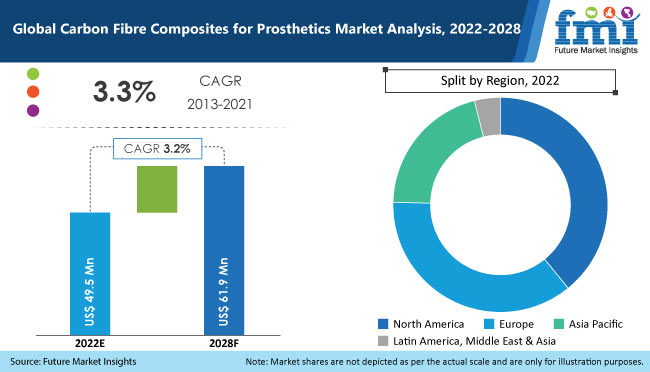
Future Market Insights (FMI) has introduced a new report on carbon fiber composites for prosthetics. The report has been titled, “Carbon Fibre Composites for Prosthetics Market: Global Industry Analysis 2013-2021 and Opportunity Assessment 2022 to 2028.” According to the Amputee Collation, the main causes of limb loss have been vascular diseases (54%) – including diabetes and peripheral arterial disease, trauma (45%), and cancer (less than 2%).

On average, 185,000 amputations occur in the United States every year. The adoption of prosthetics has witnessed steady growth in the last few years. Proliferating awareness among individuals together with swelling disposable income in the United States is expected to result in an increase in demand for prosthetics.

The majority of people agonize from limb or foot loss due to vascular diseases or due to some accident or injury, which is anticipated to further increase the sales of prosthetic products. The rising elderly population represents additional opportunities for orthopedic prosthetic device manufacturers.

The growing preference for carbon fiber-based prosthetic limb sockets among others is mounting with time. The major causes of amputations are diseases related to aging, such as diabetes-related gangrene, peripheral vascular disease, and osteoarthritis. An increase in the number of incidences of accidents is another core factor expected to drive the growth of the U.S. orthopedic prosthetics market.

Availability of Substitutes to Obstruct Market Revenue Growth

Devices manufactured using 3-D printers need additional testing and quality panels than products manufactured using conventional manufacturing techniques to comply with regulatory and reimbursement requirements, thereby adding to the cost of the manufactured products.

As a result, people are shifting towards substitutes with newer and cheaper materials such as aluminum and stainless steel. This could obstruct the growth trajectory of the global carbon fiber composites for the prosthetics market.

Growing Physical Health Consciousness to Augur Well for the Market

The emphasis on leisure sports, physical fitness, and conditioning, such as aerobics and running is mounting, which has led to increased injuries requiring orthopedic rehabilitative services and products. These trends are demonstrated by the increasing demand for new prosthetic devices that have heightened strength, corrosion resistance, stiffness, etc., essentially properties that enable amputees to actively participate in fitness and leisure sports.

Children with congenital deformities of limbs can join leisure sports as per their choice. Some military amputees in the U.S. Army have even returned to active duty in war zones such as Afghanistan and Iraq. For instance, in 2007, out of the 600 service members who came back from Iraq or Afghanistan without a leg, arm, hand, or foot, almost 31 resumed active duty owing to prosthetics.

Moreover, growing incidences of accidents due to rapid transformation and use of fast-moving machinery as well as an increase in road accidents due to rash and drunk driving has augmented the growth of the market. War victims are another demographic that needs orthopedic prosthetics.

It is projected that the majority of amputees are veterans. Mines are responsible for 26,000 amputations per year and have produced 300,000 amputees worldwide. The use of prosthetics has given new opportunities to these people, thereby pushing the market towards growth in return.

Browse the Complete Report!

Competitive Landscape

The companies operating in the global carbon fiber composites for the prosthetics market are

  • Ossur
  • Hanger Inc.
  • Otto Bock HealthCare GmbH
  • Blatchford Ltd.
  • Touch Bionics Inc.
  • The Ohio Willow Wood Co.
  • Fillauer LLC.
  • Alchemy Composites
  • Freedom Innovations LLC.
  • Trulife
  • Kinetic Research Inc.

According to the report, the global carbon fiber composites for prosthetics market is expected to witness a CAGR of 3.7% from 2018 to 2028. The market is anticipated to rise to a valuation of US$ 61.9 Million by the end of 2028.

Carbon Fibre Composites for Prosthetics Market by Category

By Product:

  • Upper Extremity Prosthetics
  • Lower Extremity Prosthetics
  • Socket
  • Modular Components

By Technology:

  • Conventional
  • Electric Powered
  • Hybrid Orthopaedic Prosthetics

By Region:

  • North America
  • LAMEA
  • Europe
  • Asia Pacific

About Future Market Insights (FMI)

Future Market Insights, Inc. (ESOMAR certified, recipient of the Stevie Award, and a member of the Greater New York Chamber of Commerce) offers profound insights into the driving factors that are boosting demand in the market. FMI stands as the leading global provider of market intelligence, advisory services, consulting, and events for the Packaging, Food and Beverage, Consumer Technology, Healthcare, Industrial, and Chemicals markets. With a vast team of over 400 analysts worldwide, FMI provides global, regional, and local expertise on diverse domains and industry trends across more than 110 countries.

Join us as we commemorate 10 years of delivering trusted market insights. Reflecting on a decade of achievements, we continue to lead with integrity, innovation, and expertise.

Contact Us:        

Future Market Insights Inc.
Christiana Corporate, 200 Continental Drive,
Suite 401, Newark, Delaware – 19713, USA
T: +1-347-918-3531
For Sales Enquiries: 
sales@futuremarketinsights.com
Website: https://www.futuremarketinsights.com
LinkedInTwitterBlogs | YouTube

Rising Demand in Healthcare Fuels Growth of Pharmaceutical Grade Sodium Chloride Market, Projected to Hit USD 618 million by 2034

The demand for pharmaceutical grade sodium chloride is projected to compel enriched healthcare expenditure and substantial growth in the pharmaceutical industry, primarily in developing regions such as China and India. Sodium chloride, or common salt, is a vital chemical in various industries, including cosmetics, pharmaceuticals, and processed foods. It is used in manufacturing products like dialysis and infusion therapies, oral rehydration salts, injections, and salt drops in the pharmaceutical industry.

The pharmaceutical-grade sodium chloride market is poised for substantial growth, with its valuation expected to reach USD 355 million in 2024 and projected to soar to USD 618 million by 2034. This significant increase, reflecting a robust compound annual growth rate (CAGR) of 5.70% from 2024 to 2034, underscores the rising demand for high-purity sodium chloride in various pharmaceutical applications. This growth is driven by its crucial role in manufacturing medical products, intravenous therapies, and dialysis solutions, alongside the expanding global pharmaceutical industry and increasing healthcare expenditures.

The pharmaceutical and healthcare industry has experienced significant growth, with substantial investments in the sector. Pharmaceutical-grade salt is predominantly used in injections, hemodialysis, oral rehydration salts, and other pharmaceutical chemicals and products. However, the complex and costly process of producing and selling sodium chloride at high purity levels has deterred many small and medium-sized manufacturers from entering the market.

The global pandemic has caused a downturn in the market, but it is anticipated to rebound and witness significant growth in the forthcoming decade. Oral drug delivery has proven superior due to high patient compliance, cost-effectiveness, decreased sterility restrictions, flexibility in dosage form design, and ease of production. The demand for matrix tablets infused with medicated salt is important for controlled and sustained-release dosage forms, and pharmaceutical-grade sodium chloride is commonly used to produce matrix tablets.

The growing prevalence of stress and lifestyle-related disorders in patients is propelling innovation and research in drug-delivery technologies, leading to an increasing market for novel drug formulations. The pharmaceutical sector is anticipated to develop exponentially due to health insurance awareness and affordability.

The pandemic has disrupted many business lines, including the pharmaceutical industry, causing decreased demand and lockdown regulations. However, the rising consumption of pharmaceutical-grade sodium chloride for various applications is predicted to accelerate market growth.

“A common ingredient found in end-use sectors such as processed foods, pharmaceuticals, and cosmetics is sodium chloride. The increase in chronic and renal disorders is one of the main factors pushing the demand for pharmaceutical-grade sodium chloride. The market is favorably impacted by elements such as new product development, application growth, the role of governmental and nonprofit organizations in creating pharmaceutical-grade solutions, the rate of industrialization and urbanization, the expansion of the healthcare sector, and rising purchasing power. The market is expected to develop because of its extensive applicability in future projects.” says an analyst of Future Market Insights.

Key Takeaways from the Pharmaceutical Grade Sodium Chloride Market Report

  • The pharmaceutical grade sodium chloride industry in South Korea is projected to experience a CAGR of 2.5% through 2034.
  • Spain’s pharmaceutical grade sodium chloride market is estimated to demonstrate a CAGR of 4.2% through 2034.
  • The pharmaceutical grade sodium chloride industry in the United States is anticipated to see a CAGR of 3.2% from 2024 to 2034.
  • China’s pharmaceutical grade sodium chloride sector is projected to showcase a CAGR of 6.3% through 2034.
  • The pharmaceutical grade sodium chloride market in India is anticipated to display a CAGR of 8.4% through 2034.

Browse the Complete Report!

Competitive Landscape of the Pharmaceutical Grade Sodium Chloride Market

With major companies spending on research and development, mergers, and manufacturing capacity, the pharmaceutical-grade sodium chloride market is expanding into emerging areas. Well-planned technology and marketing tactics drive market expansion. The market features a sizable pool of suppliers, a solid healthcare system, and strong alliances throughout the value chain. To meet the demands of a growing client base, businesses are concentrating on robust research and development initiatives and strategic partnerships with end-users and local distributors.

Recent Developments in the Pharmaceutical Grade Sodium Chloride Market

  • With United States Department of Justice permission, SCIH Salt Holdings was on the verge of purchasing Morton Salt from K+S in April 2021. The proposed settlement calls for US Salt to sell its evaporated salt business. The DOJ’s Antitrust Division filed a lawsuit to stop the deal.
  • Leading supply chain partner for the United Kingdom, Wincanton, and Tata Chemicals Europe (TCE), which comprises British Salt Limited, inked a ten-year deal for warehousing and logistics in May 2023. The partnership will manage the pharmaceutical company’s new 185,000-square-foot warehouse in Middlewich, Cheshire.

Pharmaceutical Grade Sodium Chloride Market Key Companies

  • K + S AG
  • Akzonobel
  • Cargill
  • Hebei Huachen
  • Swiss Saltworks
  • Sudsalz Gmbh
  • Tata Chemicals
  • Cheetham Salt
  • Salinen
  • Dominion Salt Ltd.

Key Segments

By Type:

  • API-NaCl
  • HD-NaCl

By Application:

  • Injections
  • Hemodialysis
  • Oral Rehydration Salts
  • Osmotic Agents
  • Others

By Region:

  • North America
  • Latin America
  • Europe
  • East Asia
  • South Asia
  • Oceania
  • Middle East and Africa

Source: Pharmaceutical Grade Sodium Chloride Market Expected to Reach USD 618 Million by 2034, Growing at a 5.70% CAGR | Future Market Insights, Inc.

About Future Market Insights (FMI)

Future Market Insights, Inc. (ESOMAR certified, recipient of the Stevie Award, and a member of the Greater New York Chamber of Commerce) offers profound insights into the driving factors that are boosting demand in the market. FMI stands as the leading global provider of market intelligence, advisory services, consulting, and events for the Packaging, Food and Beverage, Consumer Technology, Healthcare, Industrial, and Chemicals markets. With a vast team of over 400 analysts worldwide, FMI provides global, regional, and local expertise on diverse domains and industry trends across more than 110 countries.

Join us as we commemorate 10 years of delivering trusted market insights. Reflecting on a decade of achievements, we continue to lead with integrity, innovation, and expertise.

Contact Us:        

Future Market Insights Inc.
Christiana Corporate, 200 Continental Drive,
Suite 401, Newark, Delaware – 19713, USA
T: +1-347-918-3531
For Sales Enquiries: 
sales@futuremarketinsights.com
Website: https://www.futuremarketinsights.com
LinkedInTwitterBlogs | YouTube

Growing Demand for Pharmaceuticals Grade Sodium Bicarbonate: Transforming Personal Care Formulations Across Industries

Research conducted by Future Market Insights reveals that the global market generated USD 256.0 million in revenue in 2022, underlining its steady growth trajectory in the pharmaceutical sector. The pharmaceuticals grade sodium bicarbonate industry size is set to experience robust growth, with a projected Compound Annual Growth Rate (CAGR) of 3.5% from 2023 to 2033. In 2023, the market is expected to be worth USD 265.3 million and is poised to reach an impressive valuation of USD 372.4 million by the end of the forecast period.

The global pharmaceutical-grade sodium bicarbonate market is reliant on the pharmaceutical industry as a pH buffering agent. For electrolyte replenishing, as a systemic alkalizer, and in topical cleansing solutions, it has been used excessively. Furthermore, the demand from hospitals, the personal care industry, and healthcare institutions is expected to benefit the global market.

Considerable growth in the pharmaceutical industry along with accelerated sales of chemicals is predicted to boost the demand across the evaluation period. Moreover, the pharmaceutical industry is one of the key consumers of sodium bicarbonate. Over recent years, various pharma companies have been forced to shift their operating methods by adopting the latest technology. This new and sudden spur in the adoption of new technologies and innovation to support virtual work led to a significant rise in the overall market.

Compelling Market Trends

Active pharmaceutical ingredients are known as chemical compounds in medicines that have a significant effect on the body. Such drugs containing soda-bicarbonate help activate an anti-inflammatory pathway and prevent autoimmune diseases. Some medicines called OTC (over-the-counter) medicines contain pharma-grade baking soda as an active pharma ingredient.

Over-the-counter drugs are the types of medicines that can be bought without any specific prescription according to the guidelines issued by the FDA (Food and Drug Administration). The FDA considers the consumption of these medicines as safe without any medical supervision. Furthermore, these drugs are utilized to treat various genetic health problems such as sleeping-related problems, cough and cold, pain, smoking cessation, itches, weight problems, tooth decay, gastrointestinal problems, and various others.

Awareness and media advertising made people aware of self-medication for occasional heartburn and acidity and the availability of antacids in over-the-counter (OTC) sales has emerged as one of the prime factors for antacids and similar products’ growth. In addition, antacids are known as one of the most popular over-the-counter medicines. Consistent growth in sales of antacids, baking soda, or sodium bicarbonate is the key ingredient for any kind of antacids. Steady growth in sales of antacids is promoting the demand with consistent growth rates.

Growth Drivers

The growth of the market is attributed to the advancements in research and developments, the transformation of digital platforms and IT is currently the top strategic priority for pharmaceutical companies and is expected to continue to be so in the future.

Pharmaceutical Grade Sodium Bicarbonate is expected to register significant growth during the assessment period. Based on geography East Asia is estimated to dominate the market owing to the presence of leading manufacturing units of leading pharmaceutical companies in China. The prominent over-the-counter categories comprise cough-cold and allergy, vitamins, weight loss and nutrition, pain relief, and digestives which collectively accounted for a significant share of all over-the-counter sales in 2022.

Over the past five years, several developments have taken place in the market. Numerous leading companies devised their plans to fend off possible threats and seize the medium- and long-term possibilities presented by this shifting environment and focused on the development of soda bicarbonate drugs with a fine grade for the treatment of a wide range of diseases.

Browse the Complete Report!

Competitive Landscape

Leading manufacturers operating in the global pharmaceuticals grade sodium bicarbonate market are focusing on developing high-quality pharma-grade-baking soda and developing technologies for mining. Key players in the market are focusing on generating revenue by exploring potential applications. Players are expanding their geographical boundaries to expand their consumer base.

Key Companies Profiled

  • Tata Chemicals
  • Novacarb (Novacap Group)
  • Dr. Paul Lohmann GmbH KG
  • GHCL Limited
  • CIECH S.A.
  • Natural Soda LLC
  • Jost Chemical Co.
  • Tornox Alkali Corporation

Recent Developments

On September 11, 2019, Exela Pharma Sciences is to announce the launch of Sodium Bicarbonate Injection, USP. Exela received approval for its ANDA for Sodium Bicarbonate Injection in May for four separate presentations. This product has been on the FDA Drug Shortage list consistently and is only the second FDA Approved Sodium Bicarbonate Injection on the US market.

Valuable Insights into the Pharmaceuticals Grade Sodium Bicarbonate Market

China is anticipated to account for a dominant market share of around 23.8% over the forecast period. The growth of the market is generated by key players present in China which have significant opportunities to leverage revenue generation in the country.

Segmentation of Industry Research

By Grade:

  • Fine
  • Coarse

By Application:

  • Active Pharmaceutical Ingredients
  • Excipients
  • Antacids
  • Haemodialysis
  • Tablet Coating
  • Toothpaste
  • Others

By Region:

  • North America
  • Latin America
  • Eastern Europe
  • Western Europe
  • SEA and Pacific
  • China
  • India
  • Japan
  • Middle East and Africa

About Future Market Insights (FMI)

Future Market Insights, Inc. (ESOMAR certified, recipient of the Stevie Award, and a member of the Greater New York Chamber of Commerce) offers profound insights into the driving factors that are boosting demand in the market. FMI stands as the leading global provider of market intelligence, advisory services, consulting, and events for the Packaging, Food and Beverage, Consumer Technology, Healthcare, Industrial, and Chemicals markets. With a vast team of over 400 analysts worldwide, FMI provides global, regional, and local expertise on diverse domains and industry trends across more than 110 countries.

Join us as we commemorate 10 years of delivering trusted market insights. Reflecting on a decade of achievements, we continue to lead with integrity, innovation, and expertise.

Contact Us:        

Future Market Insights Inc.
Christiana Corporate, 200 Continental Drive,
Suite 401, Newark, Delaware – 19713, USA
T: +1-347-918-3531
For Sales Enquiries: 
sales@futuremarketinsights.com
Website: https://www.futuremarketinsights.com
LinkedInTwitterBlogs | YouTube

Pharmaceutical Grade Sodium Carbonate Market to Reach USD 61.4 Million by 2034: Key Trends and Growth Insights

The global market for Pharmaceutical Grade Sodium Carbonate is projected to experience steady growth over the next decade, according to a new market research report. Currently valued at USD 46.7 million in 2024, the market is expected to grow at a CAGR of 2.8% to reach USD 61.4 million by 2034. Pharmaceutical grade sodium carbonate is a critical component in various pharmaceutical applications due to its high purity and exceptional quality, making it an indispensable ingredient in the production of medications, personal care products, and other healthcare solutions.

Understanding Pharmaceutical Grade Sodium Carbonate

Pharmaceutical grade sodium carbonate, commonly known as soda ash, is a high-purity compound widely used in the pharmaceutical industry due to its properties of controlling pH levels and acting as a buffering agent. The compound, primarily composed of sodium, carbon, and oxygen, is highly soluble in water, and its use in pharmaceuticals ensures that the products meet stringent quality and safety standards.

Pharmaceutical grade sodium carbonate is often employed in the formulation of antacids, effervescent tablets, and other medicinal solutions where maintaining precise chemical balances is crucial. Its role in stabilizing active pharmaceutical ingredients (APIs) enhances the shelf life and efficacy of medications, further underscoring its importance in pharmaceutical manufacturing. Its role extends to personal care products, where it is used in toothpaste formulations to control acidity and enhance cleaning efficiency.

Market Value and Growth Projections

The current market for pharmaceutical grade sodium carbonate is valued at USD 46.7 million in 2024 and is forecast to reach USD 61.4 million by 2034. This projected growth represents a 2.8% compound annual growth rate (CAGR) over the forecast period. The steady increase in demand for pharmaceutical and personal care products, along with the expanding healthcare sector globally, are key factors contributing to this growth.

The growth trajectory is indicative of increasing reliance on high-purity chemical compounds to meet the stringent regulatory standards in pharmaceutical production. Additionally, the growing global population, increased access to healthcare, and rising prevalence of chronic diseases necessitate a higher volume of medications and treatment solutions, boosting the demand for pharmaceutical grade sodium carbonate.

Prominent Drivers of the Pharmaceutical Grade Sodium Carbonate Market

Several factors are driving the growth of the pharmaceutical grade sodium carbonate market, including:

  1. Rising Demand for Pharmaceuticals: The increasing global population, aging demographics, and rising incidence of chronic diseases such as diabetes, cardiovascular disorders, and gastrointestinal conditions are pushing the demand for pharmaceutical products. As pharmaceutical companies expand their production to meet this growing need, the demand for high-purity ingredients like pharmaceutical grade sodium carbonate continues to rise.
  2. Strict Regulatory Standards: The pharmaceutical industry operates under strict regulatory standards to ensure product safety and efficacy. Pharmaceutical grade sodium carbonate meets these rigorous requirements, making it a preferred ingredient in various formulations. Its high purity ensures consistent performance, essential for drug safety and effectiveness.
  3. Expanding Healthcare Access in Developing Regions: Emerging markets, particularly in Asia-Pacific and Africa, are experiencing significant improvements in healthcare infrastructure and access. As these regions expand their healthcare systems, there is a corresponding increase in pharmaceutical production, fueling the demand for ingredients like sodium carbonate.
  4. Technological Advancements in Drug Delivery Systems: Innovations in drug delivery systems, such as effervescent tablets and controlled-release formulations, are increasing the use of pharmaceutical grade sodium carbonate. Its ability to stabilize formulations and improve delivery mechanisms makes it essential in the development of modern medicinal solutions.

Browse the Complete Report!

Leading Pharmaceutical Grade Sodium Carbonate Brands

  • Solvay SA
  • Novacarb (Novacap Group)
  • Dr. Paul Lohmann GmbH KG
  • CIECH S.A.
  • Natural Soda LLC
  • Jost Chemical Co.
  • Tianjin Chengyuan Chemical Co. Ltd.
  • Weifang Hongyuan Chemical Co. Ltd.
  • Tronox Alkali Corporation

Challenges Faced by the Pharmaceutical Grade Sodium Carbonate Market

Despite the promising growth projections, the pharmaceutical grade sodium carbonate market faces several challenges, including:

  1. Fluctuations in Raw Material Prices: The production of sodium carbonate is dependent on sodium chloride (salt) and limestone as raw materials. Fluctuations in the availability and cost of these raw materials can impact the overall production cost of pharmaceutical grade sodium carbonate. Volatile raw material prices may affect profit margins and pricing strategies for manufacturers.
  2. Regulatory Compliance and Quality Control: While strict regulatory standards drive demand, they also present challenges for manufacturers. Maintaining consistent quality control and meeting evolving regulatory requirements across different markets can be resource-intensive and time-consuming. Companies must continuously invest in quality assurance and regulatory compliance to meet industry standards.
  3. Environmental Concerns: The production process of sodium carbonate can have environmental implications, including carbon emissions and waste management issues. With increasing global focus on sustainability and environmentally friendly practices, manufacturers are under pressure to adopt greener production methods, which may require significant investment.
  4. Competitive Landscape: The pharmaceutical grade sodium carbonate market is highly competitive, with several key players dominating the space. As more companies enter the market, manufacturers must focus on innovation and cost efficiency to maintain their competitive edge.

Future Outlook

As the demand for high-quality pharmaceutical ingredients continues to rise, the pharmaceutical grade sodium carbonate market is well-positioned for steady growth over the next decade. With a projected CAGR of 2.8% from 2024 to 2034, the market’s expansion is driven by increasing pharmaceutical production, advancements in drug formulations, and growing healthcare access in emerging economies. However, companies in this space must remain vigilant about challenges such as regulatory compliance, fluctuating raw material costs, and environmental sustainability to ensure long-term success.

Key Segments of Market Report

By Grade:

As per grade, the industry has been bifurcated into fine pharmaceutical grade sodium carbonate and coarse pharmaceutical grade sodium carbonate.

By Application:

Pharmaceutical grade sodium carbonates find application as API, for pharma excipients, personal care, and others.

By Region:

Industry analysis has been carried out in key countries of North America, Latin America, Europe, East Asia, South Asia, Oceania, and the Middle East and Africa.

About Future Market Insights (FMI)

Future Market Insights, Inc. (ESOMAR certified, recipient of the Stevie Award, and a member of the Greater New York Chamber of Commerce) offers profound insights into the driving factors that are boosting demand in the market. FMI stands as the leading global provider of market intelligence, advisory services, consulting, and events for the Packaging, Food and Beverage, Consumer Technology, Healthcare, Industrial, and Chemicals markets. With a vast team of over 400 analysts worldwide, FMI provides global, regional, and local expertise on diverse domains and industry trends across more than 110 countries.

Join us as we commemorate 10 years of delivering trusted market insights. Reflecting on a decade of achievements, we continue to lead with integrity, innovation, and expertise.

Contact Us:        

Future Market Insights Inc.
Christiana Corporate, 200 Continental Drive,
Suite 401, Newark, Delaware – 19713, USA
T: +1-347-918-3531
For Sales Enquiries: 
sales@futuremarketinsights.com
Website: https://www.futuremarketinsights.com
LinkedInTwitterBlogs | YouTube

Future Market Insights Forecasts Significant Growth in Silicon Tetrachloride Sales Amid Rising Global Polysilicon Demand

In 2022, global sales in the silicon tetrachloride market share are projected to reach approximately USD 2,277.4 million. The industry is expected to experience a CAGR of 4.5% from 2022 to 2027.

Future Market Insights (FMI) has published a report titled “Silicon Tetrachloride & Derivatives Market: Global Industry Analysis 2012 – 2021 and Opportunity Assessment 2022 – 2027.” According to the report, the increasing demand for chemical intermediates is driving the growth of the silicon tetrachloride market. This compound is widely used as an intermediate in polysilicon production, which is essential for various industries, leading to its rising demand.

By the end of the forecast period, the global silicon tetrachloride market is anticipated to reach a valuation of over USD 2,846 million, maintaining a CAGR of 4.5% from 2022 to 2027.

Growing Demand for Optic Cable to Bode Well for Market Growth

High purity silicon tetrachloride is a major raw material used for the manufacturing of optic cable preform, which is used in the manufacturing of optic cables. In the recent past, supported by the growth of 4G, 5G, LTE, FFTx and the IoT, there has been a significant increase in the demand for optic cables across the globe. China, U.S. and Japan constitute around 80% of total optic cable preform manufacturing and in terms of consumption, China accounted for nearly 58% of total optic fibre preform in 2022. A constantly increasing demand for optic cables will boost the demand for optic cable preform, which will subsequently drive the silicon tetrachloride market over the forecast period.

However, the government of China has imposed rules and regulations on the manufacturing of silicon tetrachloride, which is produced as a by-product during the production process of polysilicon. The government of China has imposed a minimum recycle rate of 98.5% on silicon tetrachloride and the initial capital cost of silicon tetrachloride recycling facility is high and the operating cost is high as well, which in turn, is increasing the price as well as limiting the supply of silicon tetrachloride. This might adversely affect the growth of the silicon tetrachloride market over the forecast period.

Adoption of Silicon Tetrachloride to be High in China Among all Regions

The growing use of silicon tetrachloride in China can be attributed to the lucrative growth of the solar industry in the region. One of the core raw materials used in the manufacturing of solar panels is silicon tetrachloride. The focus on solar energy in the region is expected to spur the demand for silicon tetrachloride in the coming years. Moreover, the snowballing effect of the semiconductor industry and the rising progress of the paints and coatings industry is anticipated to increase the adoption of silicon tetrachloride in the region in the years ahead.

The increasing demand for chemical intermediate in the manufacturing industry is also expected to propel the demand for silicon tetrachloride in the region. However, the dependence of the region on cyclical end-use industries and the several restrictions imposed on silicon tetrachloride owing to harmful health impacts might slow down the growth of the market in the region.

Browse the Complete Report!

Evonik Industries to Emerge Undefeated

In 2021, Evonik Industries accounted for over 40% of the global market share and is expected to retain its dominance in the market over the course of the forecast period. The other companies operating in the market are Cabot Corp., Wacker Chemie AG, The Linde Group, DowDuPont Inc., Tokuyama Corporation, Air Liquide S.A., and OCI Company Ltd., among others.

Silicon Tetrachloride Market by Category

By Grade:

  • Electronics Grade
  • Technical  Grade

By Application:

  • Chemical Intermediate
    • Trichlorosilane (Polysilicon)
    • Fumed Silica
  • Silicone Rubber
  • Optic Fiber Preform
  • Others

By Region:

  • North America
  • LAMEA
  • Europe
  • China
  • India
  • Japan
  • South East Asia & Pacific

About Future Market Insights (FMI)

Future Market Insights, Inc. (ESOMAR certified, recipient of the Stevie Award, and a member of the Greater New York Chamber of Commerce) offers profound insights into the driving factors that are boosting demand in the market. FMI stands as the leading global provider of market intelligence, advisory services, consulting, and events for the Packaging, Food and Beverage, Consumer Technology, Healthcare, Industrial, and Chemicals markets. With a vast team of over 400 analysts worldwide, FMI provides global, regional, and local expertise on diverse domains and industry trends across more than 110 countries.

Join us as we commemorate 10 years of delivering trusted market insights. Reflecting on a decade of achievements, we continue to lead with integrity, innovation, and expertise.

Contact Us:        

Future Market Insights Inc.
Christiana Corporate, 200 Continental Drive,
Suite 401, Newark, Delaware – 19713, USA
T: +1-347-918-3531
For Sales Enquiries: 
sales@futuremarketinsights.com
Website: https://www.futuremarketinsights.com
LinkedInTwitterBlogs | YouTube

Electronics Cleaning Solvents Market Set to Reach USD 1,696.6 Million by 2029 Amid Growing Demand for Hydrocarbon and Fluorinated Solutions

Electronics Cleaning Solvents Market

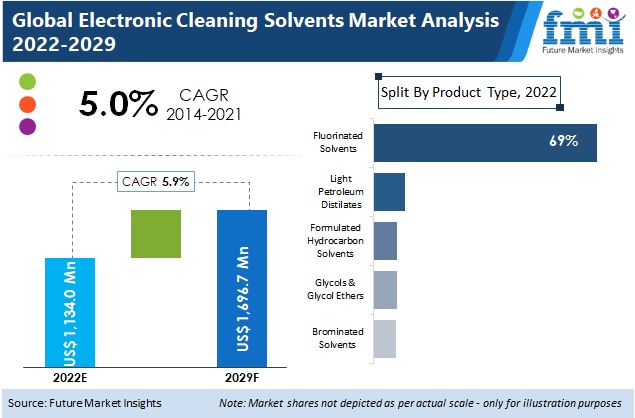
The global electronics cleaning solvent market size is projected to exhibit a value CAGR of 5.9% during the forecast period of 2022 to 2029. The introduction of low-cost electronics cleaning solvents, such as hydrofluoroethers (HFEs), which are designed to effectively remove solder flux residue from printed circuit boards, along with their environmental and safety advantages over chlorinated solvents and ozone-depleting hydro-chlorofluorocarbons (HCFCs), is expected to drive the demand for electronics cleaning solvents further.

The electronics cleaning solvents industry is constantly advancing, and superior methods and products are being developed to concur with advancements in the electronics field. Electronics cleaning solvents add to the functional quality and longevity of electronic components and products; hence, these have been gaining higher importance in the electronics industry. Certain solvents also impart high insulation resistance characteristics to components and devices, which boosts their demand for electronics cleaning.

“Stringent regulatory environmental norms have compelled manufacturers to focus on products that result in minimal ozone depletion and contribution to global warming. One such product type, fluorinated solvents, is witnessing significant demand, and is expected to establish higher prominence in the electronics cleaning solvents market until a better alternative surfaces.”

Key Takeaways of Electronic Cleaning Solvents Study

  • Fluorinated solvents product type is anticipated to grow at a healthier rate. Its market share is projected to increase due to its zero ozone depletion potential, low global warming potential, and high solvency.
  • The separated co-solvent process uses formulated hydrocarbon solvents as cleaning solvents and is extensively used in the PCB industry, owing to the extraordinary cleaning results it provides.
  • Formulated hydrocarbon solvents have developed new opportunities in the electronics cleaning solvents market over the years, and the segment is projected to witness strong market growth, supported by rising preference for this type in PCB and electronic industries.
  • APEJ and Japan, together, have established a lion’s share in the electronics cleaning solvents market, owing to the expanding electronics and electrical industry in the region. Together, the region holds over 70% of the electronics cleaning solvents market share. Moreover, the electronics industry in the region is still at a growing stage and is anticipated to flourish over the coming years.
  • The electronics industry is focusing on electronics miniaturization; hence, nanotechnology and micro electromechanical systems (MEMS) are growing in functionality as well as acceptance in a majority of applications among various industries such as consumer electronics, automotive, aerospace, medical devices, and others.

Market Landscape Moving Towards Fragmentation

The electronics cleaning solvents market is partially consolidated, with the presence of a large number of market players in both, tier I and II brackets. However, as the electronics industry is becoming highly competitive and fragmented year-by-year, the electronics cleaning solvents market is also anticipated to move towards fragmentation.

As the number of tier II and III players in the end-use sectors increases, the market is bound to witness an increase in tier II & III manufacturers to cope up with the increase in demand at variable prices.

Browse the Complete Report!

Some of the established manufacturers in the electronics cleaning solvents market

  • 3M
  • Albemarle Corporation
  • LyondellBasell Industries Holdings B.V.
  • Honeywell International, Inc.
  • BASF SE
  • The Dow Chemical Company
  • Eastman Chemical Company
  • Arkema SA
  • Asahi Glass Co., Ltd.
  • The Chemours Company
  • Solvay SA
  • Corbion N.V.
  • Godavari Biorefineries Ltd.
  • Chevron Phillips Chemical Company
  • Invista
  • A. W. Chesterton Company
  • Aervoe Industries, Inc.
  • HK Wentworth Ltd
  • Vantage Specialty Chemicals, Inc.
  • Permatex
  • CRC Industries
  • Oxea GmbH
  • ISU Chemical Co Ltd.
  • LCY Chemical Corp.
  • Deepak Fertilizers and Petroleum Corporation Limited
  • CNPC Northeast Refining & Chemical Engineering Company Limited (PetroChina Co. Ltd.)

Tier I participants are anticipated to face strong competition from tier II & III players over the foreseeable future.

Electronics Cleaning Solvents Market by Category

By Product:

  • Formulated Hydrocarbon Solvents
  • Glycols & Glycol Ethers
  • Fluorinated Solvents
  • Brominated Solvents
  • Light Petroleum Distillates

By Cleaning Process:

  • Vapor Phase Degreaser
  • Vacuum Cleaning
  • Mixed Co-solvent
  • Separated Co-solvent
  • Semi-aqueous

By Region:

  • North America
  • Latin America and Middle East & Africa (LAMEA)
  • Europe
  • Asia Pacific Excluding Japan (APEJ)
  • Japan

Old Study: https://www.nsenergybusiness.com/pressreleases/rapid-growth-of-the-electronics-industry-to-trigger-demand-for-electronic-cleaning-solvents-future-market-insights/

About Future Market Insights (FMI)

Future Market Insights, Inc. (ESOMAR certified, recipient of the Stevie Award, and a member of the Greater New York Chamber of Commerce) offers profound insights into the driving factors that are boosting demand in the market. FMI stands as the leading global provider of market intelligence, advisory services, consulting, and events for the Packaging, Food and Beverage, Consumer Technology, Healthcare, Industrial, and Chemicals markets. With a vast team of over 400 analysts worldwide, FMI provides global, regional, and local expertise on diverse domains and industry trends across more than 110 countries.

Join us as we commemorate 10 years of delivering trusted market insights. Reflecting on a decade of achievements, we continue to lead with integrity, innovation, and expertise.

Contact Us:        

Future Market Insights Inc.
Christiana Corporate, 200 Continental Drive,
Suite 401, Newark, Delaware – 19713, USA
T: +1-347-918-3531
For Sales Enquiries: 
sales@futuremarketinsights.com
Website: https://www.futuremarketinsights.com
LinkedInTwitterBlogs | YouTube

Reducing Sodium: How Salt Content Reduction Ingredients Are Revolutionizing Food Production

The global Salt Content Reduction Ingredients Market is set to experience significant growth over the next decade, fueled by increasing health consciousness among consumers and stringent regulatory measures aimed at reducing sodium intake. According to recent market analysis, the salt content reduction ingredients market is projected to reach a value of USD 11,879.8 million by 2033, up from an estimated USD 4,882.1 million in 2023, reflecting a robust compound annual growth rate (CAGR) of 9.3% from 2023 to 2033.

Understanding the Salt Content Reduction Ingredients Market

The salt content reduction ingredients market comprises various ingredients used to enhance flavor while lowering sodium levels in food products. These ingredients include potassium chloride, yeast extracts, and natural flavor enhancers that provide taste and texture without the negative health impacts associated with high salt consumption. As health issues related to excessive salt intake—such as hypertension and cardiovascular diseases—continue to rise, the demand for these innovative ingredients is expected to grow, offering food manufacturers viable solutions to meet consumer preferences for healthier options.

Salt Content Reduction Ingredients Value and Growth Projections

The salt content reduction ingredients market has seen significant investment and innovation in recent years, leading to a projected market value of USD 11,879.8 million by 2033. This growth is driven by a variety of factors, including the increasing demand for processed foods, rapid urbanization, and heightened consumer awareness of health and wellness. As consumers become more informed about the risks associated with high sodium consumption, food and beverage manufacturers are responding by reformulating products to lower salt content without sacrificing flavor.

The market’s estimated value in 2023 of USD 4,882.1 million underscores the growing emphasis on health-focused ingredient alternatives. The steady growth over the next decade indicates a robust future for the industry, with opportunities for innovation and expansion across various segments, including packaged foods, snacks, sauces, and condiments.

Prominent Drivers of the Salt Content Reduction Ingredients

Several key drivers are propelling the growth of the salt content reduction ingredients market:

  1. Health Consciousness: The rising awareness of health risks associated with high sodium intake has led consumers to seek low-sodium alternatives, creating a demand for salt reduction ingredients in various food products.
  2. Regulatory Support: Governments worldwide are implementing regulations to limit sodium levels in processed foods. Initiatives aimed at reducing sodium consumption have encouraged manufacturers to explore alternatives that comply with these guidelines.
  3. Innovation in Food Technology: Ongoing research and development efforts are yielding innovative salt reduction solutions, including natural flavor enhancers and potassium-based alternatives that effectively mimic the taste and texture of traditional salt.
  4. Increasing Demand for Processed Foods: As urbanization leads to busier lifestyles, there is a growing demand for convenience foods, which in turn drives the need for salt content reduction ingredients in processed food items.

Key Companies Profiled

Cargill Incorporated; AJINOMOTO CO., INC.; E.I. du Pont de Nemours & Co.; Associated British Foods PLC; Tate & Lyle PLC; Fufeng Group Ltd.; Advanced Food Systems, Inc.; Givaudan SA; Jungbunzlauer Suisse A.G.; Angel Yeast Co. Ltd.; Koninklijke DSM N.V.

Browse the Complete Report!

Challenges Faced by the Salt Content Reduction Ingredients

Despite the positive outlook for the salt content reduction ingredients market, several challenges remain:

  1. Consumer Perception: Many consumers associate low-sodium products with reduced flavor. Overcoming this perception is essential for manufacturers to successfully market salt-reduced products.
  2. Cost Implications: The production of innovative salt reduction ingredients can be costly, impacting the pricing strategies of food manufacturers and potentially limiting market growth.
  3. Regulatory Hurdles: While regulatory initiatives promote salt reduction, they can also pose challenges for ingredient manufacturers in terms of compliance and approval processes.
  4. Market Fragmentation: The salt content reduction ingredients market is fragmented, with numerous players offering various solutions. This fragmentation can make it challenging for new entrants to gain a foothold in the market.

The salt content reduction ingredients market is poised for substantial growth, driven by changing consumer preferences, regulatory pressures, and advancements in food technology. As the industry continues to evolve, manufacturers that prioritize innovation and consumer education will be well-positioned to thrive in this dynamic landscape. With a projected market value of USD 11,879.8 million by 2033, the future of salt content reduction ingredients looks promising, presenting numerous opportunities for growth and development in the coming years.

Salt Content Reduction Ingredients Market by Category

By Product Type:

  • Yeast Extracts
  • Glutamates (Monosodium/Potassium)
  • High Nucleotide Ingredients (Disodium Inosinate, Calcium Inosinate, etc.)
  • Hydrolyzed Vegetable Protein (HVP)
  • Mineral Salts (KCl, K2SO4, CaCl2, etc.)
  • Others (Peptide Based Compounds, etc.)

By Application:

  • Dairy Products
  • Bakery Products
  • Fish Derivatives
  • Meat and Poultry
  • Beverages
  • Sauces and Seasonings
  • Others (Snacks, etc.)

By Region:

  • North America
  • Latin America
  • Europe
  • East Asia
  • South Asia & Pacific
  • Middle East & Africa

About Future Market Insights (FMI)

Future Market Insights, Inc. (ESOMAR certified, recipient of the Stevie Award, and a member of the Greater New York Chamber of Commerce) offers profound insights into the driving factors that are boosting demand in the market. FMI stands as the leading global provider of market intelligence, advisory services, consulting, and events for the Packaging, Food and Beverage, Consumer Technology, Healthcare, Industrial, and Chemicals markets. With a vast team of over 400 analysts worldwide, FMI provides global, regional, and local expertise on diverse domains and industry trends across more than 110 countries.

Join us as we commemorate 10 years of delivering trusted market insights. Reflecting on a decade of achievements, we continue to lead with integrity, innovation, and expertise.

Contact Us:        

Future Market Insights Inc.
Christiana Corporate, 200 Continental Drive,
Suite 401, Newark, Delaware – 19713, USA
T: +1-347-918-3531
For Sales Enquiries: 
sales@futuremarketinsights.com
Website: https://www.futuremarketinsights.com
LinkedInTwitterBlogs | YouTube

Automotive Fabrics Market Set for Significant Growth: Rising Vehicle Sales and Stringent Safety Regulations Drive Demand

The automotive fabrics market size is anticipated to thrive at an average CAGR of 3.6% between 2023 and 2033. The market is expected to have a market share of USD 52.78 billion by 2033 while it is likely to be valued at USD 37.06 billion in 2023.

  • The rising businesses producing upholstery for automobiles, the increased scope of technical textiles, and the application of different materials and their grades are likely to transform the market during the forecast period. Furthermore, the high sales of premium vehicles and high third-party sales and installation also garner the market’s success.
  • Companies launching new trending designs with vibrant colors and packaging along with multi-layer designs for extra comfort are also in high demand. Alongside this, the price point, comfort, design, texture, and material are some factors that make all the difference.
  • From bike seat cover to car seat fabric and other fabrics, the products are focused on texture and color. New car businesses and local shop vendors are also promoting new brands with smart and small details that are expected to increase market sales.
  • The advanced knitting technology, computerized designs, curves, and model-based product delivery is also enriching the supply chain management and pushing product performance in the marketing funnel as well.
  • Different types of material grades and prices go hand in hand while selecting the pricing and representation of the product. The restoration of the automotive market is the first milestone that the market has crossed lately.

Key Takeaways

  1. The United States market leads North America’s automotive fabrics market in terms of market share in North America. The United States held a market share of 14.8% in 2022. Factors attributed to the new products and designs, high sales of cars and other vehicles, the advent of electric vehicles, and new businesses launching innovative ideas like sustainable seat covers, etc.
  2. Germany’s automotive fabrics market held a healthy market share of 9.7% in 2022. The market growth is caused by Germany being the center point for automotive manufacturing including premium car-making brands like Volkswagen, BMW, Audi etc.
  3. India’s market thrives at an average CAGR of 4.5% between 2023 and 2033. The growth is attributed to the increased per capita income, and growing third-party fabric installation businesses.
  4. China thrives at a CAGR of 4.2% between 2023 and 2033.
  5. Based on product type, the woven fabric segment held the leading market share of 43.0% in 2022.
  6. Based on sales channel, the OEM segment leads as it held a market share of 82.0% in 2022

Browse the Complete Report!

Competitive Landscape

The key suppliers focus on affordable, premium quality, texture, and material. The competitors also merge, acquire, and partner with other companies to increase their supply chain and distribution channel.

Key Players Profiled in the Global Market

  • HHenkel AG & Co. KGaA
  • Namics Corporation
  • ASE Group
  • MacDermid Alpha Electronic Solutions
  • Parker LORD Corporation
  • H.B. Fuller Company
  • Dow Inc.
  • ELANTAS GmbH
  • Zymet
  • Hitachi Chemical Co., Ltd.
  • Panasonic Corporation
  • AI Technology, Inc
  • Indium Corporation
  • Sanyu Rec Co., Ltd.
  • Dymax Corporation
  • Epoxy Technology, Inc.
  • Protavic International
  • YINCAE Advanced Materials, LLC

Market Segmentation

By Product Type:

  • Woven Fabric
  • Non – woven Fabric
  • Knitted Fabric

By Sales Channel:

  • OEM
  • Aftermarket

By Application:

  • Airbags
  • Floor Covering
  • Belts & Hoses
  • Tires
  • Car Roof
  • Safety-Belts
  • Pre-Assembled Interior Component (PRIC)
  • Upholstery
  • Others

By Vehicle Type:

  • Compact Passenger Cars
  • Mid-Sized Passenger Cars
  • Premium Passenger Cars
  • Luxury Passenger Cars
  • Light Commercial Vehicles
  • Heavy Commercial Vehicles

About Future Market Insights (FMI)

Future Market Insights, Inc. (ESOMAR certified, recipient of the Stevie Award, and a member of the Greater New York Chamber of Commerce) offers profound insights into the driving factors that are boosting demand in the market. FMI stands as the leading global provider of market intelligence, advisory services, consulting, and events for the Packaging, Food and Beverage, Consumer Technology, Healthcare, Industrial, and Chemicals markets. With a vast team of ~400 analysts worldwide, FMI provides global, regional, and local expertise on diverse domains and industry trends across more than 110 countries.

Join us as we commemorate 10 years of delivering trusted market insights. Reflecting on a decade of achievements, we continue to lead with integrity, innovation, and expertise.

Contact Us:        

Future Market Insights Inc.
Christiana Corporate, 200 Continental Drive,
Suite 401, Newark, Delaware – 19713, USA
T: +1-347-918-3531
For Sales Enquiries: 
sales@futuremarketinsights.com
Website: https://www.futuremarketinsights.com
LinkedInTwitterBlogs | YouTube

Revolutionizing the Transportation Coating Sector: High-Performance Coatings Built for Thermal and Mechanical Resilience

Transportation Coating Market

According to Future Market Insights (FMI) recently published report, the global transportation coating market will account for revenues of over USD 12 Billion by 2022-end. The report has projected the future of transportation coatings as being important industrial materials for utilisation in the transportation sector for the five year assessment period (2017-2022).

The report also delivers analysis on key regional segments, wherein Asia-Pacific excluding Japan (APEJ) has been anticipated to remain the most lucrative market for transportation coatings over the assessment period.

Over the past decades, engineered particularly for withstanding mechanical as well as thermal stress, high performance coatings have experienced a substantial adoption in transportation sector. These transportation coating have then been integrated into the vehicle production.

The practice of coating surfaces of metal in long haul trailers and trucks with the high-velocity oxygen fuel (HVOF) has been exercised actively in the production of vehicles as well as their components that are used for the purpose of transportation.

Sales of Solvent-based Coatings to Exhibit Fastest Expansion through 2022

The report has also analysed the global market for transportation coatings based on the types of coatings. Global sales of solvent-based transportation coatings are estimated to bring in nearly USD 3.5 Billion revenues in 2017. Projected to account for nearly two-fifth share revenue share of the market, solvent-based transportation coatings will exhibit the fastest expansion throughout the assessment period.

Demand for these coatings has been anticipated to rise, owing to their characteristics of being less prone to changes in humidity and temperature. However, high VOC emissions are associated with manufacturing solvent-based transportation coatings that leads to an environment adversity.

This factor has been expected to be a key restraint in adoption of solvent-based transportation coatings. In addition, demand for power coatings is expected to remain steady in the global market for transportation coatings. A robust expansion has been projected for sales of pre-treatment coatings through 2022.

Utilisation of Transportation Coatings from OEMs to Remain a Healthy Practice for Industries in Transportation Business

OEMs are projected to account for approximately half revenue share of the market in 2017, and will further witness a rise in their market share through 2022. OEMs will remain largest end-users of transportation coating. Polymer coatings and epoxies are actively being integrated into the production of vehicle chassis, engine parts, and several other key components.

It will remain a healthy practice for industries in transportation business to utilise transportation coatings through OEMs. The end-use of transportation coatings will continue to register the fastest expansion in the heavy-duty truck industry through 2022.

Browse the Complete Report!

Metal Coating Application to Account for Largest Revenue Share of Transportation Coating Market in 2017

On the basis of application, the plastic coating application has been estimated by the report to exhibit highest revenue expansion throughout the assessment period. More than USD 3.8 Billion worth of transportation coatings are estimated to be sold for application in plastic coatings by 2022-end. In addition, the report projects the metal coating applications to account for the largest revenue share of the market in 2017.

Leading companies of transportation coatings are anticipated to focus on boosting the application of coatings on plastic surfaces. Several players in the market are adopting new techniques of fastening such as elastic bonding. These players are also offering aging resistant adhesives for enhancing performance of transportation coatings.

Players focusing on Procuring High-quality Raw Material Grades for Transportation Coatings

Key companies profiled by FMI’s report on global transportation coating market include Akzo Nobel NV, Axalta Coating Systems Ltd., BASF SE, E.I Du Pont De Nemours and Company, Evonik Industries AG, Henkel AG & Co. KGaA, Nippon Paint Holdings Co. Ltd., PPG Industries, Inc., The Dow Chemical Company, and The Sherwin-Williams Company. The market players are focusing on adoption of key strategies for procuring high-quality raw material grades in manufacturing transportation coatings.

Market Taxonomy

Coating Type :

  • Water-based
  • Solvent-based
  • Powder
  • Pre-treatment
  • Others

End-user :

  • Automotive OEMs
  • Heavy Duty Truck Industry
  • Bus Manufacturers
  • Rail Industry
  • Other End-user

Application :

  • Metal Coating
  • Plastic Coating
  • Carbon Fiber
  • Other Substrates

About Future Market Insights (FMI)

Future Market Insights, Inc. (ESOMAR certified, recipient of the Stevie Award, and a member of the Greater New York Chamber of Commerce) offers profound insights into the driving factors that are boosting demand in the market. FMI stands as the leading global provider of market intelligence, advisory services, consulting, and events for the Packaging, Food and Beverage, Consumer Technology, Healthcare, Industrial, and Chemicals markets. With a vast team of over 5,000 analysts worldwide, FMI provides global, regional, and local expertise on diverse domains and industry trends across more than 110 countries.

Join us as we commemorate 10 years of delivering trusted market insights. Reflecting on a decade of achievements, we continue to lead with integrity, innovation, and expertise.

Contact Us:        

Future Market Insights Inc.
Christiana Corporate, 200 Continental Drive,
Suite 401, Newark, Delaware – 19713, USA
T: +1-347-918-3531
For Sales Enquiries: 
sales@futuremarketinsights.com
Website: https://www.futuremarketinsights.com
LinkedInTwitterBlogs | YouTube