Canned Seafood Market – Outlook On Emerging Application, Revolutionary Trends & Potential Growth Strategies 2032

The sales of Canned Seafood Market are estimated to be valued at US$ 36.8 Bn in 2022. As per Future Market Insights (FMI), the overall market value is expected to reach US$ 82.1 Bn by 2032, rising at a CAGR of 8.3% for 2022-32.

Globally consumers are looking for foods that are minimally processed and free of synthetic preservatives, as well as toxic fertiliser and antibiotic residues. As a result, canned meals are the greatest option for meeting the criteria. Canned fish products (such as canned salmon) are becoming increasingly popular among health-conscious customers, particularly athletes.

The report offers an executive-level blueprint of the market, covering key growth drivers, restraints, opportunities, and prevailing trends. It uses unique research methods to offer the most accurate analysis of the market.

Click the link to get a Sample Copy of the Report @ https://www.futuremarketinsights.com/reports/sample/rep-gb-11047

It includes in-depth insights into the canned seafood market. Some of these are:

  • The estimated value of the market was at US$ 36.8 Bn in 2022. Through the course of the report’s forecast period, the market is exhibited to show a steady pace of growth.
  • Regionally, Asia Pacific has emerged as a key market backed by rising demand in China, Vietnam, Thailand, and Indonesia
  • North America and Europe will remain steady as key markets for canned seafood.
  • Canned tuna segment expected to show growth at an impressive rate over the forecast period.
  • Key players are likely to focus on advanced technologies stay relevant in developed markets.

Rising Popularity of Seafood Boosts Overall Adoption of Canned Seafood

The demand for seafood has considerably risen in the last few years. The market owes much of this to the increasing awareness among consumers about health benefits of seafood. Canned seafood offers the goodness of fresh seafood packed and ready-to-eat for better convenience. Furthermore, canning seafood extends their shelf-life. These factors together work in favour of the expansion of the canned foods market. In the coming years, the trade of seafood is expected to rise, especially on account of the rising demand in emerging nations across Asia Pacific. As a result of this, the canned seafood market is forecast to rise at a steady pace through the forecast period.

Who is Winning?

Some of the leading players operating in the canned seafood market are High Liner Foods, Oceana group, Mazetta Company, Gomes da Costa, Tri Marine International, CamilAilmentos, and Mark Foods Inc.

Competition in the canned seafood market is mostly concentrated in Asia Pacific. The region boasts the presence of some of the most renowned domestic and global companies. In order to gain a competitive edge, the players in this market primarily focus on offering superior product quality at reduced costs. In addition to this, they are using advanced technologies to carve a niche in the industry.

Market Segmentation for Canned Seafood Market

By Product Type:

  • Caviar
  • Mackerel
  • Salmon
  • Sardines
  • Tuna
  • Others

By Distribution Channel:

  • Hypermarkets/Supermarkets
  • Convenience Stores
  • Independent Grocery Stores
  • Speciality Stores
  • Online Retail

Region:

  • North America
  • Latin America
  • Europe
  • East Asia
  • South Asia
  • Middle East & Africa

Buy This Report@ https://www.futuremarketinsights.com/checkout/11047

Key Questions Answered in the Report

How much is the current worth of the Canned Seafood Market?

Currently Canned Seafood Market is worth more than USD 36.8 Bn.

What is the demand outlook forecast for the canned seafood market?

The global canned seafood market is forecasted to surpass USD 82.1 Bn by the end of 2032.

At what CAGR is the market expected to grow?

Canned seafood consumption is expected to grow at a CAGR of around 8.3% during the period 2021-2032.

What are the drivers of the canned seafood market?

The growing desire for nutritious and diverse foods provides a potential for the canned seafood business to expand. Furthermore, growing public knowledge of the health advantages of seafood would boost market sales.

Which region will dominate canned seafood sales globally?

While North America and Europe will continue to be important regions, Asia Pacific is likely to provide the market with greater growth prospects. The presence of some of the industry’s leading firms will help the region’s market flourish. Furthermore, the canned seafood market in the Asia Pacific will benefit from increased consumer disposable income.

Which product category is most likely to grow the most?

In terms of products, canned tuna has emerged as a widely consumed product. Superior health benefits of tuna will support the growth of the segment

Which segment based on distribution channel will record the highest growth?

In terms of distribution channels, the segment comprising retailers and independent dealers is expected to rise at a robust pace.

About FMI:

Future Market Insights (FMI) is a leading provider of market intelligence and consulting services, serving clients in over 150 countries. FMI is headquartered in Dubai, the global financial capital, and has delivery centers in the U.S. and India. FMI’s latest market research reports and industry analysis help businesses navigate challenges and make critical decisions with confidence and clarity amidst breakneck competition. Our customized and syndicated market research reports deliver actionable insights that drive sustainable growth. A team of expert-led analysts at FMI continuously tracks emerging trends and events in a broad range of industries to ensure that our clients prepare for the evolving needs of their consumers.

Contact Us:                                                      

Future Market Insights
Unit No: AU-01-H Gold Tower (AU), Plot No: JLT-PH1-I3A,
Jumeirah Lakes Towers, Dubai,
United Arab Emirates
For Sales Enquiries: sales@futuremarketinsights.com
For Media Enquiries: 
press@futuremarketinsights.com
Superfood Market Incredible Possibilities, Growth With Industry Study, Detailed Analysis And Forecast To 2032

As per Future Market Insights (FMI), the global superfood market totaled US$ ~166 Bn in 2022 and is expected to exhibit a CAGR of ~6% to reach the value of ~US$ 299 Bn in 2032.

The importance of ‘Super’ ingredients has grown significantly over the recent years with product launches, as consumers are pulled towards natural and wholesome ingredients. For example, Quinoa has been gaining popularity as it exhibits high nutrient and antioxidant value that aids in reducing free radicals and in preventing several diseases.

According to the report, the rising demand for healthy food will stoke growth of the market. The report covers various growth drivers and restrains impacting the market’s growth trajectory. It discovers hidden opportunities for market players and helps them identify the most lucrative segments within the superfood market.

Click the link to get a Sample Copy of the Report @ https://www.futuremarketinsights.com/reports/sample/rep-gb-11053

It includes in-depth insights into the superfood market. Some of these are:

  • The estimated value of the market was at US$ 156.3 Bn in 2019. Through the course of the report’s forecast period, the market is exhibited to show a steady pace of growth.
  • Regionally, North America emerged as a key market for superfood.
  • Europe and Latin America will remain steady as key markets for superfood.
  • Fruits, among product types, is expected to remain the leading segment.
  • Key players are likely to focus on technological advancements and improving their online presence to stay relevant in developed markets.

Rising Demand from Bakeries and Confectionaries Boosts Growth

Growth in the superfood market corresponds directly to the expansion of the food and beverages industry. For instance, the superfood market is witnessing steady rate of growth over the last few years, which is attributable to the rising application in bakeries and confectionaries. Superfood is slowly gaining ground in the beverages sector as well. The increasing health concerns among consumers are reflected in their beverage choices as well. Due to their rising influence, several leading companies in the beverages sector are introducing fresh fruit and vegetable juices and drinks, which is expected to give impetus to the market.

Who is Winning?

Some of the leading players operating in the superfood market are Sunfood, Barleans, Nature’s Superfoods LLP, OMG! Organic Meets Good, Suncore Foods Inc., Superlife Co. Pte Ltd., Raw Nutrition, ADUNA Ltd and others.

As a result of increasing competition, superfood market players are focusing on expanding their online presence and improving sourcing process. According to the report, the superfood market offers scope for the entry of new players aided by the continuous shift in preferences of consumers towards healthy food. This also creates growth opportunities for the leading market players. The established players in the global superfood market are focusing on expanding their regional footprint and improving their productivity through innovations in technology.

Market Segmentation

By Product Type 

  • Vegetables
  • Fruits
  • Grain and Seeds
  • Herbs and Roots
  • Other Types

By Distribution Channel

  • Hypermarkets/Supermarkets
  • Online Channels
  • Traditional Grocery Stores
  • Convenience Stores
  • Speciality Stores
  • Other Distribution Channel

By Application

  • Beverages
  • Convenience or ready-to-eat and ready-to-drink foods
  • As it is superfoods
  • Bakery and confectionary
  • Supplements
  • Other food types

Region

  • North America
  • Latin America
  • Europe
  • APEJ
  • Japan
  • Oceania
  • Middle East & Africa

Buy This Report@ https://www.futuremarketinsights.com/checkout/11053

Key Questions Answered in the Report

What drives the superfood market?

Superfood market gains considerably about the rising awareness among consumers about benefits of maintaining a healthier lifestyle. This, coupled with their increasing disposable income, will boost superfood sales in the coming years. Social media and easy access to information also help the market.

Which factors put superfood market players at risk?

Despite witnessing steady growth opportunities, market players are vulnerable to adverse weather conditions, quality issues, and volatility in food prices. These factors may hamper the sales of the superfoods market.

Which region will lead the global sales of superfood?

North America is expected to lead the global superfood market. Europe and Latin America will offer lucrative growth opportunities as well.

Which product segment offers most lucrative growth opportunities?

In terms of product, fruits constitute the leading segment. The fruit segment is expected to remain dominant through the forecast period.

Which segment based on distribution channel will record the highest growth in the superfood market?

In terms of distribution channels, offline sales via supermarkets/ hypermarkets, traditional grocery stores, and others will remain high. However, online sales of superfoods and groceries are expected to pick up in the coming years.

What has been the impact of Covid-19 on the global superfoods market?

In a way, the pandemic helped boost demand for superfoods. Supply chains were interrupted for some period. Distribution wise the preference has moved towards brick and mortar stores owing to cautiousness about cleaner and hygienic packaging of superfoods.

About FMI:

Future Market Insights (FMI) is a leading provider of market intelligence and consulting services, serving clients in over 150 countries. FMI is headquartered in Dubai, the global financial capital, and has delivery centers in the U.S. and India. FMI’s latest market research reports and industry analysis help businesses navigate challenges and make critical decisions with confidence and clarity amidst breakneck competition. Our customized and syndicated market research reports deliver actionable insights that drive sustainable growth. A team of expert-led analysts at FMI continuously tracks emerging trends and events in a broad range of industries to ensure that our clients prepare for the evolving needs of their consumers.

Contact Us:                                                      

Future Market Insights
Unit No: AU-01-H Gold Tower (AU), Plot No: JLT-PH1-I3A,
Jumeirah Lakes Towers, Dubai,
United Arab Emirates
For Sales Enquiries: sales@futuremarketinsights.com
For Media Enquiries: 
press@futuremarketinsights.com
Website: 
https://www.futuremarketinsights.com

Potato Protein Market 2022 Growth Drivers, Regional Outlook, Competitive Strategies and Forecast up to 2032

The sales of potato protein market is estimated to be valued at US$ 121.1 Mn in 2022. As per Future Market Insights (FMI), the overall market value is expected to reach US$ 249.1 Mn by 2032, rising at a CAGR of 7.5% for 2022-2032.

According to the Market Research analysis, Avebe, Tereos, Agrana, Roquette, Omega Protein, Pepees Group, Emsland Group, Meelunie, KMC Ingredients, Südstärke, AKV Langholt, PPZ Niechlow are identified as Key Potato Protein brands.According to the report, the rising demand for healthier and plant-based food alternatives will stoke growth of the market. The report offers a comprehensive insight into the market. It covers key growth drivers, restraints, opportunities, and prevailing trends. It uses unique research methods to offer the most accurate analysis of the market. The report profiles some of the leading market players examines the impact of their growth strategies on the overall market.

Get | Download Sample Copy with Graphs & List of Figures:  https://www.futuremarketinsights.com/reports/sample/rep-gb-11052

It includes in-depth insights into the potato protein market. Some of these are:

  • The estimated value of the market was at US$ 84.6 Mn in 2019. Through the course of the report’s forecast period, the market is exhibited to show a steady pace of growth.
  • Regionally, North America emerged as a key market for potato protein.
  • Europe and Latin America will report steady rise as key markets for potato protein.
  • Among potato protein types, concentrates will witness high demand through the forecast period.
  • Key players are likely to focus on introducing new products to stay relevant in the market.

Increasing Application in Food and Beverages Sector to Boost Growth

Potato protein is widely used in infant formulas, food supplements and dairy products. Therefore, the increasing consumption of dietary protein will bode well for the market. Furthermore, the market is expected to gain from the expansion of the food industry. Because countries such as China, India, and Brazil exhibit high food demand, they are identified as some of the most lucrative markets for potato protein. In addition to this, the rising health consciousness among consumers will enable growth in the market

Who is Winning?

Some of the leading players operating in the potato protein market are (Avebe, Tereos, Agrana, Roquette, Omega Protein, Pepees Group, Emsland Group, Meelunie, KMC Ingredients, Südstärke, AKV Langholt, PPZ Niechlow and others.

As a result of increasing competition, potato protein manufacturers are focusing on expanding their product portfolio and improving sourcing processes. Their expansion strategies are further aided by agreements between them and local players across emerging market. These companies are particularly focusing on catering to changing consumer preference across various applications.

In addition to this, mergers and acquisition remains a popular strategy among market players. Companies intend to expand their regional footprint through strategic collaborations.

Market Segments Covered in Potato Protein Market Analysis

By Type:

  • Isolates
  • Concentrates

By Application:

  • Food & Beverages
    • Meat
    • Dairy
    • Confectionery
    • Processed Foods
    • Beverages
    • Sports Nutrition
  • Feed

Region:

  • North America
  • Latin America
  • Europe
  • APEJ
  • Japan
  • Oceania
  • Middle East & Africa

Buy This Report@ https://www.futuremarketinsights.com/checkout/11052

Key Questions Answered in the Report

What are the drivers of the potato protein market?

Potato protein will grow in popularity as it is increasingly used in food supplements, dairy products, and newborn formula.

Which are the factors that put potato protein market at risk?

Lack of consumer awareness may limit market growth to some extent.

Which are the regions that will lead the global sales of potato protein?

The potato protein market is predicted to have attractive sales prospects in North America and Europe.

Which product segment offers more growth opportunities in potato protein market?

Concentrates will have a larger market share in terms of kind. The segment will grow as people become more aware of the health benefits of concentrates.

Which application segment will record the highest growth?

Potato protein is projected to be in great demand in the food and beverage industry. Potato protein is increasingly being used in readily available beverages, milk protein isolates and concentrates, dry mix refreshments, frozen foods, non-dairy vegan meals, and fermented foods, allowing the industry to expand.

About FMI:

Future Market Insights (FMI) is a leading provider of market intelligence and consulting services, serving clients in over 150 countries. FMI is headquartered in Dubai, the global financial capital, and has delivery centers in the U.S. and India. FMI’s latest market research reports and industry analysis help businesses navigate challenges and make critical decisions with confidence and clarity amidst breakneck competition. Our customized and syndicated market research reports deliver actionable insights that drive sustainable growth. A team of expert-led analysts at FMI continuously tracks emerging trends and events in a broad range of industries to ensure that our clients prepare for the evolving needs of their consumers.

Contact Us:                                                      

Future Market Insights
Unit No: AU-01-H Gold Tower (AU), Plot No: JLT-PH1-I3A,
Jumeirah Lakes Towers, Dubai,
United Arab Emirates
For Sales Enquiries: sales@futuremarketinsights.com
For Media Enquiries: 
press@futuremarketinsights.com
Website: 
https://www.futuremarketinsights.com

Integrated Food Ingredients Market Potential Growth, Share, Demand and Analysis of Key Players – Forecasts to 2029

Growth of integrate food ingredients pertain to the extraction of nutritional elements from natural sources such as nuts, flowers, plants, and herbs. Amidst advancements in technology, food & beverage manufacturers are employing integrated food ingredients to add value to food and beverage products. Consumers are investigating contents of processed and convenience food products before purchasing an item. The prevalence of smart labels such as QR codes garner consumer attention to ingredients in food and beverage products. It is the combination of these factors that propel global integrated food ingredient market to a promising growth trajectory of 5% between 2019 and 2029. The report offers a comprehensive overview of the market, covering key growth drivers, restraints, opportunities, and prevailing trends.

Rapid increase in health concerns mandate food product manufacturers to maintain transparency about ingredients of food products. Government organizations and consumers alike are wary about ingredient sources that market players utilize in manufacturing products.

The global integrated food ingredients market helps F & B manufacturers to add value and differentiate product offerings based on specific ingredients. On the back of these developments, the food ingredient market is set for a promising growth trajectory of 5% between 2019 and 2029.

Click the link to get a Sample Copy of the Report @ https://www.futuremarketinsights.com/reports/sample/rep-gb-11051

It constitutes in-depth insights into the integrated food ingredients market. A few of these are:

  • North America leads regional distribution of demand with a market share of more than 21%.
  • Japan offer the most lucrative growth opportunity with a dexterous growth rate of more than 8%.
  • Plant-based sources of nutritional ingredients exhibit share-wide and growth-wide leadership in global integrated food ingredients market.
  • Vegetable Fats, & Oils are potential prospects for promising future growth.
  • Frozen Foods manufacturers continue to generate increasing demand for integrated goof ingredients.
  • Beverage manufacturers exhibit share-wide dominant characteristics owing to introduction of new flavors and increasing nutritional value in product offerings.
  • Preservatives garner increasing revenue traction on the back of rising demand for enhanced shelf-life of products.

Plant-Based Ingredients Offer Exponential Growth

Plant-based food ingredients are expected to exhibit continuous rise in demand due to the increasing popularity of vegetarian and vegan diets. Another factor that propels demand of plant-based integrated food ingredients is the versatilely of organic sources of nutritional value. Artificially manufactured ingredients are second in line on the back of increasing demand from frozen foods, baker & confectionary, and beverages. The pivotal role of artificial ingredients in manufacturing ready to eat products, and preserving nutritional value for long-periods drive the demand of artificially integrated food ingredients.

Ingredient Innovation Preserves Revenue Sources

Integrated food ingredient manufacturers are focused on product innovation to cater to the dynamic demand for specific nutritional components. Market players are entering strategic relationships with food & beverage firms to ensure sustained growth in the future. Major players in the global integrated food ingredients market are Cargill, Incorporated, Kerry Group Plc, Sensient Technologies Corporation, Dohler GmbH, Archer Daniels Midland Company, Tate & Lyle PLC, Koninklijke DSM N.V., Ajinomoto Co., Inc., CHS Inc., E. I. du Pont de Nemours and Company, Foodchem International Corporation, C.P. Kelco, Naturex SA, Ashland Global Holdings Inc., FMC Corporation, Ingredion Incorporated, and Furest Day Lawson Holdings Limited.

Buy This Report@ https://www.futuremarketinsights.com/checkout/11051

Integrated Food Ingredients Market Segmentation

By Source

  • Animal
  • Plant
  • Seaweed
  • Microbial & Fermented
  • Artificial

By Product Type

  • Food Hydrocolloids
  • Sweeteners
  • Vegetable Fats & Oils
  • Food Enzymes
  • Food Colors and Flavors

By End-Use

  • Dairy Products
  • Frozen Foods
  • Bakery and Confectionery
  • Sauces, Dressings, and Condiments
  • Beverages
  • Snacks and Savory
  • Meat, Poultry, Seafood
  • Pet Food

By Functionality

  • Thickener
  • Stabilizer
  • Gelling Agent
  • Leavening Agent
  • Flavoring and Coloring Agent
  • Emulsifiers
  • Fortifiers
  • Preservatives

Region

  • North America
  • Latin America
  • Europe
  • APEJ
  • Japan
  • Oceania
  • Middle East & Africa

About FMI:

Future Market Insights (FMI) is a leading provider of market intelligence and consulting services, serving clients in over 150 countries. FMI is headquartered in Dubai, the global financial capital, and has delivery centers in the U.S. and India. FMI’s latest market research reports and industry analysis help businesses navigate challenges and make critical decisions with confidence and clarity amidst breakneck competition. Our customized and syndicated market research reports deliver actionable insights that drive sustainable growth. A team of expert-led analysts at FMI continuously tracks emerging trends and events in a broad range of industries to ensure that our clients prepare for the evolving needs of their consumers.

Contact Us:                                                      

Future Market Insights
Unit No: AU-01-H Gold Tower (AU), Plot No: JLT-PH1-I3A,
Jumeirah Lakes Towers, Dubai,
United Arab Emirates
For Sales Enquiries: sales@futuremarketinsights.com
For Media Enquiries: 
press@futuremarketinsights.com
Website: 
https://www.futuremarketinsights.com

Customized Premixes Market 2022 | Latest Trends, Demand, Growth, Opportunities & Outlook Till 2030

According to Future Market Insights (FMI) global tracker, worldwide revenue of customized premix market will rise 6.37% year over year to US$ 8.8 Bn in 2020. Market players must capitalize on consumers’ ever-increasing focus on health to support healthy lifestyle for employees and shoppers.

While economic uncertainties due to COVID-19 pandemic is reflected in almost every industrial sector, globally, sales of customized premixes will skyrocket, as the pandemic has highlighted the need for healthy living.

Moreover, e-commerce has witnessed a surge as consumers are turning to online channels for grocery shopping – a rise that will be sustained post-COVID-19 pandemic.

Click the link to get a Sample Copy of the Report @ https://www.futuremarketinsights.com/reports/sample/rep-gb-11526  

COVID-19 Impact on Customized Premix Market

Consumption of customized premixes will rise as consumers across the globe are viewing products and brands through a new lens amid the COVID-19 pandemic. Mega consumer trends such as ‘Healthy lifestyle’ are receiving huge spur as purchase decisions are increasingly hovering around nutritional profile of products and services.

Consumers of all age groups, worldwide, are embracing healthier dietary regimens and putting more emphasis on ingredients, seeking functional ingredients and plant-sourced alternatives. The COVID-19 crisis is redefining customized premix market in real time, triggering long-term fundamental trends within few weeks.

Recent research by Accenture of over 3,000 consumers in 15 countries across five continents has revealed that 64% of individuals are increasingly emphasizing on reducing food wastage, while about 50% are making more health-centric decisions during grocery purchasing and will continue to follow the same going forward.

FMI indicates that these evolving trends will endure post COVID-19 lesson and will remain key long-term priorities among manufacturers as well as consumers.

Customized Premix Market – Competitive Intelligence

The global customized premix market is highly fragmented, characterized by several large-scale as well as medium- and small-scale players. Given rising competition, players are investing in production developments and innovations in order to improve their market position. For instance,

  • Archer Daniels Midland (ADM) Company has rolled out new assembly of flours, which all-purpose flours, organic flours, and organic premium bread flours, with additional organic milled products.
  • Karl Fazer has introduced two different bakery products – Fazer Kinuskimarenkileivos and Fazer Suklaamarenkileivos – in an effort to expand its product portfolio to meet requirements in bakery industry.

Key Segment

Ingredient Type

  • Vitamin Premix
  • Mineral Premix
  • Nucleotides Premix
  • Amino Acids Premix
  • Enzymes
  • Coccidiostats
  • Probiotics
  • Prebiotics
  • Multigrain Premix
  • Omega 3 Fatty Acids
  • Excipients
  • Gums
  • Botanicals
  • Sweeteners
  • Flavours
  • Proteins
  • Color

Form

  • Powder
  • Liquid

Function

  • Bone Health
  • Immunity
  • Digestion
  • Energy
  • Heart Health
  • Weight Management
  • Vision Health
  • Brain Health & Memory
  • Resistance
  • Others

Application

  • Food Sector
    • Early Life Nutrition/ Baby Food
    • Medical Nutrition
    • Sports Nutrition
    • Energy Drinks
    • Milk and Milk products
    • Bakery and Confectionery Products
    • Cereals & Snacks
    • Oils and fats
    • Staple foods (Flour, Salt and Rice)
  • Dietary Supplements
  • Pharma OTC Drugs
  • Pet Food

Product Type

  • Premix blends/ Direct-to-consumer Solutions
  • Drum-to-hopper Formulations

Regional Outlook

  • North America (US, and Canada)
  • Latin America (Brazil, and Mexico)
  • Europe (Germany, UK, Russia, France, and Italy)
  • South Asia (India, Indonesia, and Thailand)
  • East Asia (China, Japan, and South Korea)
  • Oceania (Australia and New Zealand)
  • Middle East & Africa (MEA) (Turkey, GCC Countries, and South Africa)

Buy This Report@ https://www.futuremarketinsights.com/checkout/11526

Key Questions Answered in the Report

How the market for customized premix is expected to shape up in coming ten years?

The global customized premix market size will value around US$ 17.9 Bn in 2030. Market revenue pool will expand 6.37% year over year in 2020.

Which is the largest market for customized premixes?

North America and Europe represent the largest markets for customized premixes, globally, given heightening health concerns as well as strict regulatory norms regarding food fortification.

How the competition is structured in global customized premix market?

The global customized premix market is highly fragmented with presence of various leading and emerging players including, Archer Daniel Midland Company, AQC Chem Lab (P) Ltd, and Barentz International B.V..

Which product type will remain high in demand in global customized premix market?

Among various product types, demand for premix blends will remain high over decade ahead in global customized premix market. However, market players are also tapping into direct-to-consumer solutions to ensure relevant returns.

Which application will remain highly profitable for players in global customized premix market?

Market players are reaping substantial revenue from food sector. Under the application category, usage of customized premixes will remain prominent in bakery and confectionery products and cereals & snacks.

About FMI:

Future Market Insights (FMI) is a leading provider of market intelligence and consulting services, serving clients in over 150 countries. FMI is headquartered in Dubai, the global financial capital, and has delivery centers in the U.S. and India. FMI’s latest market research reports and industry analysis help businesses navigate challenges and make critical decisions with confidence and clarity amidst breakneck competition. Our customized and syndicated market research reports deliver actionable insights that drive sustainable growth. A team of expert-led analysts at FMI continuously tracks emerging trends and events in a broad range of industries to ensure that our clients prepare for the evolving needs of their consumers.

Contact Us:                                                      

Future Market Insights
Unit No: AU-01-H Gold Tower (AU), Plot No: JLT-PH1-I3A,
Jumeirah Lakes Towers, Dubai,
United Arab Emirates
For Sales Enquiries: sales@futuremarketinsights.com
For Media Enquiries: 
press@futuremarketinsights.com
Website: 
https://www.futuremarketinsights.com

CMOS Camera Market 2022 Key Players, SWOT Analysis, Key Indicators and Forecast to 2029

The global CMOS camera market is predicted to rise at a stellar CAGR of 10.7% over the forecast period (2022-2029). Sales of CMOS cameras are thereby expected attain a valuation of US$ 10.2 Bn by 2029, more than doubling from the current market size of US$ 5 Bn.

Sales of CMOS cameras account for around 15% of the global digital camera market revenue. HD CMOS cameras are expected to have a bright outlook over the coming years as the availability of HD CMOS image sensors increases.

Request a Sample of this Report @ https://www.futuremarketinsights.com/reports/sample/rep-gb-11274

Over the last several years, imaging systems for security applications have grown significantly. Large, high-cost, and inefficient cameras mostly used for specific military and government applications have been replaced by compact, low-cost, low-power smart camera systems, becoming available not only for military and government purposes, but also for expanding civilian security applications.

“The unique features of CMOS digital cameras find use in various applications, including network teleconferencing, videophones, guidance and navigation, automotive imaging systems, robotic and machine vision, and security & surveillance. Such security systems are equipped with several video cameras, communication devices, and computer software or certain kind of digital signal processors (DSPs) for real-time video analysis.”

Key Takeaways of CMOS Camera Market Study

  • North America is expected to hold a significant share in the global CMOS camera market during the forecast period.
  • Low-light CMOS cameras are likely to capture a leading share in the global CMOS camera market among all camera types, as these cameras are widely used for video detection and monitoring systems.
  • By pixel density (megapixels), less than 5MP is anticipated to retain its significant share in the global CMOS camera market over the coming decade, as this pixel density has high growth opportunities in the automotive industry.
  • The consumer electronics industry is witnessing top-line growth all over the world. However, security & surveillance is estimated to continue to hold significant market share in the global CMOS camera market during the forecast period.
global cmos camera market

Increasing Demand for Machine Vision to Propel Sales

Growth in machine vision adoption, with the convergence of advanced imaging analysis, robotics, and machine learning, is leading to new creative and never-before-seen solutions for industrial vision applications. Machine vision cameras will remain critical to the development of next-level solutions in a variety of growing global markets. Moreover, CMOS cameras have taken over a majority of the machine vision market. CMOS chips yield higher quantum efficiency, and are expected to drive the growth of the global CMOS camera market, as they are used for near infrared (NIR), scientific, and life science applications.

More Valuable Insights on CMOS Camera Market

Future Market Insights offers an unbiased analysis of the global CMOS camera market, providing historical data of 2014-2021 and forecast statistics for 2022-2029. To understand the opportunities in the CMOS camera market, the market is segmented on the basis of camera type, professional services, pixel density (megapixels), and application, across seven major regions.

CMOS Camera Market – How Growth will Unfold

CMOS cameras with pixel density of less than 5 megapixels (MP) will continue to capture the attention of market players over the decade ahead. These 5 MP CMOS cameras are increasingly leveraged in the automotive industry. As innovations prevail in machine vision, extended automotive use cases, including advanced driver assistance systems (ADAS), will offer new growth avenues for these CMOS cameras.  5-10 MP CMOS cameras are also reflecting value-capture prospects; however, they are likely to lose their revenue share to CMOS cameras with a pixel density over 20 MP, over the years to come.

CMOS CAMERA MARKET TAXONOMY 

The global CMOS camera market is segmented in detail to cover every aspect of the market, and present a complete market intelligence approach to the readers.

Camera Type

  • Stereo Vision CMOS Cameras
  • Low-light CMOC Cameras
  • Low-noise CMOS Cameras
  • HD CMOS Cameras
  • Ultra-HD CMOS Cameras

Professional Services

  • Imaging Consultancy Services
  • Camera Integration Services
  • Support & Maintenance Services

Pixel Density (Megapixels)

  • Less Than 5MP
  • 5-10MP
  • 10-20MP
  • More Than 20MP

Application

  • Aerospace & Defense
    • Land-based Applications
    • Naval-based Applications
    • Airborne Applications
  • Automotive & Transportation
    • Roadways
    • Railways
    • Seaways
  • Medical Devices
  • Consumer Electronics
  • Industrial
  • Security & Surveillance
  • Others

Buy Complete Report @ https://www.futuremarketinsights.com/checkout/11274

Region

  • North America
  • Latin America
  • Western Europe
  • Eastern Europe
  • Asia Pacific Excluding Japan
  • Japan
  • Middle East & Africa
  • GCC Countries
  • Emerging Countries

Marine Electronics Market Research Report 2022 – Global Forecast till 2029

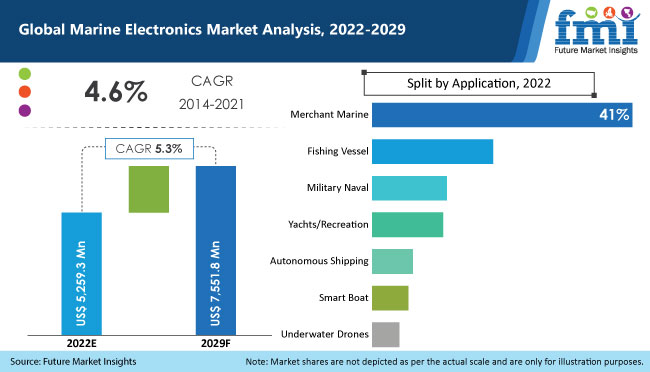
The global marine electronics market is estimated at US$ 5.2 Bn in 2022, and is projected to close in on a valuation of US$ 7.5 Bn by 2029, expanding at a CAGR of 5.3% over the said period.

Marine electronic device sales currently account for around 5% share of the global marine industry. Demand for hardware components is likely to rise at a prominent CAGR over the assessment period of 2022 to 2029. 

Request a Sample of this Report @ https://www.futuremarketinsights.com/reports/sample/rep-gb-2392

Surge in industrialization and globalization is resulting in an increase in demand for ships and boats, which is ultimately driving the growth of the marine electronics market.

Moreover, growing concerns regarding search & rescue, safety & security, and aid for the monitoring and navigation of marine transportation has increased the use of marine electronics devices. Furthermore, governments of various countries are also implementing various regulations for the mandatory installation of AIS in ships and boats which is, in turn, is fuelling the growth of the marine electronics market.

marine electronics market

Defence Industry Remains Key Revenue Contributor

The increasing demand for marine electronics solutions from the defence sector is also generating potential growth opportunities for the marine electronics market.

In order to increase coastal safety and security, the Coast Guard Office of Navigation Systems and Coast Guard Research and Development Center are working for the improvement of communication and navigation for continuous broadcast and autonomous systems. Moreover, constant research and development by the defence sector for the improvement of marine navigation and communication is one of the major factors contributing in the growth of marine electronics market.

In the past few years, ocean carriage has witnessed significant growth in European and Asian countries. Counties in these regions, such as, India, China, Japan, France, and Germany, have large logistical operations that require continuous communication and monitoring. This creates potential demand for advanced monitoring systems in these regions and therefore, key players in the marine electronics market are focusing on offering advanced marine communication and navigation systems.

FMI has segmented the global marine electronics market on the basis of component, application, and region. Based on component, the global marine electronics market is sub-segmented into hardware and software. The hardware segment is further sub-segmented into GPS & radar systems, multi-function navigation, fish finders/SONAR modules, thermal & visible cameras, marine VHF communication devices, audio/video equipment, marine autopilots, autonomous identification systems, analogue & digital communication display, and satellite TV.

Ask An Analyst @ https://www.futuremarketinsights.com/ask-the-analyst/rep-gb-2392

SEA&P Likely to Soon Outpace Europe

Based on application, the global marine electronics market is sub-segmented into merchant marine, fishing vessel, yachts/recreation, military naval, autonomous shipping, smart boat, and underwater drones. Among these, the underwater drones sub-segment is expected to witness a high growth rate during the forecast period, owing to the increasing adoption of underwater drones for a wide range of underwater operations and inspection activities.

In addition, on the basis of geography, Europe is expected to dominate the global marine electronics market. However, in the next few years, the SEA & Others of APAC region is expected to surpass Europe to become the leading region in global marine electronics market owing to the increasing marine activities and growing demand for advanced ships & boats in the countries of this region.

Some of the key players in the global marine electronics market research report include Navico, Furuno Electric, Garmin Ltd., FLIR Systems, Raytheon Company, Transas, Wärtsilä SAM Electronics, SRT Marine Systems, Icom Inc., Kongsberg Maritime, and Japan Radio. These companies in the marine electronics market are continually focusing on providing advanced marine electronics products and solutions by leveraging the latest technologies to enhance and expand their product portfolio with new innovations and technological advancements.

Key Segments of Marine Electronics Industry Research 

By Component:

  • Hardware
    • GPS & Radar Systems
    • Multi-function Navigation
    • Fish Finders/SONAR Modules
    • Thermal & Visible Cameras
    • Marine Electrical Screeners
    • Marine VHF Communication Devices
    • Audio/Video Equipment
  • Software

By Application:

  • Merchant Marine Electronics
  • Fishing Vessel Electronics
  • Yacht/Recreation Boat Electronics
  • Military Naval Electronics
  • Autonomous Shipping Electronics
  • Smart Boat Electronics
  • Underwater Drone Electronics

By Region:

  • North America Marine Electronics Market
  • Latin America Marine Electronics Market
  • Europe Marine Electronics Market
  • East Asia Marine Electronics Market
  • South Asia & Pacific Marine Electronics Market
  • Middle East & Africa (MEA) Marine Electronics Market

Buy Complete Report @ https://www.futuremarketinsights.com/checkout/2392

Key Questions Answered in the Report

  • Who are the prominent manufacturers of marine electronic products?
  • Which segment has the largest share in marine electronics?

Parking Finder Apps Market 2022 | Present Scenario and Growth Prospects 2031

The parking finder apps market is projected to grow at an expected CAGR of 17.6% during the forecast period 2021-2031. Due to growing number of vehicles on the street, it takes good amount of time for a driver to look for a spot of parking at all places.

All parking spots are filled with vehicles on the road leaving the driver to dismay. Car drivers take several rounds of a parking lot to park their car.

Parking finder applications address all these issues of car drivers by taking them directly to the vacant parking spots for parking their vehicles. The application is designed for users to find the location with the help of features of GPS (Global Positioning System) and navigation.

Request a Sample of this Report @ https://www.futuremarketinsights.com/reports/sample/rep-gb-13759

Users also get a choice of booking online and book the spot as per their preferences by making an online payment. Rising parking concern across the globe will drive the demand of parking finder apps.

What is Driving Demand for Parking Finder Apps?  

Parking finder applications leverages machine learning (ML) technology to deliver parking demand data and real-time parking availability accurately, on and off the street. These applications put the power in the user hands for finding a parking spot or reserve a spot for later.

Drivers are paying quickly from their mobile devices for on-street parking. Such benefits of parking finder applications will help the market to grow in upcoming years.

Users find difficulties in parking at the time of meetings and interviews, concerts and sporting events, flights and food runs. With the help of parking application, they are able to reserve a parking spot before they leave home.

For day-to-day needs, it has been easier to pay for on-street parking or reservation of a parking space in a garage before the time with the help of these applications. Thus, saving the time for a user at parking location will increase the demand of parking finder apps.

What are the Key Trends for Parking Finder Apps?

It has been difficult to find a vacant parking space during peak hours in areas such as hotel, shopping malls, university, airport, hospital, exhibition and others. Due to growing population, there is an increase in issues for residential and commercial parking.

The parking finder technology addresses all these issues by finding out the vacant parking spot for users. Thus, the market of parking finder apps is projected to grow during the forecast period.

Companies like Tesla and Ford are introducing parking assistance function and testing the same in driverless vehicles. This function is capable of showing free parking space. These companies are continuously investing a good amount of money on building autonomous vehicles. Such trends are continuously contributing to the growth of parking finder apps.

Ask An Analyst @ https://www.futuremarketinsights.com/ask-the-analyst/rep-gb-13759

North America Demand Outlook for Parking Finder Apps

North America is one of the advanced region for implementing parking finder technology in the market. Businesses in United States and Canada are deploying online systems to manage their visitors and employees parking.

These online systems save money and time for them. Vehicle manufacturers are launching autonomous cars in United States and Canada with in-built parking assistance function. The region is way ahead in adopting the technology of parking the cars with smartphones. In-addition, the region has most of key players of parking finder applications. All these factors will drive the demand of parking finder apps in the region.

Europe Demand Outlook for Parking Finder Apps

The Europe region is going to hold a largest share of the parking finder apps market during the forecast period after North America. Hotels, hospitals, universities, airports and others are adopting parking finder solutions to save time and money for their employees.

Countries like United Kingdom and Germany in Europe have already adopted parking finder technology and also focusing on innovative ways to handle the vehicle using smartphones. There is a continuous advancement in technology in the Europe and it will create many opportunities for parking finder apps market in the upcoming years.

Who are the Key Parking Finder Apps Vendors?

Some of the leading vendors of parking finder apps include

  • ParkMobile
  • PayByPhone
  • BestParking
  • Streetline
  • SpotHero
  • ParkMe
  • Parking Mate
  • Parking Panda
  • ParkWhiz
  • Parkopedia
  • JustPark
  • Waze

Parking Finder Apps Report Highlights:

  • Detailed overview of parent market
  • Changing market dynamics in the industry
  • In-depth market segmentation
  • Historical, current and projected market size in terms of value
  • Recent industry trends and developments
  • Competitive landscape
  • Strategies of key players and products offered
  • Potential and niche segments, geographical regions exhibiting promising growth
  • A neutral perspective on market performance
  • Must-have information for market players to sustain and enhance their market footprint
Key Segments

By App Type:

  • Free Version
  • Paid Version

By Operating System:

  • IOS System Phone
  • Android System Phone

By Region:

  • North America
  • Latin America
  • Europe
  • East Asia
  • South Asia & Pacific
  • Middle East & Africa

Buy Complete Report @ https://www.futuremarketinsights.com/checkout/13759

Contact Us:                                                            

Future Market Insights
Unit No: AU-01-H Gold Tower (AU), Plot No: JLT-PH1-I3A,
Jumeirah Lakes Towers, Dubai,
United Arab Emirates
For Sales Enquiries: sales@futuremarketinsights.com
For Media Enquiries: press@futuremarketinsights.com
Website: https://www.futuremarketinsights.com

Supply Chain Management (SCM) Market 2022 Development Status, Competition Analysis, Type and Application 2031

According to newly released data by Future Market Insights (FMI), the supply chain management market will grow at a CAGR of 11.4% from 2021-2031, with revenue totaling ~US$ 21.2 Bn by the end of 2021.

Owing to rapid technological advancements in transportation and logistics sector, there is an increase in demand for supply chain management solutions. Also, advanced technologies have become essential in improving economic competitiveness, thereby propelling the market growth.

Chief factors fueling the demand for supply chain management solutions include high growth in eCommerce, need for greater transparency and visibility in supply chain processes and data, enhancing business continuity by minimizing potential failures, and rising adoption of cloud supply chain management among SMEs.

Request a Sample of this Report @ https://www.futuremarketinsights.com/reports/sample/rep-gb-13958

In addition to this, integration of AI capabilities with supply chain management (SCM) offerings is projected to create lucrative opportunities for SCM vendors in the long run.

supply chain management market key countries and industry mekko chart 2021

Key Takeaways: Supply Chain Management Market

  • By software solution segment, the integrated SCM platform/suite is anticipated to account for the leading market share. The segment is estimated to grow at a robust CAGR of 13.5% through 2031.
  • Based on deployment, the on-premises segment is estimated to account for more than half of the software solution segment in 2021.
  • The demand for supply chain management in large enterprises is expected to grow at the highest rate.
  • Demand for supply chain management in transportation & logistics and manufacturing sector is estimated to grow at an impressive CAGRs. However, retail & consumer goods segment is estimated to continue to hold dominant market share in the global supply chain management market during the forecast period.
  • Among the regions, North America is estimated to hold highest market share followed by Europe in 2021. South Asia & Pacific is anticipated to emerge as the fastest growing region between 2021 & 2031.
  • The market in Japan is expected to progress at a noteworthy CAGR of more than 14% through 2031.
  • In the U.K., sales are expected to increase tremendously at a CAGR of 11.4% over the next ten years.

 Supply chain management solutions enable organizations to efficiently manage potential challenges such as demand spikes, inventory and labor shortages, and transportation disruptions, along with effectively mitigating supply chain disturbances. In addition to this, agility and omnichannel supply chains are becoming the norm, while the increasing availability of Big Data means organizations are now able to close the loop with prescriptive analytics and make informed supply chain decisions, says FMI analyst.  

Ask An Analyst @ https://www.futuremarketinsights.com/ask-the-analyst/rep-gb-13958

COVID-19 Impact Analysis on Supply Chain Management Market

The COVID–19 pandemic has compelled several industries and organizations to revamp their global supply chain model. The lockdown implemented to contain the spread of the virus across various countries has shut down economies and is impacting every aspect of the supply chain around the world.

This also has caused various industries to move their normal manufacturing processes to manufacture PPE kits and other essential medical supplies. Technologies such as Machine Learning (ML) and AI are beginning to drive innovation strategies of the businesses, in order to successfully operate during this period, which is further estimated to increase the adoption of cloud-based SCM solutions across various sectors.

The global pandemic affected almost all aspects of the global economy over the past few months. One industry that has seen remarkable changes is e-commerce. There is a huge pressure on the supply chain logistics industry to keep up with the ever-rising demand, as self-isolated consumers are shifting towards online shopping platforms. Accordingly, logistics companies are stepping up with innovative strategies to respond to these rapidly shifting logistics trends in 2021.

Thus, the supply chain management market is estimated to showcase a slight decline, temporarily, from around 9.1% to 8.7% Y-o-Y from 2019 to 2021.

Integration of Blockchain Technology to Propel the Sales

The demand for blockchain technology is increasing for supply chain management solutions as it increases the efficiency and transparency of the supply chain and positively affect the logistics processes, from delivery to storage and payment. Due to transparency and security achieved by blockchain, the speed of physical flow of goods is increased.

Blockchain records every single asset from product to containers as it flows through the supply chain nodes. It also helps to track information regarding orders, receipt, invoice, payments and digital assets like copyrights, certifications, barcodes and other things.

Blockchain integration with supply chain management systems results in increased sustainability, reduced errors and delays, minimized transportation cost, faster identification of errors, and improved product transport and inventory management.

More Valuable Insights on Supply Chain Management Market

FMI’s report on the Supply chain management market is segmented into four major sections – solution (integrated SCM platform/suite, standalone solutions (supply chain planning, warehouse management software, transportation management software, sourcing & procurement, order management, and others), and services (outsource supply chain management services and professional services), deployment (cloud-based and on-premises), enterprise size (small and medium enterprises (SMEs) and large enterprises), industry (retail & consumer goods, manufacturing, automotive, healthcare & pharma, food & beverages, transportation & logistics, and others), and region (North America, Latin America, Europe, East Asia, South Asia & Pacific, and the Middle East & Africa), to help readers understand and evaluate lucrative opportunities in the supply chain management market.

Buy Complete Report @ https://www.futuremarketinsights.com/checkout/13958

Contact Us:                                                                            

Future Market Insights
Unit No: AU-01-H Gold Tower (AU), Plot No: JLT-PH1-I3A,
Jumeirah Lakes Towers, Dubai,
United Arab Emirates
For Sales Enquiries: sales@futuremarketinsights.com
For Media Enquiries: press@futuremarketinsights.com
Website: https://www.futuremarketinsights.com

Edtech Market 2022 Outlook, Current and Future Industry Landscape Analysis 2031

According to Future Market Insights (FMI), the demand registered in the edtech market will increase at a healthy CAGR of 14.5% during the forecast period (2021-2031).

The overall sales in the market are expected to reach the valuation of ~US$ 74,239.7 Mn by the end of 2021. As per FMI, rapid technological advancements and introduction of learning through entertainment have increased the adoption of edtech worldwide.

Request a Sample of this Report @ https://www.futuremarketinsights.com/reports/sample/rep-gb-14286

As standardization is difficult while working with multiple sites, digital learning helps individuals to access content at any time of the day. It can also be accessed at any time in any part of the globe.

With new innovative tools or practices being launched in the digital technology, online learning is helping learners adopt new changes efficiently. Hence, learning management software (LMS) is gaining a wider acceptance globally.

The LMS helps in managing the learning process and creating an engaging learning environment for adding more functionalities to enhance the learning capacities. Hence, companies are using LMS to make their employees better trained, and more knowledgeable about products and services.

Key Takeaways

  • By component, the hardware segment is anticipated to account for the leading share during the forecast period. However, the software segment is estimated to grow at a CAGR of 16.7% through 2031.
  • By end user, the academic institution segment is anticipated to increase at a CAGR of 16.7% between 2021 & 2031.
  • The market in U.S. is expected to expand at a CAGR of around 11.2% through 2031.
  • In India, edtech market is estimated to grow by a CAGR of nearly 22.8% over the next ten years.
  • Edtech market in Japan is expected to witness growth by 5.1X during the forecast period.

“Key players in the market by offering attractive short term subscriptions pricing and gamified and contextualized interfaces to engage and retain the learning audience. This is expected to create growth avenues and reach large customer base,” says FMI Analyst

Adaptive Learning is Gaining Traction

Adaptive learning has gained more interest due to new product development, partnership among e-learning software providers and education publishers and significant investment in adaptive learning. Adaptive learning is gaining popularity as the development of new technologies like AR and AI which is giving adaptive learning a lift at another level. The adaptive learning has the advantage of robust analytics, it also helps in confidence-based assessments and pre-learning tests that help organizations to sidestep the drawbacks of generalized learning.

Adaptive learning ensures that each learner goes through the most effective learning path. Adaptive learning helps learners to gain confidence due to the personalized feedback provided. Adaptive learning model adoption can help learner to gain the objective knowledge and various skills.

Ask An Analyst @ https://www.futuremarketinsights.com/ask-the-analyst/rep-gb-14286

Initiative by Educational Institutes Creating Growth Opportunities

Education institutions are undertaking initiatives for encouraging the students for switching from the traditional textbooks to eBooks for learning seamlessly. For Instance, K-12 schools are replacing traditional study to new online learning to benefit student’s overall growth. This is creating opportunities for the players to offer their e-learning solution in the market.

Also, demand for micro learning is increasing as it is suitable way of learning for the new generation of learners that have shorter attention spans. Learners are provided information at a rate that matches their ability to help them absorb knowledge more efficiently.

Micro learning also helps them to improve learning transfer by 71% compared to traditional learning methods. It generates 50% more engagement, while reducing development costs by 50% and increasing development speed.

More Valuable Insights on Edtech Market

FMI’s report on the edtech industry research is segmented into three major sections – component (hardware, software, and services), end user (government organization, academic institution, enterprises and others) and region (North America, Latin America, Europe, East Asia, South Asia & Pacific, and the Middle East & Africa), to help readers understand and evaluate lucrative opportunities in the Edtech demand outlook.

Buy Complete Report @ https://www.futuremarketinsights.com/checkout/14286

Contact Us:                                                            

Future Market Insights
Unit No: AU-01-H Gold Tower (AU), Plot No: JLT-PH1-I3A,
Jumeirah Lakes Towers, Dubai,
United Arab Emirates
For Sales Enquiries: sales@futuremarketinsights.com
For Media Enquiries: press@futuremarketinsights.com
Website: https://www.futuremarketinsights.com